Wedding Flower Decor: Groom Hair and Bouquet Placement
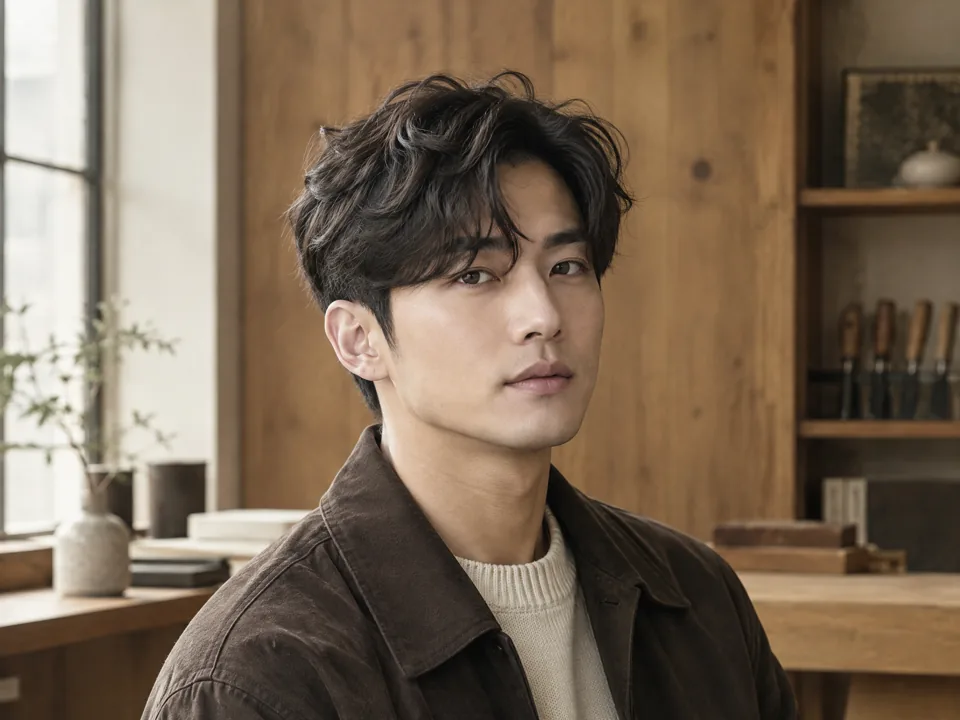
Choose the groom’s hairstyle and flower placement together so faces remain clear in portraits and movement feels comfortable. Keep bouquet height, fringe direction and the ceremony backdrop in the same planning conversation. A handsome arrangement should not require either partner to hold an awkward pose throughout the wedding.
For a Hong Kong celebration, the useful test is the journey between spaces. A groom may leave a preparation room, greet relatives at a tea ceremony and enter a restaurant reception. His hair needs to work during those transitions, while flowers need somewhere deliberate to rest between photographs.
This Canvas Texture journal guide connects men’s grooming with the practical work of hosting a wedding. It uses three checks: the couple’s outline, the space around them and the person responsible for each handover. Start with a simple rehearsal, then give the stylist, florist and venue a shared plan.
01
Choose the groom’s silhouette before matching floral shapes
Start with the haircut you can wear comfortably, rather than copying the shape of an arrangement. Photograph the groom from the front and both sides in his intended jacket. A high quiff changes the head’s outline; a softer fringe changes how much forehead appears. Those differences matter when flowers frame the couple closely.
Ask the stylist how the existing cut behaves when you look down, turn and greet someone. The American Academy of Dermatology advises limiting excessive heat and brushing, and avoiding sustained pulling on hair [1]. That supports a gentler preparation routine, not repeated forceful restyling whenever a photograph reveals a stray strand.
If you are considering a perm or colour change, arrange an assessment of your hair condition with the stylist. There is no universal waiting period that suits every head of hair. Explain the wedding schedule and your usual styling habits, so the conversation concerns a manageable result rather than a dramatic photograph alone.
For a hypothetical groom wearing a textured side part, one side may already create enough visual movement. Dense foliage immediately behind that side can make his outline harder to distinguish. Try a quieter background there before changing the haircut. The useful adjustment may belong to the portrait position, not the groom’s hair.
02
Rehearse bouquet height beside both partners’ faces
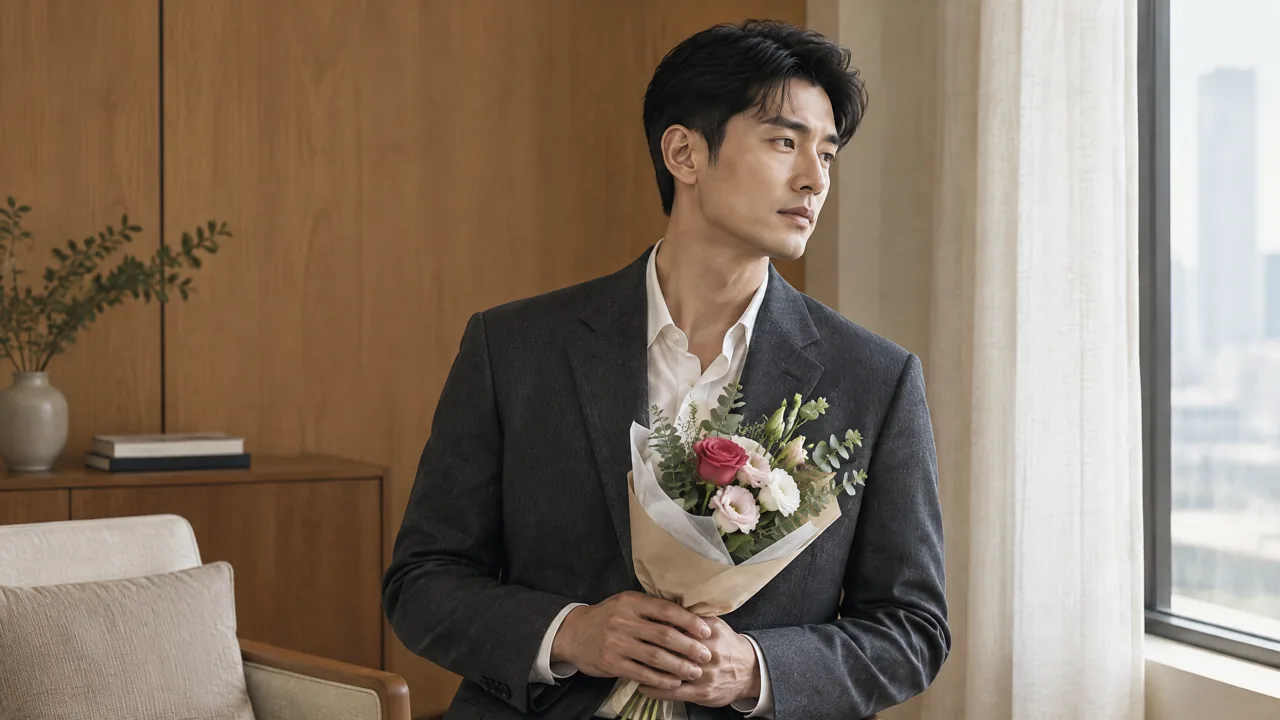
Rehearse with a lightweight stand-in before choosing the final flower shape. Hold it at a relaxed height, then check a full-length photograph and a closer portrait. The aim is to see hands, clothing and faces together. Raising an arrangement for every photograph can hide jacket details and introduce tension into the shoulders.
When discussing a bridal bouquet, use those photographs to explain preferred scale, shape and how it will be carried. Confirm flower availability, substitutions, handle finishing and handover arrangements before ordering. A reference image can communicate the look, but it cannot establish the weight or handling of the finished arrangement.
Look at the groom’s fringe when the couple lean towards each other. A forward fringe may fall into his eyes, while a tall arrangement may hide the other partner’s chin. First try a small change in body angle and hand position. Avoid treating either person’s natural height as a problem that needs disguising.
Also rehearse the moment when nobody wants to carry flowers. Assign a stable resting place during signatures, greetings or jacket adjustments. Ask the florist how the arrangement should be supported and cared for. Do not improvise by pushing stems into a pocket, leaning flowers against clothing or placing them on a busy drinks table.
| Moment | What to check | Useful adjustment |
|---|---|---|
| Full-length portrait | Hands, jacket and bouquet remain visible | Relax the hold and review proportions |
| Close couple portrait | Neither face disappears behind flowers | Change angle before forcing a higher hold |
| Signing or greeting | A clear place exists for the bouquet | Name a helper and agree suitable support |
| Walking together | Flowers do not catch clothing | Rehearse the grip and walking position |
Editorial note: A wedding portrait works better when the couple can move naturally than when every detail demands a fixed pose.
03
Frame the ceremony without hiding hair and shoulders
A ceremony display should frame people rather than become a wall directly behind their heads. Ask the photographer where the couple will stand and where the main camera positions are likely to be. Compare the groom’s hair colour with the proposed background. Dark foliage behind dark hair may make the silhouette less distinct.
A discussion of wedding flower decor is useful for coordinating ceremony flowers, entrance displays and reception arrangements around that layout. Confirm the final design, installation scope, venue permissions and charges separately. The plan should specify where people stand, rather than relying only on a photograph of an empty floral arch.
Check the view while seated as well as standing. A display that looks balanced at the couple’s height may obstruct relatives watching from the first rows. Ask the venue to review the actual arrangement of chairs and the aisle. Leave the photographer room to move without making the ceremony route narrower or more awkward.
For a hypothetical restaurant ceremony, a smaller arrangement beside the couple might work better than an elaborate structure behind them. It can leave the groom’s shoulders visible and preserve space for greetings afterwards. The trade-off is less floral impact in a wide photograph. Decide whether that matters more than movement and a clear view.
04
Keep seasonal kumquat displays out of the portrait lane
A wedding close to Lunar New Year may share an entrance with festive plants. Treat them as a hosting decision, not an automatic wedding requirement. Ask whether the venue already has seasonal decorations and whether the couple want them in photographs. An existing display may suit the welcome area without belonging beside the ceremony.
If several agreed welcome points need plants, bulk kumquat plant orders can help organise a quantity-and-location enquiry with Y. Florist. Confirm seasonal supply, actual dimensions, planter details, delivery scope and pricing individually. A listed height does not tell you the branch spread or whether a plant fits beside a particular doorway.
Send a measured sketch showing the display position and the space needed for guests to pass. Include loading arrangements and the named receiver, especially when plants and wedding flowers arrive separately. Have the venue approve placement. Neither decorative value nor a festive meaning is a reason to reduce access or obscure important signs.
Keep the groom’s arrival photograph in mind when choosing the position. Branches behind his head may appear to emerge from his hair in a flat image. Try photographing the empty location from the intended angle. Moving the portrait spot can be easier than shifting a heavy planter after the couple and guests have arrived.
05
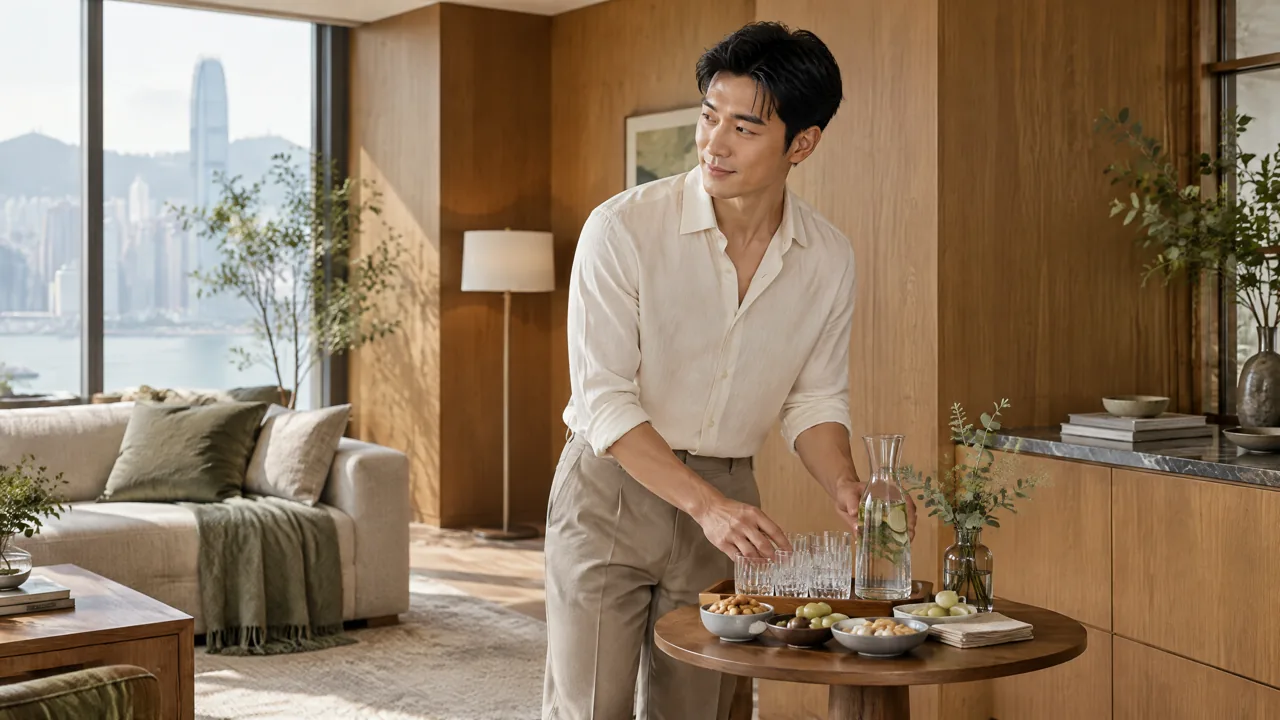
Separate the grooming station from tea and food service
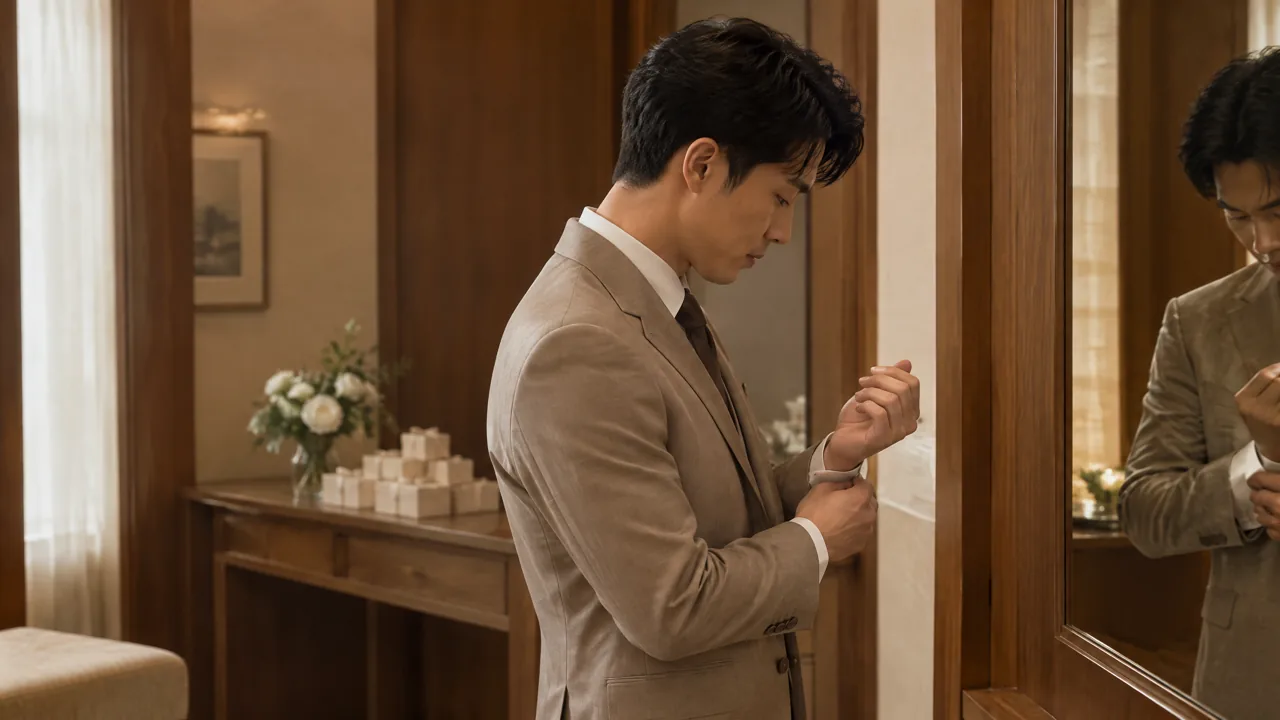
Finish grooming in a designated preparation space before the groom starts receiving guests or helping with handovers. Leave enough time for hair to dry without rushing into repeated hot styling. Keep the mirror and personal products away from tea cups, food trays and floral containers. A small room still needs distinct places for these jobs.
Hong Kong’s Centre for Food Safety identifies clean hands and utensils, separation, thorough cooking and safe temperatures among its Five Keys [2]. Keep that guidance relevant to the food service itself. Separately, use a practical grooming boundary: do not spray hair products near food preparation, uncovered refreshments or utensils waiting to be used.
Give the groom a compact personal kit rather than borrowing space from the tea ceremony table. A comb, mirror and clean cloth can stay with a nominated helper. After touching hair or styling products, anyone returning to food handling should clean their hands. Ask the catering team to retain control of its own preparation area.
This division also protects the wedding schedule. When cups, flowers and grooming tools occupy the same surface, someone must clear them before the next task begins. Allocate the spaces before guests arrive. The groom can then take a brief private check without interrupting a relative’s greeting or asking staff to move refreshments around him.
06
Plan the handover between lifts, vehicles and portraits
Map the actual route from the preparation room to the first portrait location. Include the lift journey, vehicle entry and any outdoor wait. Hair and flowers face different handling problems during this route. A groom may need a private mirror check, while the bouquet needs the support and care instructions agreed with its florist.
Choose one helper for flowers and another person to coordinate timing when possible. Otherwise, a single helper may be answering a driver’s call while holding the bouquet and searching for the groom’s kit. Write down who receives each item and who keeps it during photographs. Responsibility matters more than an elaborate packing checklist.
At a vehicle door, pause before lowering your head into the seat. A tall hairstyle can brush the roof, and flowers carried against the jacket can be compressed. Let the helper manage the arrangement while the couple get settled. Ask how it should travel, rather than assuming any flat box or available seat is suitable.
After an outdoor arrival, check the hair once in a suitable private spot. Adjust the direction gently instead of rebuilding the whole style at the entrance. Then check the bouquet and clothing separately. That sequence avoids brushing hair while someone holds flowers against the groom’s chest and gives the photographer a clear moment to begin.
| Stage | Named responsibility | Confirm beforehand |
|---|---|---|
| Preparation room | Groom’s helper keeps the personal kit | Private mirror space and departure cue |
| Flower receipt | Flower helper checks the handover | Contact, care instructions and item list |
| Vehicle transfer | Transport coordinator manages departure | How flowers travel and who carries them |
| Portrait arrival | Photographer directs positions | Brief hair check and bouquet resting place |
07
Preserve seated sightlines for toasts and family photographs
Reception flowers need a second review after the ceremony layout is settled. Sit at a representative table and look towards the couple and the speaker’s position. Consider ordinary conversation too. Guests should not have to lean around an arrangement to speak, and the groom should not repeatedly duck beneath foliage to greet relatives.
For a hypothetical long family table, several smaller arrangements may leave more usable gaps than a continuous dense display. The trade-off is a less uninterrupted floral line. Test the places needed for serving dishes and table settings with the venue team. The best layout cannot be judged from a centrepiece photographed on its own.
Discuss the groom’s lapel flower alongside the jacket, not the hairstyle alone. Check its scale in a seated photograph and ask how it will be attached securely. Let the florist or another competent person handle the attachment. During greetings, the groom should be able to move his arms without pressing the bouquet against it.
Before a family photograph, give flowers a planned destination and clear the standing area. Do not pass the bouquet through a line of relatives while everyone rearranges themselves. The groom can check that his fringe stays clear when leaning towards seated family members. A visible expression usually matters more than perfectly repeated hair volume.
Editorial note: Put flowers where they support the occasion, and give grooming a quiet place of its own.
08
Use one shared rehearsal to settle the remaining decisions
Bring the main decisions together in one short rehearsal rather than requesting separate approvals for every detail. Use the intended jacket, a bouquet stand-in and photographs of the actual spaces. Walk, sit and turn towards another person. Note only the changes that improve comfort, facial visibility or access; not every variation needs correcting.
Send the stylist the relevant portraits, including side views and the lowered-head position used during greetings. Send the florist the bouquet hold and display sketch. Give the venue the placement and handover plan. Different teams need different information, but they should all understand the same sequence rather than working from unrelated inspiration images.
Record uncertain items as questions, not assumptions. Flower substitutions may affect colour and texture, while the venue may reject a proposed display position. Decide who approves those changes and how the photographer will hear about them. This avoids asking the groom to settle an installation question while he is dressing or welcoming relatives.
On the day, prioritise a comfortable groom, visible faces and a workable guest route. A slight shift in hairstyle or flower shape does not automatically justify delaying the next moment. With clear resting places and named helpers, the couple can focus on greeting people. That is the practical purpose of preparing hair and flowers together.
- Photograph the groom’s front and side profiles in the intended jacket.
- Rehearse bouquet height while standing, walking and leaning together.
- Mark flower resting places and approved display positions on the venue plan.
- Name the flower receiver, grooming helper and person who approves changes.
Sources and useful reading
Continue with hair and grooming
For a separate men’s own-hair consultation: Groom Hairstyle Perm HK
Continue with related occasion and grooming planning: Private floral workshop: Hair, Team Roles and Preserved Flowers
Read our men’s hairstyling background: Vit So and the Canvas Texture studio
Prepare a shared hair and flower plan
Rehearse the couple’s positions, photograph the groom’s silhouette and mark the flower handover points. Bring those details to your stylist, florist and venue, then confirm the final arrangements before the wedding.
Canvas Texture · WhatsAppFrequently asked questions
Should the groom change his hairstyle to match a large bouquet?
Not automatically. First test the bouquet hold, couple’s angle and background. Choose a hairstyle the groom can manage comfortably. Discuss any major change with the stylist rather than assuming a different cut will solve a placement problem.
Where should the bouquet go during a tea ceremony?
Agree a separate, stable resting place with the florist and venue. Name a helper to handle the transfer. Keep it off the active tea service surface and follow the florist’s instructions for support and care.
Are kumquat plants necessary for a Lunar New Year wedding?
No. They are an optional seasonal welcome feature. Check the venue’s existing decorations and the couple’s preferences first. If plants are wanted, confirm dimensions, availability, placement, receiving arrangements and the full order terms.
What should we send the stylist and florist before the wedding?
Send jacket and hairstyle reference photographs to the stylist. Give the florist bouquet scale references and venue placement details. Both should know the day’s main transitions, while the venue receives the agreed handover and access plan.
Related journal articles
Hong Kong Catering Service: A Host’s Grooming Plan
A host’s hairstyle has done its job when it stops competing with the welcome.
Catering Packages: Compare Food and Grooming Budgets
Editorial principle: protect the meal and the host's preparation time before spending on extra variety or a more elaborate look.
Office Lunch Catering: Keep Hair Products off Food Tables
A prepared host gives hair products a home before giving lunch a place on the table.