
Sai Kung Dive Days: A Gentle Plan for Men’s Curly Hair
For a Sai Kung dive day, give your curls a simple plan: leave them easy to handle, confirm where you can rinse with fresh water afterwards, and allow time for gentle drying. The aim is not to preserve a salon finish through seawater. It is to avoid unnecessary pulling and make the journey home manageable, whether your curls are natural or created through a men’s perm.
The useful preparation happens before departure. Ask about the meeting point, storage for dry belongings, available shade and washing facilities. A coastal location does not automatically provide a shower, and an estimated return is not a guaranteed appointment time. Those details affect whether you can wash comfortably before travelling or need to complete your routine at home.
This guide focuses on your own hair and the practical shape of the day. It does not teach diving or decide who can participate. The instructor confirms activity eligibility and suitable equipment; a clinician handles personal health questions. Hair care should fit around those decisions, not become a reason to alter equipment or push ahead with an unsuitable outing.
01
Start with the curls you actually have
Begin with an ordinary look at your hair, rather than buying a special sea-day routine. Consider its length, existing tangles, how readily it dries and what usually makes it difficult to manage. A short textured crop needs a different plan from a long curly top. If your ends already feel rough, set aside more time for gentle detangling instead of expecting stronger styling products to keep every curl in place.
For men with a longer fringe, think about how often you normally sweep it away from your face. Repeatedly pulling wet curls backwards is not an ideal styling habit. Before the outing, ask your stylist about a comfortable, low-tension way to contain your current length on land. Show the instructor any concern about hair catching around equipment, so they can assess the fit. Do not assume that a neat-looking hairstyle guarantees a comfortable mask.
If you have recently had a perm, colour or lightening service, ask the stylist who assessed your hair how the proposed water day fits the products used and your current condition. There is no universal waiting period that guarantees every treated head can go swimming. Sun and pool exposure also deserve consideration when planning lightened hair.[1] Keep the chemical-service discussion separate from the instructor’s activity assessment, and avoid squeezing a major colour change into an already crowded departure week.
A sea-day hairstyle should be easy to undo, not difficult to keep perfectly intact.
02
Plan the rinse before you plan the view
Start the travel conversation with the details your curls will actually need. Ask where the group meets, whether belongings stay accessible and whether there is authorised fresh-water rinsing at the return point. The guide to Sai Kung diving Hong Kong is a useful next read for comparing local settings and access. It is not a promise of a particular coastline, shower or calm sea on your chosen day; confirm the current arrangements directly.
Work backwards from the journey home. If a rinse is available but a full wash is not, you can plan to complete cleansing and drying at home rather than hunt for facilities after departure. Ask whether you need to bring water specifically for rinsing and whether its use is permitted. Keep that separate from your drinking supply. Do not rely on a drinking-water dispenser, boat tap or public facility being available for hair care without permission.
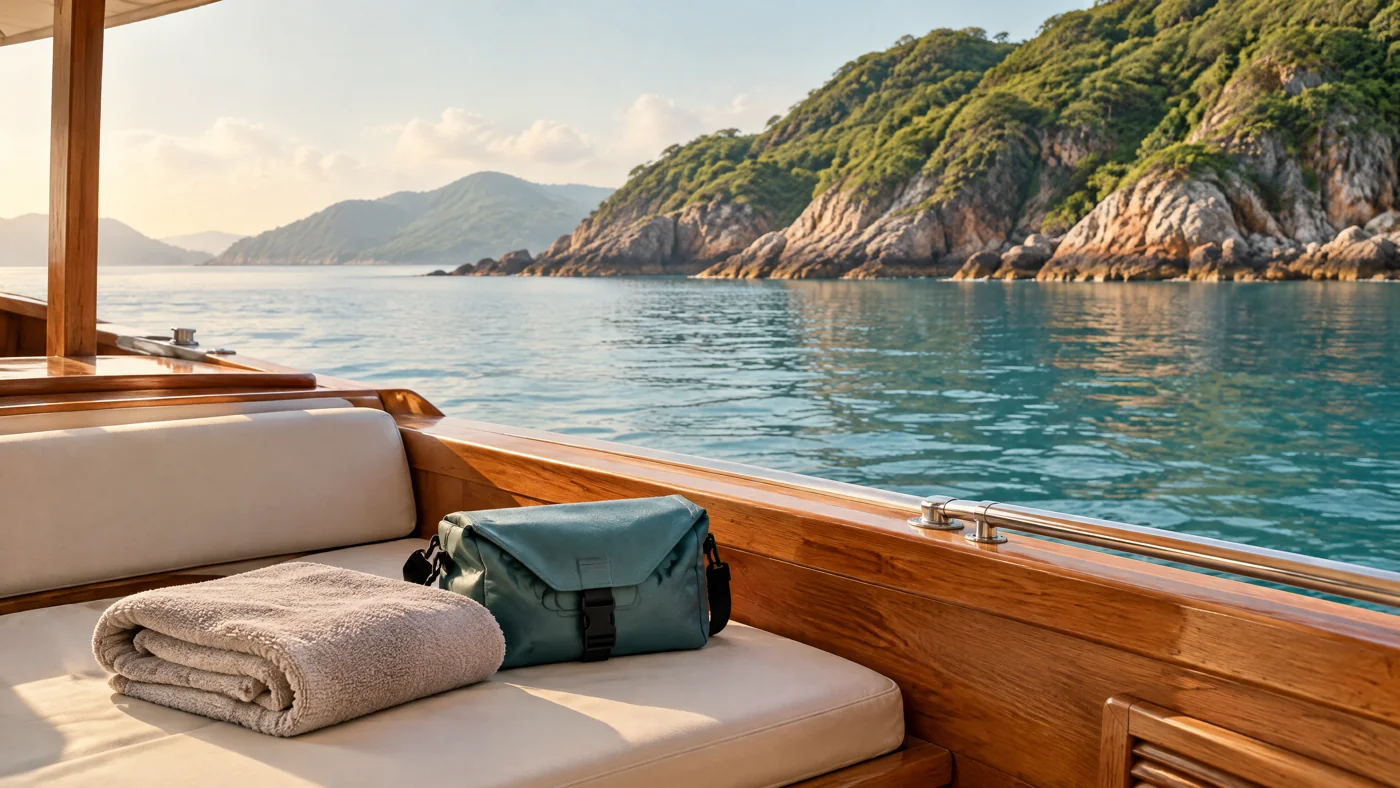
Shade also belongs in the plan, especially if you expect to spend time waiting ashore with damp hair. Ask what shelter is available rather than assuming every stop has a covered seating area. Pack a suitable hat for permitted land use, plus a clean towel and dry clothing. Leave room in your timetable for changing and packing: rushing those tasks can turn a simple curl routine into vigorous rubbing and hurried brushing.
| Part of the day | Hair-care plan | Confirm before departure |
|---|---|---|
| Journey to the meeting point | Wear an easy-to-manage style and keep the dry towel packed | Exact meeting point and latest arrival instructions |
| Waiting ashore | Use shade and a land-use hat where appropriate | Available shelter and storage for personal items |
| After the water session | Use an authorised fresh-water rinse if available | Rinse access, permission and whether water must be brought |
| Journey home | Leave the full styling finish until there is space and time | Changing arrangements and estimated return, allowing a buffer |
- Ask whether rinse facilities are available, rather than assuming they are included.
- Keep a clean towel separate from wet clothing.
- Confirm where a small bag of hair-care essentials can be stored.
- Leave time after the estimated return for washing, changing and travel.
03
Separate learning days from leisure days
A course can involve a different washing schedule from a single recreational outing. If you are considering a Sai Kung scuba diving course, use the course page to frame questions about the learning sequence, water venues and travel arrangements. Ask which sessions are pool-based and which are planned at sea. A location name alone does not establish a branch, a fixed itinerary or the place where you will finish with wet hair.
Pool and sea sessions need practical planning without treating them as identical experiences. The American Academy of Dermatology notes that pool chemicals can damage hair and recommends rinsing after swimming, with suitable cleansing and conditioning care.[1] For your own curls, choose familiar products appropriate to your hair rather than adding several untested formulas. Use them at an authorised washing location and follow venue and product instructions; a biodegradable label is not proof that a cosmetic is appropriate to release into coastal water.
In a hypothetical week with both a pool session and a later sea day, keep the routine easy to repeat. Have a clean towel ready for each outing, check when you can wash at home and avoid scheduling both around an elaborate hairstyle. Do not turn this into a rigid extra-shampoo rule: your scalp, products and existing routine matter. Tell the instructor your actual experience and water confidence, while taking any concern about persistent scalp discomfort to an appropriate clinician.
04
Compare boat days by more than the fare
For a boat outing, the useful comparison includes the whole day away from your bathroom. The Hong Kong boat dive price page is a relevant next read when you need to clarify format and inclusions. Ask for a current written quote, meeting details, storage arrangements and an estimated return. For your curls, a slightly different travel plan may matter more than the headline fare if it changes when you can rinse, wash and dry comfortably.
Before paying, read the booking conditions alongside the logistical answer. DiveHarbour currently states that all paid fees are non-refundable; make-up sessions are available only subject to its written conditions. Do not assume weather changes mean a refund or an automatic replacement date. Keep an immovable haircut, colour appointment or evening engagement away from the estimated return. That leaves space for the operator’s current-condition decisions without making your grooming timetable the reason to resist a changed plan.
Canvas Texture and the DiveHarbour website share an owner. This is a related planning resource, not an independent ranking or a first-hand review of a boat trip. Canvas Texture’s role here is men’s own-hair styling: helping you choose a manageable cut and a realistic routine. DiveHarbour should answer the activity questions, including eligibility, equipment and current arrangements. A stylist cannot establish the day’s sea conditions, and a comfortable curl routine does not establish that an outing is suitable.
05
Contain longer curls without pulling them tight
On land, longer hair may be easier to organise with a soft tie if you have enough length to gather it without pulling. Keep it comfortable, rather than forcing short sides or a fringe into a tight knot. If gathering the hair causes discomfort or leaves the roots under obvious tension, choose another land-use arrangement with your stylist. There is no need to make a short curly top behave like a long ponytail just for one outing.
Treat anything worn with diving equipment as a separate fit question. Let the instructor see your usual hairstyle and confirm appropriate equipment before participation. Do not improvise strap changes, put oils or grease on gear, or assume an ordinary swimming cap can replace a hood. A hat that is useful while waiting ashore is not automatically appropriate underneath equipment. The salon can discuss hair length and tangling habits, but it cannot promise a seal or prescribe a gear solution.
For the fringe, an everyday styling decision is often more useful than an emergency trim. Ask whether a small adjustment at your next normal haircut would make the hair easier to manage without losing the curl shape you like. Meanwhile, avoid repeatedly dragging a brush through wet hair to restore your usual parting. You can accept a different appearance during the journey and reshape it later. That is a lower-effort compromise than trying to keep a precise salon silhouette throughout the day.
Keep hair comfort and equipment fit as two separate conversations; one cannot guarantee the other.
06
Rinse, press and detangle when you are ashore
Once ashore, use the authorised fresh-water rinse you arranged. When suitable washing facilities are available, follow with your familiar cleansing and conditioning routine as needed. If they are not, finish the wash when you reach home rather than dispensing products at an unsuitable shoreline. Keep the routine modest: an after-water wash is ordinary hair care, not a treatment for hair loss or a promise to reverse chemical damage. Product suitability still depends on your hair and the instructions.
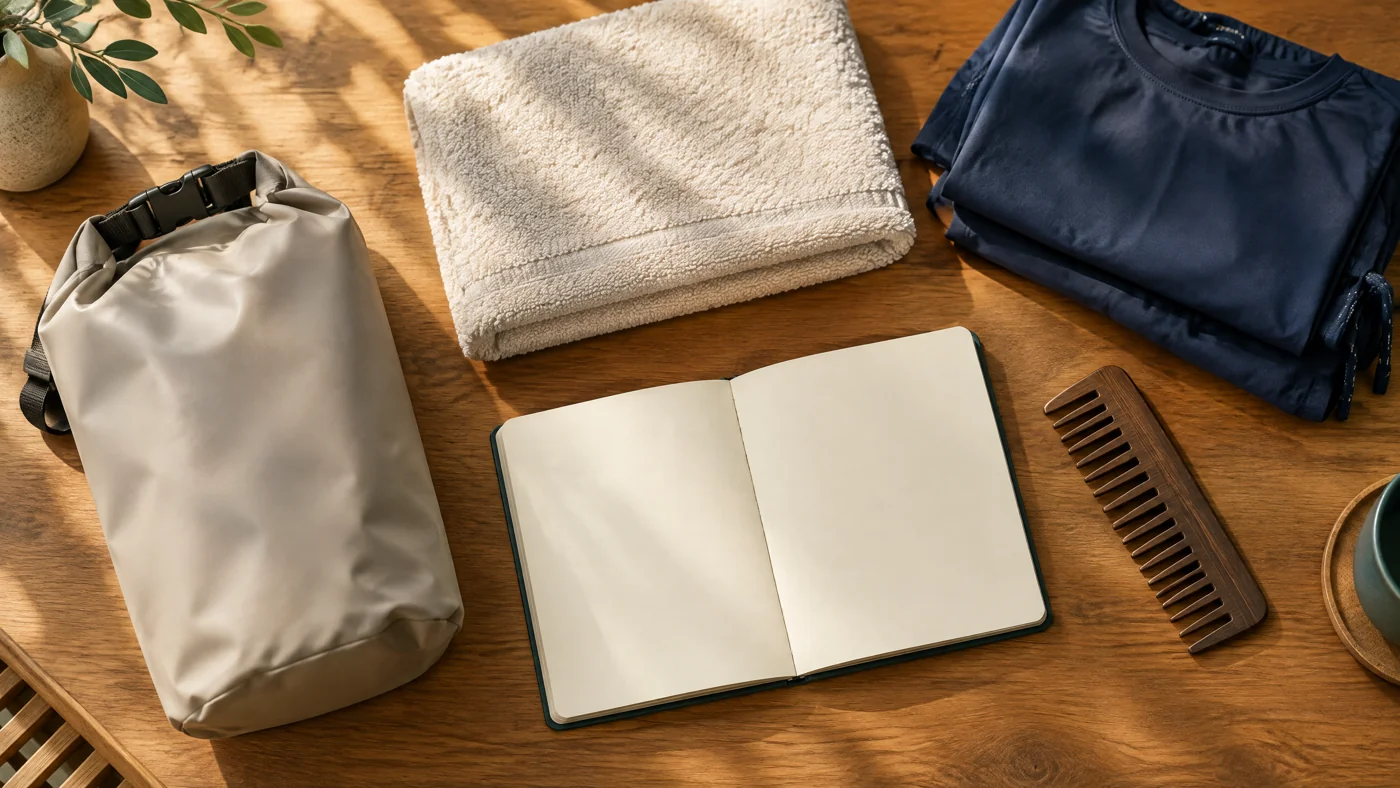
After washing, press the hair gently with a clean towel instead of rubbing it vigorously. The American Academy of Dermatology advises gentle handling and different detangling approaches for different textures; curly hair may be better combed while damp, using a wide-tooth comb.[2] Work patiently through small areas and avoid forcing a tool through a knot. The goal is to make the curls manageable without repeatedly pulling at the same section, not to produce a perfectly uniform pattern before you leave the changing area.
Drying can wait until you have a comfortable place to do it. If you use a dryer, choose low heat and limit unnecessary handling, consistent with the AAD’s damage-reduction advice.[2] Do not try to speed up the process by pulling each curl straight with a hot brush. Leave heavy finishing products until you can assess the hair after drying. A temporary uneven shape is easier to live with than a hurried routine built around heat and repeated tension.
| What you notice | Practical response | What not to chase |
|---|---|---|
| Wet hair after seawater | Use an authorised fresh-water rinse; complete washing where facilities permit | A shoreline product routine without permission |
| Tangling after washing | Use texture-appropriate, gentle detangling without forcing knots | A perfect parting achieved through repeated pulling |
| Curls dripping before travel | Press gently with a clean towel | Fast drying through vigorous rubbing |
| An uneven shape after drying | Make a light adjustment using your familiar routine | A full salon finish before the hair has settled |
07
Leave room for a low-effort evening finish
At home, judge the curls after washing and drying rather than while they are still carrying the day’s moisture. You may only need a light adjustment with the products you normally use. If the shape looks different, avoid immediately adding more layers of product or restarting the whole process. A water day does not need to become a second styling appointment. Give yourself permission to choose a simpler evening look that works with the texture you have now.
Consider a hypothetical plan to meet friends for dinner after returning from Sai Kung. Instead of promising a sharp, freshly styled finish at a fixed time, allow a flexible gap for travel, washing and drying. A relaxed curly top and clean dry clothes may suit that evening better than a precise parting that demands extra work. If the return estimate changes, simplify the social plan rather than rushing hair care or asking the operator to fit around an appearance deadline.
If these outings become a regular part of your week, bring that pattern to your next men’s hair consultation. Explain your pool and sea days, how long your own hair takes to dry and where tangles usually occur. A useful haircut discussion is about workable length and daily handling, not making curls water-proof. Persistent soreness, irritation or unusual shedding belongs with an appropriate clinician. For the ordinary styling questions, aim for a routine you can maintain without tight gathering, aggressive rubbing or repeated high-heat correction.
Sources and useful reading
Continue with hair and grooming
For a separate men’s own-hair discussion: Deep Hair Treatment HK
Continue with a related hair-and-water planning guide: Dive-Day Photos: Hair, Consent and the Picture Afterwards
Read our hair styling background: Vit So and the Canvas Texture studio
Make your own curls easier to manage
Ask Canvas Texture about men’s own-hair styling, fringe length and a gentle everyday routine that fits your pool or sea days. DiveHarbour-related activity, eligibility, equipment and booking questions belong with DiveHarbour, not the salon. Published by the Canvas Texture editorial team, with AI assistance and public sources.
Canvas Texture · WhatsAppFrequently asked questions
Should I straighten my curls before a Sai Kung water day?
There is no need to straighten them simply for the outing. Keep your usual texture manageable and discuss hair-related equipment discomfort with the instructor. Avoid adding a high-heat styling session just to chase a shape that may change when wet.
Can I assume there will be a shower at the return point?
No. Ask about authorised rinse access, changing facilities and whether you need to bring water for rinsing. Plan to finish washing at home if suitable facilities are unavailable, and keep drinking water separate.
How soon after a perm can I join a water activity?
There is no universal timing guarantee. Ask your stylist about the products used and your hair’s condition. The instructor separately confirms activity eligibility, and any personal health concern should be assessed by an appropriate clinician.
Is a biodegradable conditioner suitable to use in the sea?
The label does not establish that it is appropriate for marine use. Use hair-care products at an authorised washing location and follow both the product directions and the venue’s rules. Do not apply oils or grease to diving equipment.
Will a boat trip include everything I need for hair care?
Do not assume so. Confirm storage, shade, fresh-water access and changing arrangements directly. Bring your own clean towel and a small, familiar washing kit where appropriate. Read the current inclusions and written booking terms before payment.
Related journal articles
First Scuba Lessons: Keep Your Hair, Plan the Pool-Day Wash
Keep the haircut you want to live with; prepare for the wet-hair version of it.
Trying Scuba in Hong Kong: Prepare Your Fringe Before a Mask Fitting
Prepare the fringe you actually have, not the hairstyle you hope will stay unchanged in water.
Choosing a Hong Kong Diving School: A Men's Hair Planning Guide
Choose the learning environment with the instructor; choose an achievable hair routine with your stylist.

