
Cool-Weather Boat Days: Hood-Friendly Hair and a Dry-Bag Plan
For a cool-weather boat day, plan for wet hair rather than a perfect hairstyle under a hood. Keep your usual cut manageable, ask the instructor to confirm suitable thermal equipment, and pack a separate towel and dry layer for afterwards. A quieter fringe and an organised wash bag are more useful than extra-strong styling products. They also make the journey home less of a scramble.
The key is separating three decisions: how your hair behaves, which equipment suits the activity, and where you can rinse and dry afterwards. Your stylist can discuss curl shape, a stubborn crown or fragile coloured ends. The instructor handles equipment and activity requirements. Neither a haircut nor a warm-feeling outfit establishes whether a particular outing is suitable for you.
Canvas Texture and the related diving website, DiveHarbour, share an owner. That connection lets us explain a genuine overlap between men's grooming and water-activity planning without presenting this as an independent operator review. This guide focuses on your own hair, towel logistics and realistic diary choices. It does not teach diving or set cold-water limits; those decisions belong in the appropriate professional conversation.
01
1. Choose a haircut that does not need rescuing afterwards
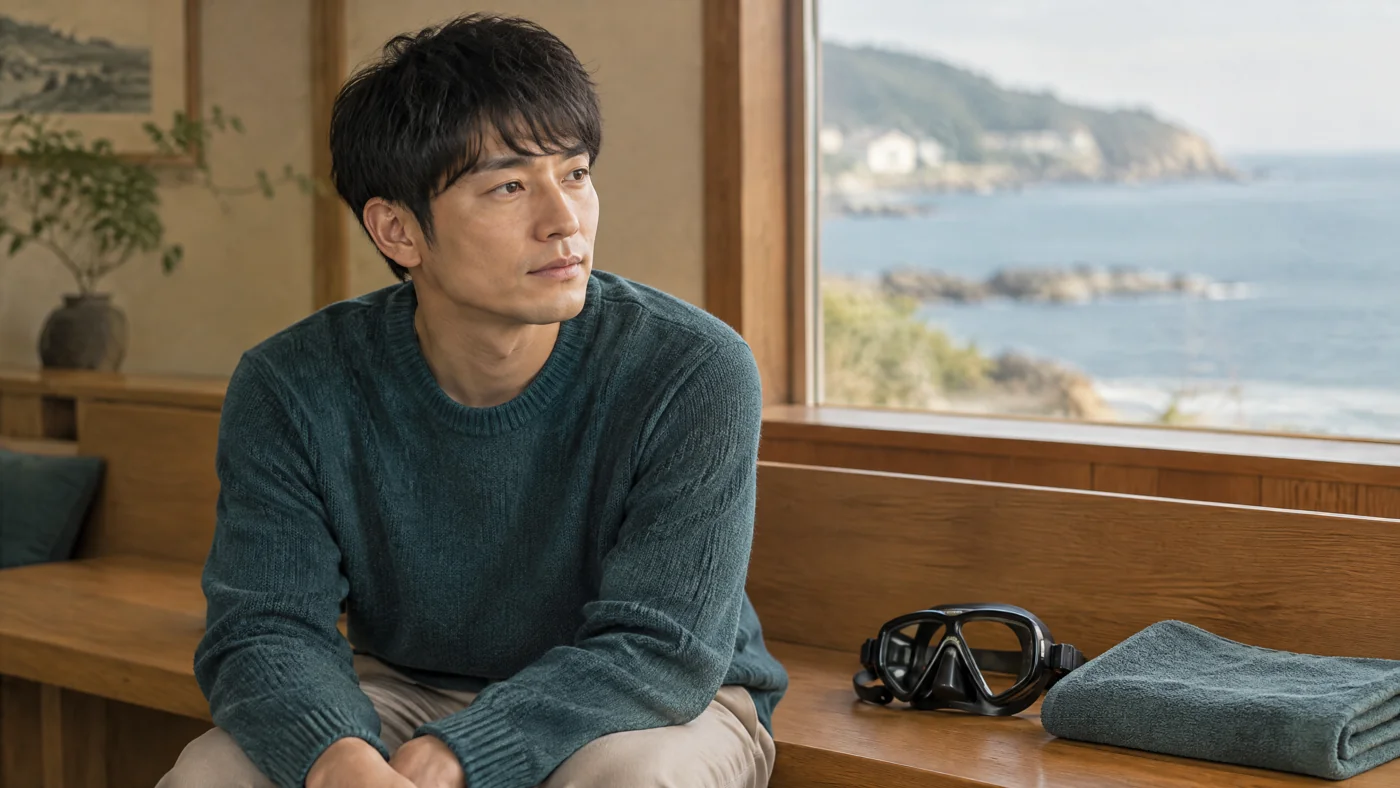
Start with what your hair does when damp and flattened. A long fringe may drop across your forehead, while a textured crop may simply lose its lift. A perm can look less defined after compression without requiring a new product routine on the boat. Tell your stylist which change bothers you most. The useful aim is an easier reset, not a promise that your hair will emerge untouched.
Keep the conversation about shape rather than automatically cutting everything short. Some men prefer enough length to restore their usual parting with their fingers once ashore. Others want less bulk around the sides because it feels untidy after changing clothes. There is no universal diving haircut. Ask how a proposed trim will look both air-dried and styled for work, so a single outing does not dictate your everyday appearance.
Longer hair needs a low-tension plan rather than a tightly pulled arrangement made in a hurry. Describe where you usually notice pulling, including around the temples or crown. Discuss hair management with the instructor during the equipment conversation on land; a stylist cannot approve arrangements around diving gear. Avoid adding unfamiliar clips or elaborate accessories just to preserve a look. Comfort and suitable equipment come before keeping every strand in place.
On departure day, separate your usual office styling from what the activity actually needs. An elaborate blow-dry may be wasted effort if you expect to wash afterwards. Keep the morning routine simple, and save any appearance-dependent finishing for the return. You can still look tidy without making your hair another item to protect all day.
A useful boat-day haircut is one you can reset gently, not one that demands a perfect reveal.
02
2. Ask about hood comfort without choosing thermal gear yourself
A hood belongs to the equipment discussion, not the salon shopping list. Ask the instructor what exposure protection is appropriate for the proposed activity and whether a hood is part of that arrangement. Mention your hair length and any previous snagging or pulling. Do not select equipment thickness from a weather forecast or a hairstyle preference. Air temperature alone is not a personalised equipment recommendation, and this article supplies no temperature threshold.
Give the instructor concrete observations rather than asking for a seal guarantee. You might explain that your fringe falls forwards when wet or that longer hair has previously felt caught during equipment changes. Let the instructor assess suitability and show any necessary handling in person. Do not modify a mask or hood, apply oils or grease to gear, or treat an ordinary swimming cap as a substitute for required thermal equipment.
Leave room for the answer to change your grooming expectations. A hood should not be treated as a way to keep hair dry, and your usual volume may not survive the day. That is an appearance issue, not a reason to compromise equipment. If your scalp is persistently sore or irritated, seek appropriate clinical advice rather than hiding the problem under a new hairstyle. A clinician handles health questions; the instructor confirms the activity and equipment.
03
3. Compare the whole boat day, including the wash afterwards
Before comparing outings, ask where your dry bag can be stored and whether fresh-water rinsing or changing facilities are available. Do not infer a shower from a boat photograph. Knowing that you may need to wash at home changes the packing list and your plans afterwards. A second dry towel may be more useful than a large styling kit, especially if the first towel will also be used after changing out of wet clothing.
Once those practical needs are clear, the Hong Kong boat dive price guide is a relevant next read for understanding the quote. Ask DiveHarbour to confirm the trip format, equipment inclusions, meeting arrangements and any personal storage provision in writing. Its current published policy states that all paid fees are non-refundable, with make-up sessions only subject to written conditions. A weather-dependent outing is not a guaranteed departure or an entitlement to a replacement date.
Plan the return journey with the same care as the outbound one. Ask for the estimated return, then leave a buffer before a dinner, appointment or work commitment that needs styled hair. Do not make a booking depend on completing a full wash and blow-dry at an unconfirmed venue. If time is tight, choose a realistic, low-effort finish and carry clean clothing rather than assuming the boat day will run to an exact timetable.
| Ask before paying | Why it matters for hair and clothing | If it is not confirmed |
|---|---|---|
| Where can personal bags be secured? | A clean towel needs a protected place | Ask for the crew's storage requirements |
| Is fresh-water rinsing available? | It determines whether the main wash happens ashore or at home | Plan a later rinse without improvising on deck |
| Are changing facilities available? | Dry clothing and hair supplies need a workable transition | Ask about suitable arrangements before committing |
| What is the estimated return? | A hair reset needs time beyond travel | Avoid a tightly timed appearance-dependent appointment |
04
4. Pack a clean reset kit, not a floating bathroom
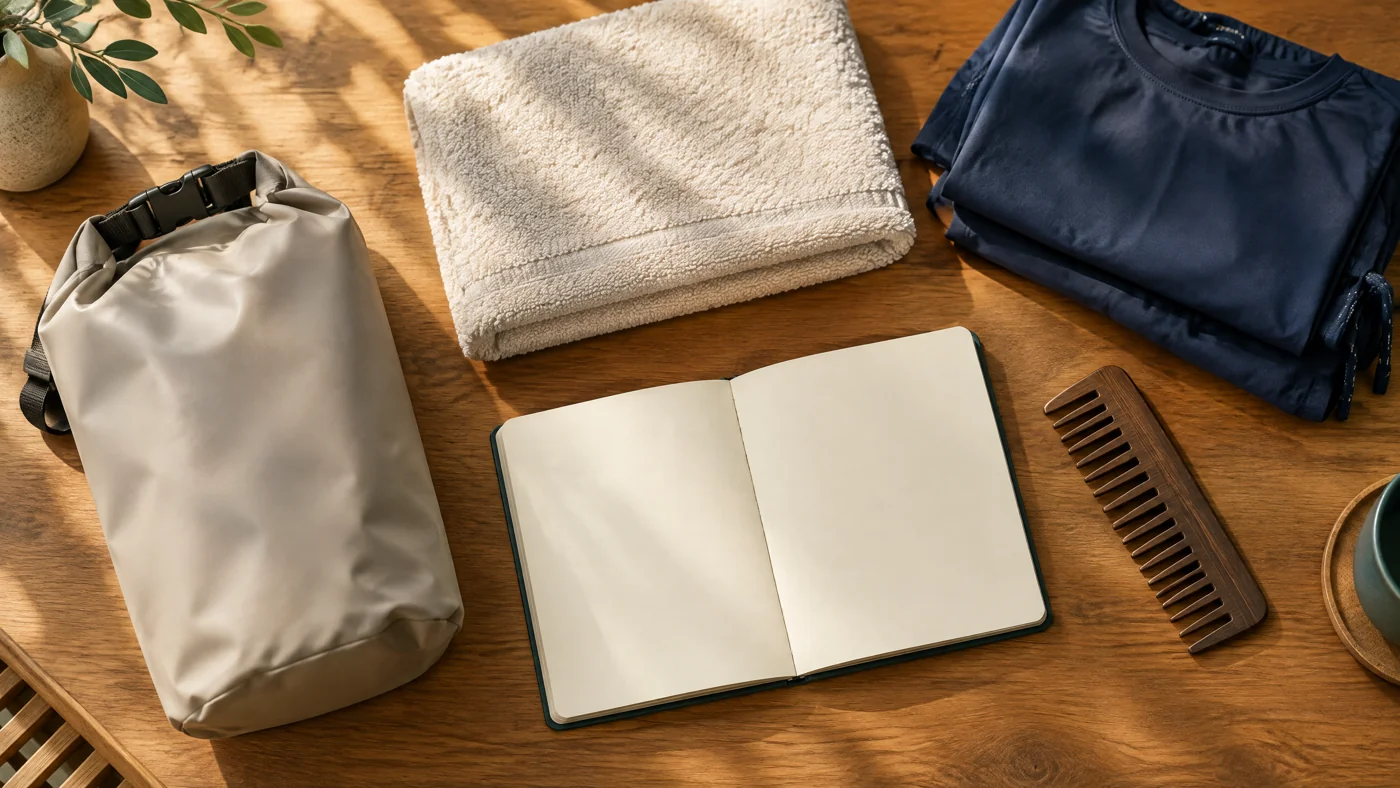
Separate dry essentials from everything expected to get wet. Keep a clean hair towel with your dry clothing, and give used towels their own washable pouch. A bag described as waterproof is not a reason to ignore its closure instructions or the crew's storage directions. Pack modestly enough that you can find what you need without emptying toiletries around other people's equipment. An accessible, orderly kit is easier to use when you are tired.
Where suitable fresh-water facilities are available, plan a rinse after the activity and use an appropriate cleansing routine for your hair. The American Academy of Dermatology notes that pool chemicals and sun exposure can damage hair, and recommends swimming-related rinsing and suitable hair care.[1] If your course includes pool sessions, account for those too. Do not assume that exposure happens only on the sea day or that extra styling product will prevent it.
Take only the products you actually need for permitted use ashore. A familiar cleanser and conditioner may be more practical than several leave-in experiments. Follow the venue's rules and product directions, and keep containers closed during travel. A biodegradable label does not establish that a cosmetic is appropriate to release into a pool or the sea. Apply your usual styling finish later, when you have a suitable place and enough time to use it properly.
Choose towel sizes for their separate jobs. A small hair towel saves bag space, but should not be expected to dry both your hair and body. On a cool day, finding that your only clean towel is already wet is an avoidable inconvenience. Keep the dry clothing together so changing does not require another full search through the bag.
| Bag zone | Useful contents | What to keep separate |
|---|---|---|
| Clean and dry | Hair towel, clothing and dry layer | Used towels and wet swimwear |
| Closed wash pouch | Familiar cleanser and conditioner | Loose toiletries near other equipment |
| Grooming pocket | Suitable comb or brush | Damp towel fibres and leaking bottles |
| Wet-item pouch | Used towels and clothing after changing | Anything needed clean for the journey home |
- Pack a dedicated clean hair towel separately from the towel used for your body.
- Carry a separate washable pouch for wet towels and clothing.
- Choose a familiar comb or brush suited to your hair, not an unfamiliar travel gadget.
- Keep small, securely closed wash products for permitted use at suitable facilities.
- Include a dry layer and allow room to repack without mixing wet and clean items.
The spare towel earns its space when it stays dry; the styling jar can wait until you are ashore.
05
5. Give your calendar room for both training and hair services
A fresh colour or perm appointment deserves its own planning conversation. Tell your stylist about the intended pool and sea sessions, any existing breakage and how your hair usually feels after washing. Ask for advice based on the actual service, product system and hair condition. There is no fixed waiting period in this article that guarantees swimming suitability after a chemical treatment. Hair-service advice and the activity provider's requirements remain separate decisions.
If work shifts or treatment appointments make a standard course diary awkward, read about a private scuba course with flexible schedule Hong Kong. That page is useful for preparing a scheduling enquiry, not securing any date you choose. Explain your available windows and ask which sessions are pool-based or sea-based. Instructor availability, venues, training requirements and conditions still govern the plan; private arrangements do not remove those constraints.
For a hypothetical example, a man maintaining a perm might prefer not to stack a salon appointment, pool session and evening event into one crowded day. He could ask about alternative date windows while leaving time for normal washing and drying. The point is not that the perm needs a universal recovery deadline. It is that a calmer diary makes individual care advice easier to follow and avoids relying on rushed, high-heat styling between commitments.
06
6. Match further training to your life, not to a tougher look
Owning a hood or tolerating flattened hair does not indicate readiness for a more demanding course. If you are already certified and considering another step, describe your current experience and learning goals to the instructor. Ask what the proposed programme involves and what equipment is required. From a grooming perspective, the useful question is whether you can maintain a simple wash routine across the actual sessions, not whether a rugged haircut makes you look prepared.
The advanced diver training Hong Kong overview can help you frame that conversation. Course names, prerequisites and requirements vary by pathway, so have DiveHarbour confirm the exact scope rather than assuming every advanced option is the same. Ask about session locations and equipment arrangements before buying anything. Your towel and hair-care plan should follow a confirmed programme, while eligibility and training decisions stay with the instructor.
Repeated sessions also make small grooming frustrations worth reporting early. If your fringe repeatedly bothers you or your hair feels pulled during equipment changes, raise the observation on land rather than experimenting in the water. Bring the same manageable care kit so you can judge what actually needs changing afterwards. Any continuing scalp discomfort needs appropriate medical attention; a different course, stronger conditioner or tighter hairstyle is not a treatment for it.
07
7. Dry gently and restore only the style you need
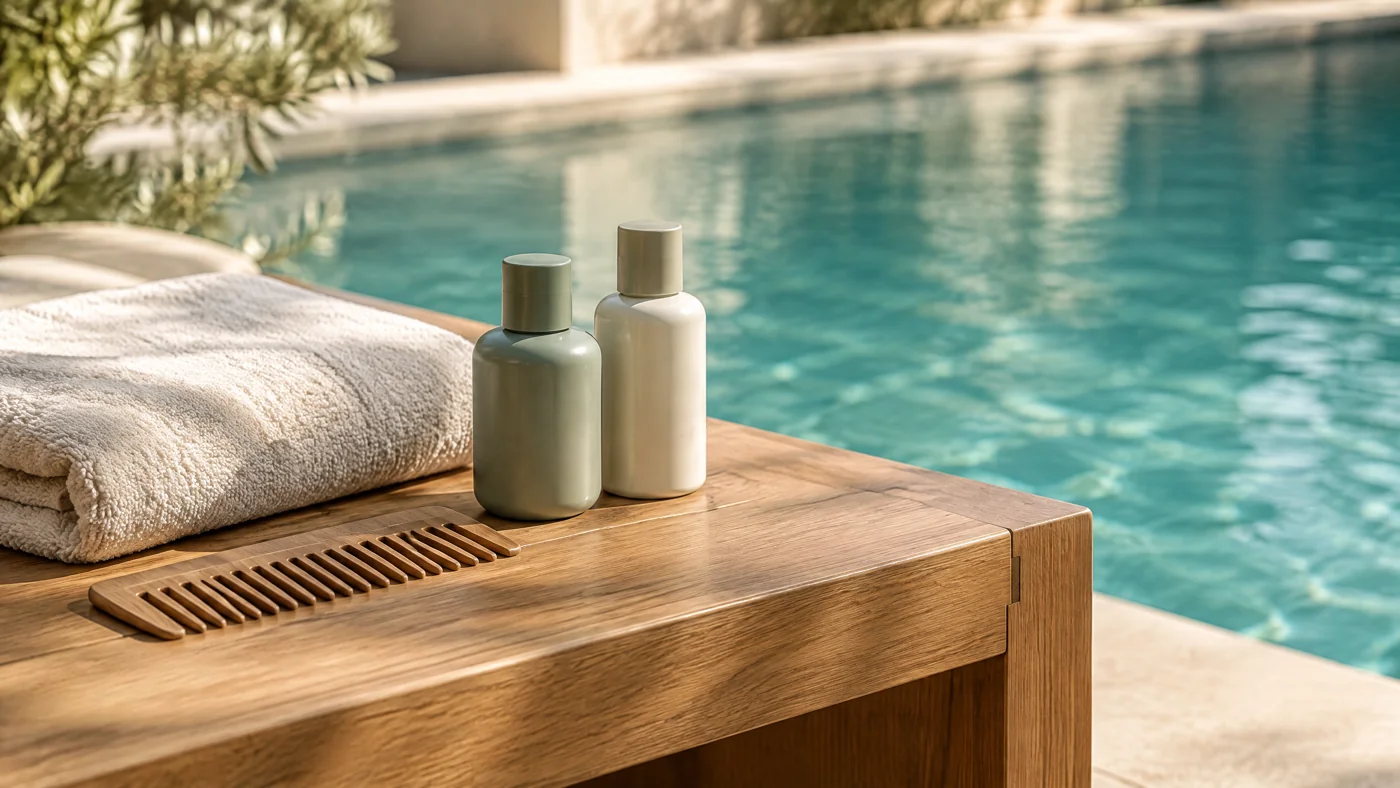
Once you have a suitable place to wash, avoid turning the towel into a scrubbing tool. Gently absorb water instead of rubbing vigorously. Choose detangling methods for your hair type rather than following one rule for everyone. The American Academy of Dermatology advises gentle washing, less damaging towel habits and appropriate handling of straight or curly hair, alongside limiting heat and pulling.[2] These are general care principles, not a guarantee against breakage or hair loss.
Restore a modest version of your normal style. A crop may only need its direction reset; curls may need careful separation rather than repeated brushing. If you use a dryer, favour low heat and avoid pulling hard to recover every millimetre of volume. Wait until you can see how your hair has settled before adding more product. The goal is a comfortable, presentable finish for the journey or next appointment, not a hurried salon-level reconstruction.
A changing room does not necessarily provide a dryer or permit personal electrical appliances. Check before packing one. If no suitable drying facilities are confirmed, keep the full styling session for home rather than planning around an assumed socket. That makes the clean towel and the time buffer more important than another piece of equipment.
Unpack the wet pouch when you get home and let towels and grooming tools dry appropriately. Then review the practical gaps: was the spare towel still clean, was the wash location workable, and did you leave enough time? Take haircut or styling questions to Canvas Texture and activity-related questions to DiveHarbour. A better next outing may need only a simpler fringe, a clearer facilities enquiry or a less crowded diary, rather than an entirely new look.
Sources and useful reading
Continue with hair and grooming
For a separate men’s own-hair discussion: Deep Hair Treatment HK
Continue with a related hair-and-water planning guide: Rescue-Course Preparation: Hair Comfort Is Not Rescue Skill
Read our hair styling background: Vit So and the Canvas Texture studio
Ask Canvas Texture about an easier hair reset
Bring Canvas Texture your men's own-hair styling questions, from a manageable fringe to caring for curls and resetting your everyday look. DiveHarbour-related activity, scheduling and equipment questions belong with its team, not a salon booking. Prepared by the Canvas Texture editorial team with AI assistance and public sources.
Canvas Texture · WhatsAppFrequently asked questions
Will a diving hood keep my hairstyle dry and intact?
Do not plan on that. Treat wet, flattened hair as a realistic outcome and ask the instructor to confirm suitable equipment. A hood is not a hairstyle-preservation accessory.
Should I cut my fringe short before a boat day?
Not automatically. Ask your stylist how your existing length behaves when damp and how easily you can restore it. Keep equipment suitability with the instructor rather than treating a haircut as the solution to fit questions.
Can I replace a hood with my normal swimming cap?
Do not substitute a swimming cap for required thermal equipment. Tell the instructor about your hair concerns and let them confirm the appropriate equipment for the activity.
How soon after a perm or colour service can I attend a pool session?
There is no universal guaranteed interval here. Ask your stylist about the specific products and your hair condition, then separately confirm activity requirements with the provider. Health concerns belong with an appropriate clinician.
Does a private schedule guarantee a replacement date if plans change?
No. Availability and conditions still need confirmation. DiveHarbour currently states that all paid fees are non-refundable; make-up sessions are only subject to its written conditions. Read those terms before paying.
Related journal articles
First Scuba Lessons: Keep Your Hair, Plan the Pool-Day Wash
Keep the haircut you want to live with; prepare for the wet-hair version of it.
Trying Scuba in Hong Kong: Prepare Your Fringe Before a Mask Fitting
Prepare the fringe you actually have, not the hairstyle you hope will stay unchanged in water.
Choosing a Hong Kong Diving School: A Men's Hair Planning Guide
Choose the learning environment with the instructor; choose an achievable hair routine with your stylist.

