One Day Baking Class: Hair for Adult and Family Workshops
For a baking workshop, choose a hairstyle that keeps your view clear and works with the studio’s required hair covering. Finish grooming before entering the food preparation area, rather than trying to preserve a complicated look throughout the class. A comfortable, contained style leaves your attention free for the demonstration.
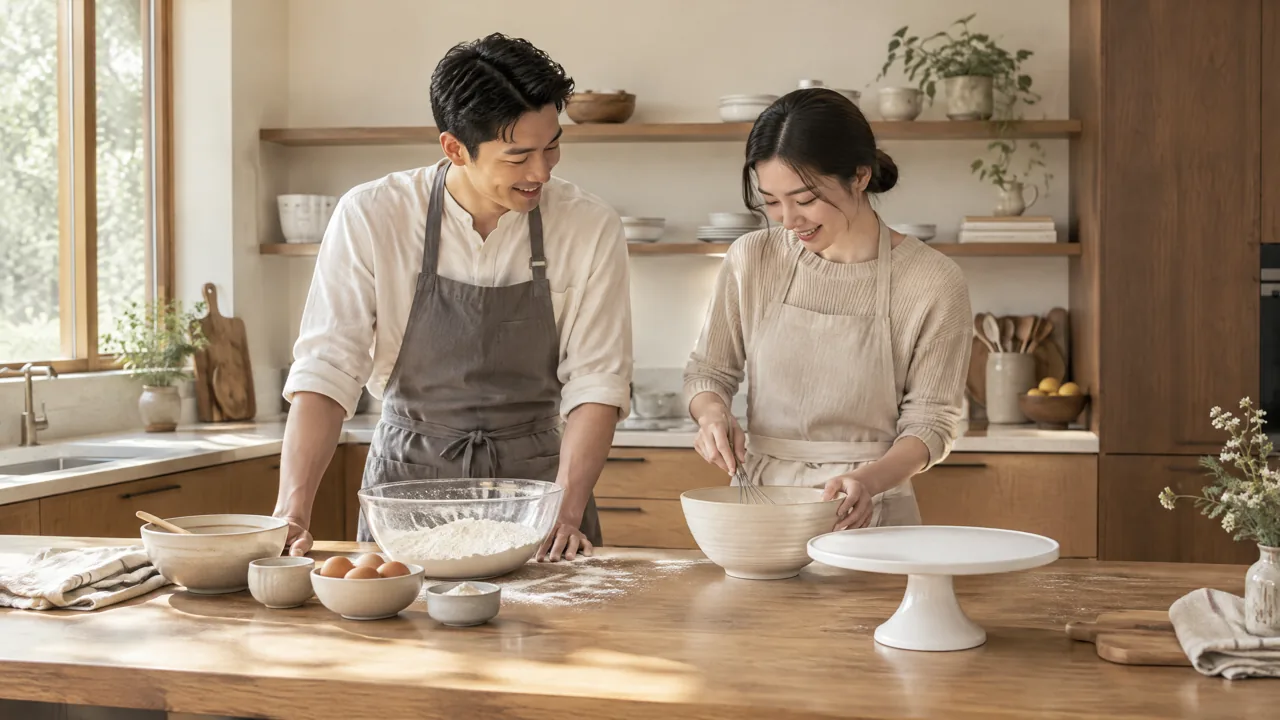
A Hong Kong Saturday might include an MTR journey, several hours at a shared bench and dinner with relatives afterwards. A father attending with his child also has supervision duties. These plans need different preparation from a quick portrait appointment, even when everyone hopes to take a good photograph.
This Canvas Texture guide connects men’s grooming with the practical decisions behind an adult or family workshop. Start with your role, then check the studio’s rules and the finished food’s journey. The aim is to look considered without letting hair, photographs or a promised gift compete with learning and care.
01
Map the whole outing, not just the lesson
Begin with three separate milestones: arrival, confirmed departure and your next commitment. A session’s advertised duration does not tell you when packaging will be complete. If dinner follows, leave room for the journey and the storage arrangements. Avoid making the workshop responsible for a schedule you have not discussed with its organiser.
YumYum’s One Day Baking Class is a starting point for exploring a compact practical learning session. Confirm the actual tasks, expected departure time and take-home arrangements for your chosen booking. The phrase ‘one day’ alone does not establish how much independent work you will do or when your food can leave.
Decide whether the outing’s main purpose is learning, time together or making a gift. Each priority changes what counts as success. A learner may value practising one difficult technique. A family may need a manageable pace. Someone promising a cake to relatives needs the finished quantity and handover plan settled first.
For a hypothetical father and daughter attending before a family meal, the meal should not depend on an unconfirmed cake. They could tell relatives that baking is their afternoon activity and only promise dessert once details are clear. That leaves space for a slower task, an imperfect finish or a necessary change of plan.
| Main priority | Confirm before booking | Preparation implication |
|---|---|---|
| Practise a technique | Which stages you perform yourself | Keep fringe clear for close demonstrations |
| Bake with a child | Your supervision and participation duties | Choose hair you will not keep adjusting |
| Make a gift | Your finished share and packaging | Leave time for the handover journey |
| Attend dinner afterwards | Departure and food storage instructions | Plan a separate grooming reset |
02
Choose a haircut that still works under a covering
Ask about hair requirements before deciding on your styling finish. A cap or other covering may flatten height at the crown. A hairstyle that looks balanced without a tall front is easier to manage afterwards. With longer hair, check whether the studio requires it secured as well as covered, rather than assuming one replaces the other.
Test your fringe at home by looking down at a tabletop and turning towards an imaginary demonstration. If it repeatedly falls across your eyes, arrange it differently before leaving. Short hair does not automatically remove the need for a covering. Follow the instructor’s requirements for your actual length and activity, including any facial-hair instructions.
The American Academy of Dermatology advises reducing excessive heat and avoiding continuously tight, pulling styles [1]. Apply that restraint to your preparation instead of repeatedly heating hair to rebuild volume. If securing longer hair feels uncomfortable, reconsider the arrangement. The guidance supports gentler styling; it does not certify a particular workshop hairstyle.
Use your usual manageable finish rather than experimenting with a demanding new look on the morning of class. Give yourself enough time to dry and arrange your hair without rushing. If you are considering a perm or colour change, ask your stylist about your hair’s condition and care needs. There is no universal preparation timetable.
A workshop-ready hairstyle earns its place by needing less attention, not by surviving every moment unchanged.
03
For adult learners, prioritise concentration over camera angles
An adult workshop can involve watching carefully, sharing a bench and taking turns. Hair that needs frequent checking adds another task during instructions. Before booking, distinguish between watching a technique and performing it. The right session gives you a chance to practise your chosen skill, rather than merely producing an attractive object for a photograph.
An Adult Baking Class can help you compare pastry preparation, dough handling and finishing as learning goals. Ask which steps each participant completes and whether components are prepared beforehand. That distinction matters if you want to repeat the process at home, especially when your own equipment differs from the studio’s.
If you attend with a partner or friend, discuss how you will share tasks before starting. One person should not become the permanent photographer while the other does all the practical work. Take turns where the instructor permits. Keep questions focused on the method, and leave personal styling adjustments for an appropriate break away from ingredients.
A hypothetical office worker learning cake finishing might choose to focus on hand position and pressure rather than speed. He could ask for permission to photograph the finished result later, not interrupt each movement. A low-maintenance side part would support that plan. Its value is fewer distractions, not any claim that a haircut improves baking ability.
04
For parents, separate your lesson from your supervision role
A family booking does not necessarily give the accompanying adult an independent lesson. You may be expected to help your child follow instructions throughout. Ask whether you are a learner, an assistant or an observer, and whether you need your own place. That answer should shape both your expectations and what you wear for the activity.
A Kids Baking Class offers a route for exploring child-focused activities rather than assuming an adult session suits everyone. Confirm the age criteria, accompanying-adult rules and responsibilities for the selected class. Also ask what happens when a child finishes early, needs a break or no longer wants to continue.
For an accompanying father with longer hair, a secure arrangement should remain comfortable when he bends to hear his child. Avoid choosing a look that requires both hands to repair repeatedly. Put spare personal hair accessories in your belongings, not on the workbench. Any adjustment during class should follow the studio’s hygiene and re-entry instructions.
Explain the sequence to your child in plain language before arriving: listen, do the assigned task, then wait for the next instruction. Agree that photographs come when the instructor allows them. If your child becomes tired, follow the agreed supervision arrangement. Their completed decorating task does not mean the family’s food is packed or departure is permitted.
05
Create a clear boundary between grooming and the workbench
Complete product application at home, away from food, and pack any comb inside a separate personal pouch. Do not spray hair products in the preparation area. On arrival, ask where bags and outerwear belong. Keeping personal items off the bench gives you usable working space and avoids treating the studio as a dressing table.
Hong Kong’s Centre for Food Safety lists cleanliness, separating raw and cooked food, and safe temperatures among its five keys [2]. These principles explain why a tidy-looking hairstyle is not the whole hygiene plan. Follow the instructor’s handwashing and handling procedures. Hair control is one preparation detail, not a substitute for clean hands or suitable food storage.
Make hair and apron adjustments before washing your hands for the task. If you subsequently touch your hair, phone or personal belongings, tell the instructor and follow the required cleaning procedure before resuming. Do not quietly continue because your hands look clean. The practical aim is to make the boundary easy to observe throughout the lesson.
For a family, explain where the child’s bag, drink and personal accessories should stay according to the studio’s rules. Keep the exit route clear rather than placing belongings beside your feet without permission. A compact bag is useful when travelling by MTR, but it still needs a designated place during the workshop.
06
Ask food questions before promising anyone a homemade gift
If your finished baking is intended for someone else, ask about their dietary requirements before choosing the session. Then request the actual ingredient information from the organiser. A workshop name or a photograph cannot establish suitability. Include fillings, decorations and any proposed substitutions in the conversation, rather than checking only the main cake mixture.
FARE explains that allergen cross-contact can involve invisible amounts of food protein, and cooking does not eliminate that risk [3]. Ask the studio about shared tools, preparation areas and ingredient handling when an allergy matters. Do not interpret removing a topping as making the remaining food suitable. These questions concern both participants and intended recipients.
Keep preference questions separate from allergy questions. Someone who prefers no nuts is not necessarily describing a diagnosed allergy, while an allergic recipient needs more than a flavour substitution. Likewise, vegetarian and gluten-free are different requirements. Relay the recipient’s actual needs accurately and avoid giving a personal assurance that the organiser has not supported.
If the studio cannot confirm an arrangement that meets the stated requirements, do not promise the baked item as an edible gift. A different activity or separately chosen present may be more appropriate. For children, discuss any relevant allergy-management needs with the organiser before booking. An attractive family photograph is not evidence that everyone can eat the result.
Making the gift yourself does not remove the need to ask what the recipient can receive and how it should be handled.

07
Treat packing and the journey home as part of the plan
Ask how many finished items belong to your booking, not just how many the recipe produces. Shared work may produce a shared quantity. If you hope to give separate gifts, confirm whether suitable individual packaging is available. Do not arrive with gift bags that assume dimensions, upright clearance or a packing arrangement you have not checked.
Get the storage and transport instructions for the actual finished product before departure. The answer should guide your route home and whether another stop makes sense. Do not leave temperature-sensitive food waiting while you browse shops or arrange portraits. If the required conditions do not fit your itinerary, change the itinerary or discuss another workable arrangement.
Allocate carrying responsibilities before leaving, especially when one adult must also supervise a child. A large cake box and a tired child can compete for the same attention. Keep grooming items inside your bag so your hands are available. Ask about the package’s handling needs rather than assuming any box can travel sideways or fit beneath a seat.
For a hypothetical family bringing their baking to grandparents, direct travel may be preferable to a restaurant stop. They would first confirm that the grandparents can receive and store it as instructed. If not, the family should reconsider the handover. A present is only useful when its recipient can manage the practical requirements attached to it.
| Detail | Question to settle | Decision it changes |
|---|---|---|
| Finished share | What exactly can our booking take home? | How many gifts to promise |
| Packaging | What package suits each finished item? | Who carries each box |
| Storage | What instructions apply to this product? | Whether another stop is workable |
| Recipient | Can they receive and store it as instructed? | Where and when to hand it over |
08
Take the photograph, then reset for the next occasion
Wait until the instructor identifies an appropriate photo moment and your food is secure. Ask before including other participants, and respect family preferences about children’s pictures. A finished-item photo can capture the work without turning the whole session into content production. Keep the frame clear of recipe details or personal information that others have not agreed to share.
For your own portrait, look for a clear front view and a relaxed three-quarter angle rather than rebuilding your hairstyle beside food. Let the apron and finished work explain the occasion. If your hair has flattened under a covering, that is a normal practical trade-off. A photograph need not disguise that you attended a hands-on workshop.
Make any grooming reset afterwards in a suitable place away from the preparation area. Check the fringe and side profile, and use a clean personal comb if needed. Do not assume you can remove the required covering for photographs while work continues. The instructor’s rules take priority over the image you planned to post.
For dinner afterwards, choose one achievable reset instead of trying to recreate a full salon finish. First make sure the food and your child, if accompanying you, are properly attended to. Then refresh your appearance. Thoughtful preparation means arriving at the next occasion present and organised, not spending the journey correcting a hairstyle that was unsuitable for the workshop.
- Write down the required hair covering and check that your chosen style fits before leaving home.
- Confirm whether the accompanying adult participates independently or supervises throughout the child’s session.
- Record the finished take-home share, packaging arrangement and product-specific storage instructions.
- Agree on a permitted photo moment and a separate place for any grooming adjustment.
Sources and useful reading
Continue with hair and grooming
For a separate men’s own-hair consultation: Korean Men's Perm
Continue with related occasion and grooming planning: Wedding Cake: Grooming and Corporate Cake Handover
Read our men’s hairstyling background: Vit So and the Canvas Texture studio
Prepare for the bench and the journey beyond it
Choose your workshop around the learning and supervision you actually need. Confirm its hair rules, finished share and food-handling instructions, then plan a simple hairstyle and an achievable outing. Leave the elaborate grooming for another occasion.
Canvas Texture · WhatsAppFrequently asked questions
Does a short haircut mean I can skip a hair covering?
No. Follow the studio’s requirements for the specific activity. Ask before attending, including any facial-hair rules. A short cut may be easier to manage, but it does not override the organiser’s hygiene procedure.
Can I attend a children’s workshop and learn my own recipe at the same time?
Do not assume so. Confirm whether your role is to supervise, assist or take a separate participant place. Ask who is responsible if your child needs attention during your own task, and what happens when their activity ends first.
Can I fix my hair between mixing and decorating?
Ask the instructor where and when personal adjustments are allowed. Keep grooming items away from the bench and never spray hair products near food preparation. Follow the required hand-cleaning procedure before returning to your task.
Can the cake from class be our dessert at dinner afterwards?
Only plan that once the finished quantity, departure time and product-specific transport and storage instructions are confirmed. Check the dinner guests’ dietary requirements too. If those details remain unresolved, arrange dessert separately rather than promising the workshop result.
Related journal articles
Hong Kong Catering Service: A Host’s Grooming Plan
A host’s hairstyle has done its job when it stops competing with the welcome.
Catering Packages: Compare Food and Grooming Budgets
Editorial principle: protect the meal and the host's preparation time before spending on extra variety or a more elaborate look.
Office Lunch Catering: Keep Hair Products off Food Tables
A prepared host gives hair products a home before giving lunch a place on the table.