Hair salon or hair stylist: what should you compare?
Compare both, but for different reasons. A salon tells you where the appointment happens and which services you can enquire about. The individual doing your hair matters for the design discussion and agreed work. Neither a broad menu nor an impressive professional title answers the key question: does the proposed change fit your hair, priorities and ordinary routine?
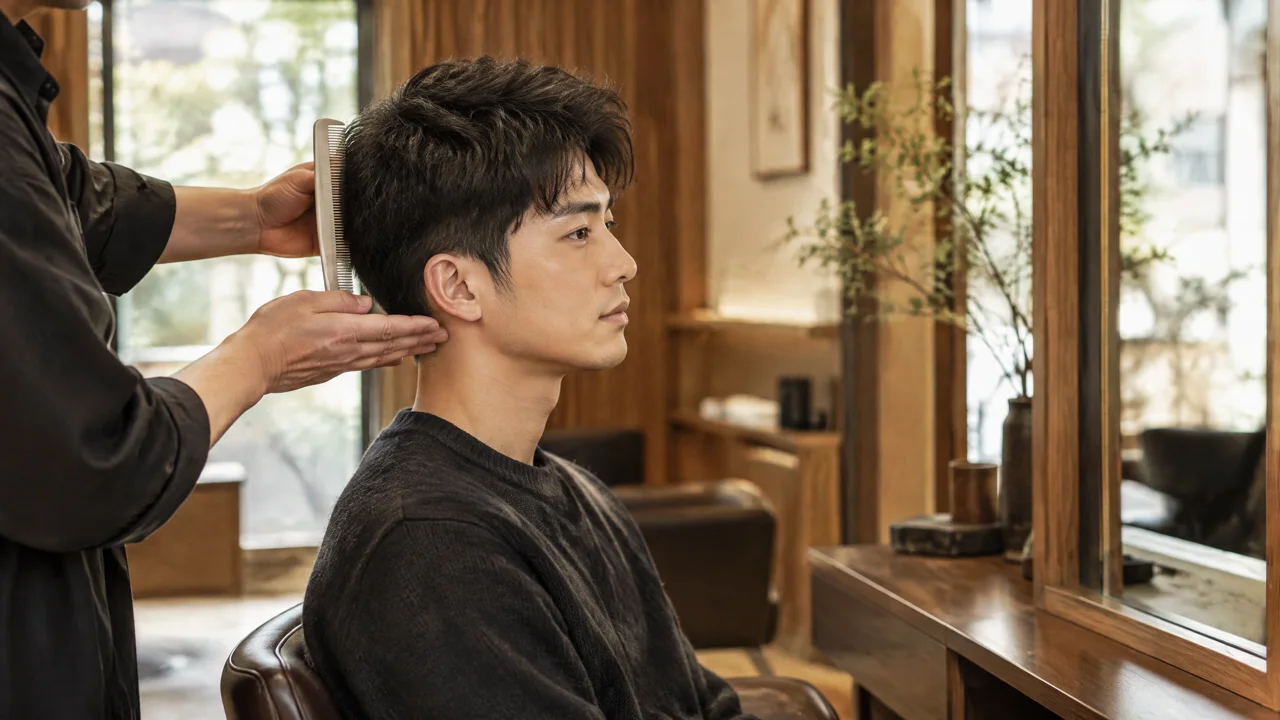
For men's hair, that fit can be surprisingly specific. You may want a closer outline around the ears without losing a longer fringe. You might like movement on top but dislike spending time shaping it each morning. These are separate decisions, even when a reference photograph combines them. Start by naming the change you need, then compare how each enquiry addresses it.
This guide separates business scope, design judgement and practical arrangements so you can make a more useful comparison. It does not rank salons or treat hairdresser and stylist as fixed levels of ability. Instead, it explains what to ask, how to interpret photographs and where maintenance creates a trade-off. Any scenarios below are illustrative examples, not accounts of client appointments.
01
Separate the salon's scope from the person's role
A salon is the setting and service structure; a hairdresser or stylist is a person whose work needs its own discussion. The titles often overlap in everyday use. Do not assume that one means cutting only and the other means creative design only. Ask who will discuss your goal, who will carry out the proposed work and how any handover would happen.
A wide menu can be useful when you have several goals, but it is not evidence that combining them is sensible. Cutting, colour, texture and cosmetic care address different changes. If the sides feel bulky, adding another service simply because it is available may not resolve the actual concern. First establish whether the issue is length, direction, movement or the way you finish your hair.
Vit So's hair salon guide separates these service directions, making it useful when you are unsure what kind of enquiry to send. Its published scope includes cutting, colour, texture and care. That range is a starting point for questions, not confirmation that every process suits your current hair or that a requested combination is available for your preferred visit.
Keep the business questions alongside the design questions rather than letting either replace the other. A clear proposal still needs an agreed fee and visit arrangements. Equally, a convenient location and suitable appointment window do not settle whether you want the ears exposed or the fringe retained. Comparing these layers separately prevents practical convenience from becoming an accidental design decision.
| Layer | Useful question | What it does not establish |
|---|---|---|
| Salon scope | Which service category addresses my main goal? | Suitability of every listed process for my hair |
| Individual role | Who discusses and carries out the proposed work? | Ability based solely on the title used |
| Appointment agreement | What work, fee and visit arrangements are confirmed? | A booking merely because an enquiry was sent |
A service menu tells you what to ask about. It cannot decide what your hair needs.
02
Define a good result through your ordinary week
Before comparing anyone's work, write down one improvement you would notice without a mirror-ready finish. Perhaps the fringe would stop touching your glasses, or the sides would require less resetting after your commute. Then identify something you want to preserve. A familiar parting, ear coverage or enough top length to push back gives the discussion a useful boundary rather than an open-ended request for change.
Use visible landmarks when describing length. Saying that the fringe should sit above the eyebrows is clearer than asking for it to be a little shorter. Explain whether that endpoint matters when the hair falls naturally or when it is brushed back. The same retained length can look different in those positions, so a measurement alone may not communicate the outline you have in mind.
Consider a hypothetical reader who wears glasses at work and likes longer hair around the temples. Cutting every area shorter might remove the contact with the frames, but also remove coverage he values. A better enquiry separates the troublesome contact point from the overall length. This example illustrates a design trade-off; it does not predict which cutting method would suit a particular person's hair.
Your willingness to maintain the finish also belongs in the comparison. Explain whether you use a dryer, your fingers, a brush or no styling tools. Mention headwear and how often you need to reset the front after removing it. A shape you enjoy maintaining may be a good choice for you, while the same routine could feel burdensome to someone who prefers to leave home immediately.
03
Read hairstyle photographs as evidence with limits
A finished photograph shows a visible look, not the whole appointment behind it. Lighting, head position, drying direction and product can influence what you see. A swept fringe might depend on styling rather than a lasting change in texture. When comparing images, identify the feature you like before treating the entire result as a practical option for your own starting hair.
Relevant starting conditions matter more than collecting many attractive images. Look for comparable length, natural movement and the areas where fullness is retained or removed. A photograph cannot reliably tell you how someone else's hair will behave after washing. Ask which visible details appear connected to the cut and which depend on the finish, and leave room for an assessment of your hair.
Two contrasting references can communicate more than a large inspiration folder. For example, label one image 'I like the longer front' and another 'these sides feel too exposed for me'. This is an illustrative way to express a preference, not a recommendation for either style. Separating an appealing feature from an unwanted boundary reduces the risk of asking for a whole look you do not actually want.
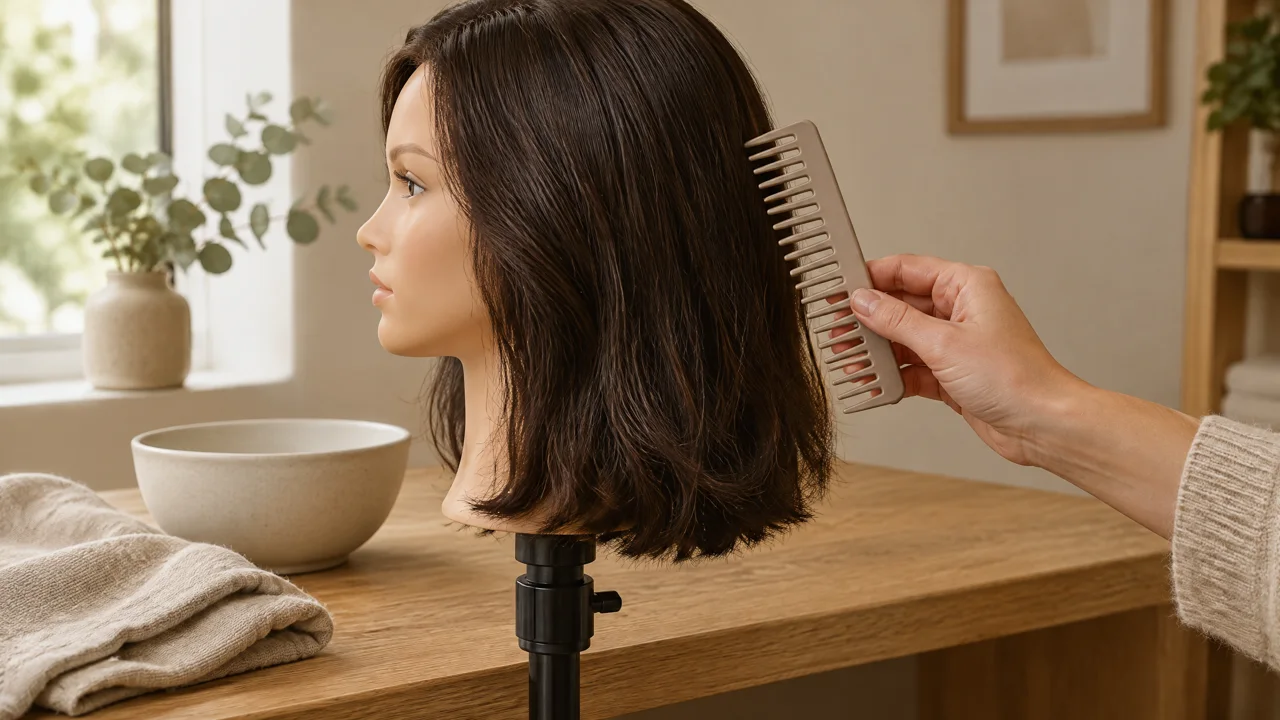
Keep current photographs of your own hair separate from inspiration images. Front, side and back views help show different concerns, especially when the crown and fringe behave differently. Say whether your pictures show air-dried hair or a styled finish. Concept illustrations can help explain proportion, but they should not be mistaken for evidence of client results or proof that a particular professional produced the look.
04
Compare the consultation through concrete questions
A useful consultation makes choices easier to understand without requiring you to learn technical vocabulary first. Try asking, 'What would change around the ears, and what would remain longer?' Follow with, 'Which part would I need to style at home?' These questions connect the proposal to recognisable features. They are more informative than asking whether a fashionable technique is generally better than another.
Vit So's hairdresser page frames the enquiry around what you want to keep, change and manage each day. It also records a background in Japanese precision cutting and commercial hair design. Read that as context for a conversation about shape and proportion, not a guarantee of suitability. Your current hair, intended finish and maintenance preferences still need their own discussion.
Notice whether an explanation distinguishes your priorities from optional changes. If you want a tidier outline but are undecided about colour, ask for those decisions to remain separate. You should be able to understand what is proposed before agreeing to additional work. When a term is unfamiliar, ask what visible change it describes and which area of your hair it would affect.
Communication language is another practical requirement to confirm directly. An English website does not establish spoken-English consultation availability. If you need to discuss technical details in a particular language, say so before travelling. Short written notes and labelled images can clarify preferences, but they do not replace agreement on the service. Do not interpret a polite acknowledgement as confirmation that every detail has been understood.
05
Separate shape, texture and colour before adding services
A fuller-looking top, closer sides and a different shade are distinct goals. A cut changes length and outline; a texture enquiry concerns movement or straightness; colour changes shade or placement. They may interact visually, but one is not automatically the answer to another. Describe the area that bothers you and how it behaves before selecting a service name from a photograph or menu.
Imagine a man who likes a reference with waves on top and tightly controlled sides. He rarely styles his own hair and has previously coloured the lengths. This hypothetical enquiry contains several questions, not one ready-made package. He needs to separate desired movement from side coverage, explain his existing processing history and ask which elements require daily finishing. The image alone cannot establish a suitable chemical plan.
Bring an approximate timeline of salon and home colour, bleaching, perming and straightening, including processes whose visible effect has faded. Describe which treated lengths remain and any previous product reaction. The American Academy of Dermatology explains that colouring and perming can leave hair dry and brittle.[1] That safety point supports taking hair history seriously; it does not prove that a proposed process is suitable or unsuitable for you.
Keep discomfort and unexpected hair changes separate from cosmetic design requests. Persistent scalp irritation or worrying hair loss needs appropriate medical advice, not a promise that a salon service will treat it. You can still discuss how you prefer your hair to look, but appearance and medical care are different conversations. If you are unsure about a chemical change, you do not need to commit before those concerns are addressed.
The most useful reference is not a demand for the whole picture. It is a clear description of the parts worth keeping.
06
Compare the first visit with the upkeep afterwards
A quotation is easier to compare when it covers the same proposed work. Ask whether cutting, finishing and any additional colour, texture or care are included, and which additions are optional. State your spending boundary before agreeing to a combination. A lower headline amount tells you little if the compared appointments have different scopes. Request clarification rather than assuming a broad service description means an all-inclusive visit.
Maintenance creates a second comparison that cannot be reduced to the initial fee. A closely defined outline may make regrowth more noticeable, while keeping more length may require a different approach to drying. Ask what changes you are likely to notice as the hair grows and what would prompt another enquiry. Avoid treating someone else's return schedule as a fixed requirement for your hair or preferences.
If a finish depends on repeated heat styling, discuss whether you genuinely want that routine. The American Academy of Dermatology advises reducing excessive heat and handling wet hair gently to limit damage.[2] Detangling advice differs with hair texture, so this is not a rule that all wet hair must never be combed. The practical design question is which finishing steps you are willing to repeat carefully.
For an illustrative comparison, one reader may enjoy brushing his fringe into place every morning, while another prefers finger-drying after exercise. Neither preference is inherently better. Ask how the intended shape would be approached with your own tools and habits, and which details may look different without a polished finish. This makes upkeep an explicit choice rather than an unexpected obligation after the appointment.
| Decision | Confirm before agreeing | Consider between visits |
|---|---|---|
| A closer side outline | Which areas become shorter or more exposed | Whether growing edges will bother you |
| A longer, directed fringe | The retained endpoint and intended finish | Whether you will reset its direction after washing |
| A colour or texture change | Proposed scope, hair history and complete fee | The care and finishing routine you are willing to follow |
| Several services together | Which changes are essential and which are optional | Whether a simpler plan would better suit your budget and habits |
07
Turn your comparison into a clear enquiry
Build the first message around a goal, a boundary and a routine. For example: 'I want the sides to look less wide, but I want to keep the front long enough to sweep back. I normally dry with my fingers.' This is an illustrative message, not a client quotation. Add current photographs and relevant hair history so the recipient can understand the starting point without guessing.
When exploring Vit So's approach, the hair stylist page connects individual hair goals with preparation for the single Sheung Wan location. The stated address is 252 Hollywood Road. Use that information to plan an enquiry, while confirming the service, consultation language and visit arrangements directly. It does not establish another branch, walk-in acceptance or availability on a date you have suggested.
Before setting off, check that the reply identifies the proposed work, date and arrival time. Mention a firm departure deadline rather than assuming that separate service names reveal the total visit length. If you change your goal after the first exchange, update the enquiry. An added colour or texture request may change the scope, so the earlier arrangement should not be treated as agreement to the extra work.
After the visit, judge the shape through your normal routine rather than only its first photograph. Note specific observations: the fringe falls forward after air-drying, or one side needs more resetting after headwear. If you enquire again, describe where and when the difficulty occurs. That information makes a follow-up conversation more focused than asking for a completely different style before identifying what did not work for you.
- Name one main change and one feature to preserve, using an eyebrow, ear or neckline landmark where helpful.
- Send current front, side and back views, and label the exact detail you like in each inspiration image.
- Describe your normal drying method, tools, headwear and previous chemical services, including home applications.
- Confirm the proposed work, full fee, consultation language and visit arrangements before treating the enquiry as a booking.
Sources and useful reading
Continue with hair and grooming
Continue with Canvas Texture’s male hair needs: Korean Men's Perm
Explore another related decision: Haircut, wash cut and blow dry: choosing the scope
Read the lead stylist’s background: Vit So and the Canvas Texture studio
Discuss your men's hair priorities with Canvas Texture
Ask Canvas Texture about a consultation for your men's hair needs. Explain what you want to change, what you want to keep and how you normally style your hair, so your priorities can be discussed.
Canvas Texture · WhatsAppFrequently asked questions
Is a hair stylist necessarily different from a hairdresser?
The terms often overlap. Neither title alone establishes skill, service scope or who will perform each part of an appointment. Ask about the work you need and how the consultation and service will be handled.
Should I choose the salon or the individual first?
Start with your main hair goal. Check that the salon accepts enquiries in the relevant service category, then compare how the individual discusses your starting hair and priorities. Confirm costs and practical arrangements separately.
How many hairstyle references should I bring?
A small, clearly labelled selection is more useful than a large folder without explanation. Include your current hair and distinguish what you like from what you do not want. A reference helps communication; it does not guarantee an identical result.
Does an English service page mean I can book an English consultation?
No. Written English information does not confirm spoken-English consultation availability. State your language requirement and ask how your technical preferences can be discussed before confirming a visit.
Related journal articles
Haircut, wash cut and blow dry: choosing the right family appointment
A family can share a journey to the salon without sharing the same haircut brief.

A layered haircut for busy days: choose what to keep
The most useful length is not always the longest strand; it is the shortest piece your routine still needs.
Women's haircut: choosing a bob or lob for everyday life
A useful length is one that works when you move, not only when you stand still for a photograph.