
First Scuba Lessons: Keep Your Hair, Plan the Pool-Day Wash
You do not need to cut your hair short simply because you are considering a first pool-based scuba lesson. Start with your current haircut, identify anything that already feels uncomfortable when wet, and plan a gentle wash afterwards. A trim is an option for your everyday style, not a requirement for learning. Questions about caps and equipment belong with the instructor before the session, rather than being solved with a drastic haircut.
For men with a long fringe, a textured crop or curls, the useful preparation is surprisingly ordinary. Know how your hair behaves without styling product. Pack what you need to rinse, wash and dry it comfortably. Allow time to leave the changing room without scrubbing your scalp or pulling a comb through knots. Your first pool day does not need to become a test of whether your hairstyle stays photo-ready.
This guide is about looking after your own hair and fitting a new activity around normal life. It does not teach diving or decide whether you can participate. Canvas Texture and DiveHarbour share website ownership; the connection is disclosed here, not presented as an independent recommendation. Canvas Texture handles men's own-hair styling questions, while DiveHarbour handles enquiries about its activities and current arrangements.
01
1. Decide whether you actually want a haircut
Look at what bothers you on an ordinary shower day before booking a salon appointment for the pool. Does your fringe stay over your eyes afterwards? Are the longer sections difficult to detangle? Or do you simply dislike seeing your usual volume disappear when it is wet? These are different concerns. A tidy-up might address your preferred outline, but it will not make wet hair behave like a freshly blow-dried style. Separate appearance preferences from questions about equipment comfort.
If your current cut works well at home, keeping it is a reasonable starting point. Tell your stylist that you are planning water activities and want an easy return to your normal look. Discuss the fringe length, how much daily styling you enjoy and which parts you would rather not shorten. There is no single men's 'diving haircut'. A close crop may suit your taste, while another man may prefer enough length to maintain his familiar side part or curls.
Consider a hypothetical man with a longer top and neat sides who wants to try one pool session. Cutting off the top would change his weekday appearance for longer than the activity itself. A better first decision might be to keep the cut and ask about the actual hair-and-equipment concern. Conversely, someone already unhappy with a heavy fringe may welcome a modest trim. The reason should be a useful haircut, not a promise that shorter hair makes the lesson suitable.
| Current situation | Own-hair option to discuss | What it cannot decide |
|---|---|---|
| You like your cut and can manage it after washing | Keep it and plan the wash afterwards | Whether equipment is appropriate for you |
| Your fringe already bothers you during daily grooming | A modest trim that preserves your preferred shape | Whether a mask will fit comfortably |
| Your longer curls take time to detangle | Keep useful length and simplify the drying plan | Whether you meet activity prerequisites |
| You were already considering a shorter style | Choose a cut you want beyond the pool day | Whether the session can go ahead |
A pool session is a reason to plan your wash, not an obligation to change your identity.
02
2. Understand your fringe and texture without extra tension
At home, notice your hair after a normal wash with little or no styling product. A fringe that looks controlled with paste may fall quite differently when clean and wet. Curls may group together, and a longer top may lie flatter than expected. You are observing your hair, not rehearsing equipment use. Knowing these changes helps you describe a concern clearly without assuming you need stronger hold, tighter tying or more product for the pool.
Avoid turning hair control into a tug-of-war. If you usually gather longer hair, pay attention to whether your normal hairstyle already pulls at the temples or feels sore. Do not choose an unusually tight arrangement just to make the hair seem immovable. The American Academy of Dermatology advises avoiding hairstyles that pull and reducing unnecessary stress on hair.[2] Bring the comfort issue to the instructor when discussing equipment; a salon can help with styling options but cannot approve that combination.
Your description can be simple: a long fringe, short sides with curls on top, or hair that tangles easily at the back. Mention any tenderness rather than treating it as a minor inconvenience to endure. A clear description is more useful than buying several accessories before knowing what is permitted. It also gives your stylist a practical brief afterwards: preserve the shape you like, reduce unnecessary daily pulling and find a finish that does not depend on aggressive brushing.
03
3. Ask about pool caps before buying one
A pool cap is a question to raise, not an automatic solution. The American Academy of Dermatology lists a swim cap among measures that can help reduce pool-related hair damage.[1] That general hair-care advice does not establish which cap, if any, is appropriate for a scuba lesson. Ask the instructor about the venue's rules and compatibility with the equipment being used. Do not assume a cap will keep every strand dry or that it will remove the need to rinse afterwards.
Explain if caps have previously felt tight, if your fringe is difficult to manage or if you worry about hair catching around equipment. Leave equipment selection and fitting to the instructor. An ordinary swimming cap is not a substitute for an instructor-specified hood, and changing a mask strap yourself is not a grooming fix. Avoid oils or grease on equipment. There is no reason to experiment in the water with something that could have been discussed before arrival.
For the wider activity enquiry, DiveHarbour's scuba diving course Hong Kong page is a useful next read once you have written down your hair-comfort questions. Ask its instructor to confirm eligibility, swimming prerequisites, equipment and the actual venue. A request for a pool-based start is not a confirmed booking or a guarantee of availability. Complete required health information honestly, and take individual health concerns to a qualified clinician; neither a haircut nor this article provides medical clearance.
04
4. Pack for the wash rather than a perfect hairstyle
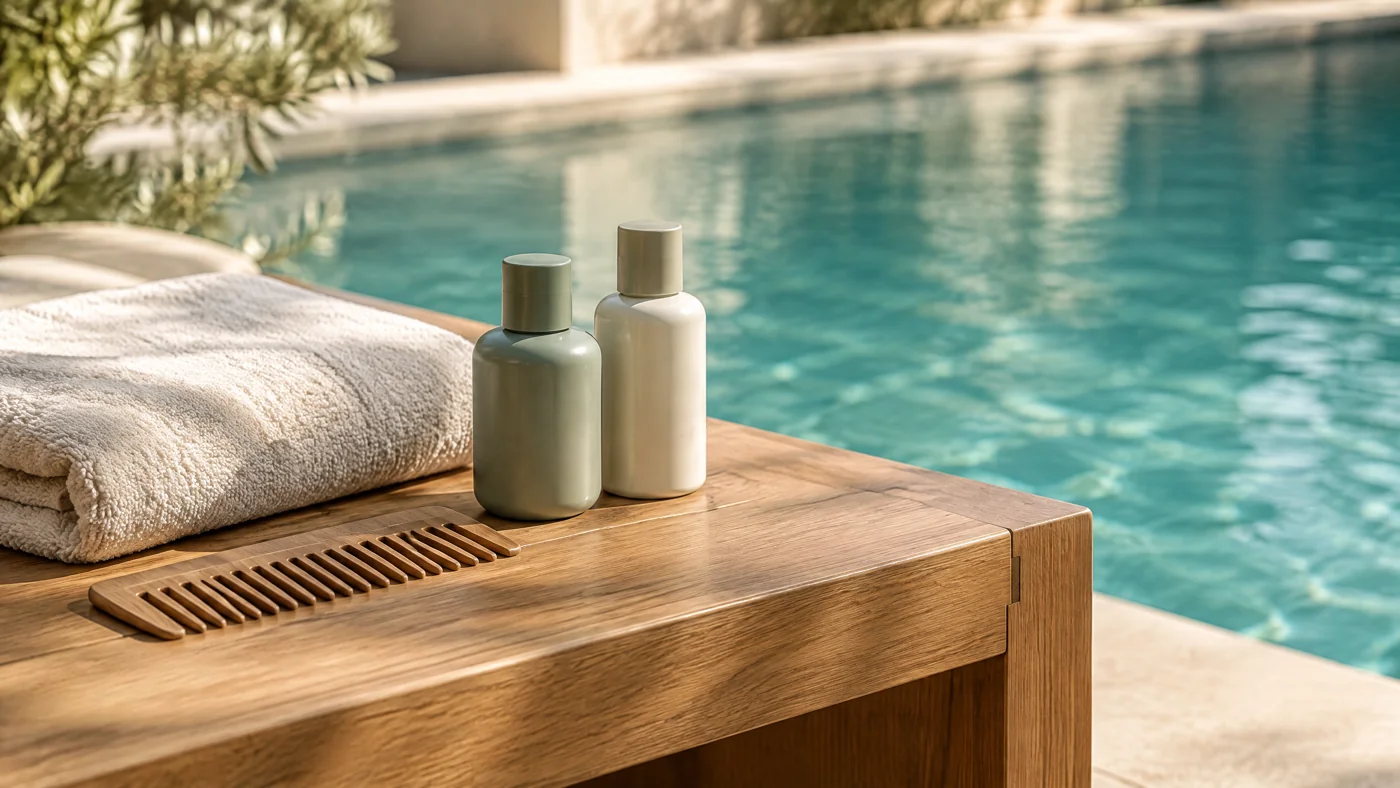
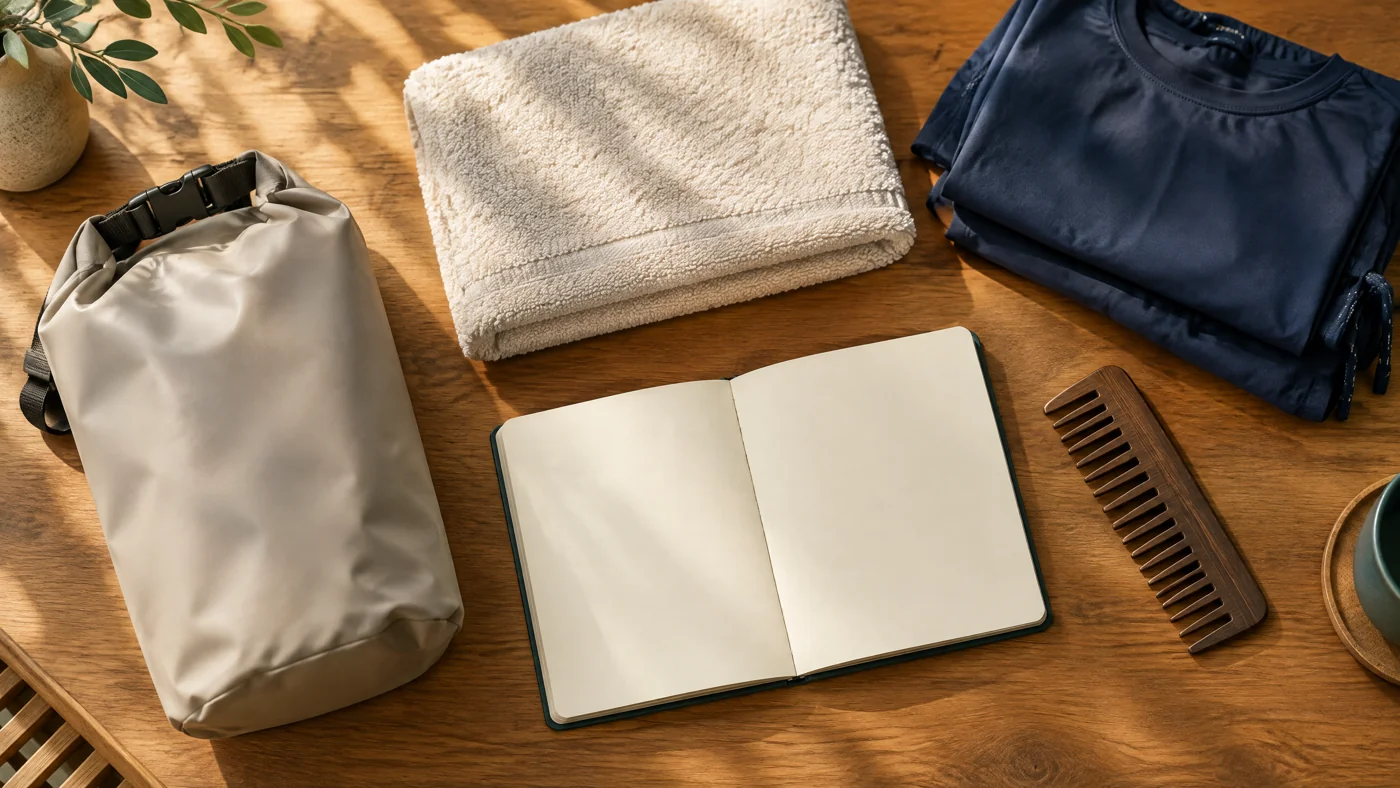
Think about the end of the session while packing. Ask whether you will have access to fresh water, a shower and an appropriate place to change, then pack accordingly. A soft towel and familiar wash products may be more useful than several styling jars. Keep wash items separate from wet clothing so they are easy to find. If the venue cannot offer the facilities you need, discuss the arrangements before committing rather than building your plan around an assumed changing room.
Product choice should follow your hair needs, the label and the venue's rules. Do not coat your hair with an unfamiliar oil or conditioner before entering the pool because a social post calls it protective. A cosmetic described as biodegradable is not automatically suitable for release into a pool or the sea. Keep any permitted grooming use to the appropriate washing or changing area. The aim is a manageable routine, not finding a product that supposedly makes water exposure consequence-free.
Pack around the style you can realistically restore. Someone with a simple crop may need little beyond washing and gentle drying; a longer curly top may need more time and a suitable detangling tool. That is a planning difference, not a competition to travel light. If you usually rely on a dryer, check availability rather than assuming one will be supplied. A simpler finish for the journey home can spare you a rushed attempt to recreate your full morning routine.
| When | What to arrange | Why it helps |
|---|---|---|
| Before packing | Confirm fresh-water and changing facilities | Avoids relying on an unconfirmed shower |
| In your wash pouch | Familiar permitted shampoo, conditioner and a suitable detangling tool | Keeps the routine straightforward |
| After the session | A soft towel and time for gentle washing | Reduces pressure to scrub and rush |
| For the journey home | Dry clothing and a realistic low-fuss finish | Makes a neat exit possible without elaborate styling |
- Confirm washing facilities and product rules before packing.
- Bring a soft towel you can use without vigorous rubbing.
- Choose a detangling tool suited to your hair texture.
- Keep wet clothing separate from clean wash items.
- Leave room in the day for drying and changing.
05
5. Make the post-pool wash gentle and unhurried
After leaving the water, rinse with fresh water when facilities permit and wash according to your hair needs and product instructions. Pool chemicals can damage hair, and the American Academy of Dermatology recommends rinsing after swimming along with suitable shampoo and conditioning care.[1] More force does not make the routine better. Work gently at the scalp rather than scrubbing the lengths together. If you want to consider a swimmers' shampoo, ask whether it suits your hair, especially if you already use colour-specific care.
Press or wrap with the towel instead of rubbing vigorously. Detangling should suit your texture: dermatology guidance distinguishes allowing straight hair to dry a little before gentle combing from combing textured or tightly curled hair while damp.[2] Avoid forcing a tool through resistance. Work patiently with a suitable comb rather than chasing speed, and ask your stylist to show a routine for your own hair if you are unsure. Wet hair does not need to be made perfectly smooth immediately.
When drying, favour a lower heat setting and minimise repeated pulling with a brush, in line with general advice to reduce heat-related damage.[2] You do not need maximum volume before leaving the venue. A comfortable, lightly finished style can be enough. Do not treat persistent scalp soreness, burning or unusual symptoms as a styling problem to cover with product. Seek appropriate clinical advice for ongoing discomfort; rinsing and conditioning are grooming measures, not treatment for hair loss or a scalp condition.
06
6. Keep colour and perm decisions separate from course dates
If you are planning a perm, bleaching or colour service near the session, tell your stylist before the appointment. Discuss the specific product, your current hair condition and the aftercare instructions. Do not rely on a universal 24-, 48- or 72-hour rule to declare your hair ready for the pool. Hair-service advice and permission to participate are separate decisions. The stylist assesses the hair service; the instructor confirms activity requirements, and a clinician handles relevant health questions.
The trade-off may be about convenience rather than cancelling a hairstyle. In a hypothetical week containing a first pool lesson, a chemical service and an important work event, moving the salon appointment could leave more room for aftercare and an unrushed wash. Alternatively, you may prefer postponing the activity. Bleached hair deserves particular thought because pool exposure and sun can add damage.[1] There is no benefit in stacking commitments so tightly that you cannot follow the personalised advice you receive.
To understand the commitment before arranging salon dates, read DiveHarbour's guide to learn to scuba dive in Hong Kong. Ask whether you are considering an introductory experience or a certification course, and obtain the current session arrangements in writing. Its destination website currently states that all paid fees are non-refundable; make-up sessions are only subject to written conditions. Do not schedule a hair service on the assumption that an activity can be moved freely, or that a replacement date is guaranteed.
A workable diary gives hair aftercare and activity arrangements their own space.
07
7. Plan the journey home and the next useful question
A first pool day is easier to fit into city life when the return journey is part of the plan. Decide whether you need to look polished afterwards or can accept a simpler finish. If you have a meeting or dinner, leave enough space for changing and drying rather than expecting wet hair to settle into its usual shape on the commute. Pack a separate bag for damp items so your clean clothing and grooming tools remain usable when you need them.
Afterwards, notice what your hair actually needed. Was the fringe inconvenient once wet? Did detangling take longer than your usual shower routine? Did you pack products you never used? These observations can inform a salon conversation without becoming a claim about how all men should wear their hair. Keep equipment discomfort separate and report it to the instructor. You can refine your wash pouch or discuss a small trim while still keeping the hairstyle that feels like you.
If you remain interested in the activity, Hong Kong scuba lessons for beginners explains the lesson enquiry and the distinction between an experience and a qualification. Take DiveHarbour your questions about learning pace, current prerequisites and confirmed facilities. Take Canvas Texture a different question: how can your own hair be easier to wash, handle gently and style around your week? Keeping those conversations separate makes the next decision more useful, without asking a salon to act as a diving instructor.
Sources and useful reading
Continue with hair and grooming
For a separate men’s own-hair discussion: Deep Hair Treatment HK
Continue with a related hair-and-water planning guide: SSI Weekends and Perm Care: Leave Room for Cleaning
Read our hair styling background: Vit So and the Canvas Texture studio
Make your own hair easier to manage
Ask Canvas Texture about men's own-hair styling, fringe length and a gentler daily grooming routine that fits your week. DiveHarbour-related activity questions belong with DiveHarbour, not the salon. Editorial credit: Canvas Texture editorial team, with AI assistance and public sources.
Canvas Texture · WhatsAppFrequently asked questions
Do I need short hair for a first pool scuba lesson?
Not simply because you are trying the activity. Choose a haircut for your own daily preferences. Explain fringe or tangling concerns to the instructor, who must confirm appropriate equipment and participation requirements.
Should I buy a swimming cap before enquiring?
Ask first. Venue rules and the equipment being used matter. A cap is not a guarantee of dry hair, and an ordinary swimming cap must not be treated as a substitute for an instructor-specified hood.
Can I put leave-in conditioner on before entering the pool?
Do not assume it is permitted or environmentally suitable. Follow the product instructions and venue rules, and keep grooming products to approved washing or changing areas. Avoid putting oils or grease on equipment.
How soon after a perm or colour service can I attend?
There is no universal waiting period that guarantees suitability. Ask your stylist about the particular service and your hair condition. Separately confirm the activity requirements with the instructor, with health concerns handled by a clinician.
Can Canvas Texture arrange the lesson or approve my health form?
No. Canvas Texture offers men's own-hair styling consultation. DiveHarbour handles its activity enquiries and current booking conditions. Complete health information honestly and seek a qualified clinician's assessment when required.
Related journal articles

Trying Scuba in Hong Kong: Prepare Your Fringe Before a Mask Fitting
Prepare the fringe you actually have, not the hairstyle you hope will stay unchanged in water.
Choosing a Hong Kong Diving School: A Men's Hair Planning Guide
Choose the learning environment with the instructor; choose an achievable hair routine with your stylist.
PADI eLearning and Men’s Haircare: Plan Study Time Around Pool Days
Flexible theory is useful when it creates breathing room around water days, not when it hides the time needed afterwards.

