Wig Shop Kwun Tong: Plan a Useful Sample Visit
A useful wig sample visit starts with a clear agenda: compare the hair outline, check comfort and leave with written questions answered. Confirm the appointment and relevant samples before travelling to the sole Kwun Tong showroom. You do not need to settle on a purchase during the visit. A successful first appointment can simply establish which coverage and styling choices deserve closer investigation.
Focus on details that change your decision: fringe position, temple coverage, crown height, remaining hair and the care a particular sample requires. Material names alone cannot settle those questions, and a display sample may not represent the exact item available to order. Ask which features you can assess that day and which depend on confirmed specifications, measurements or a later fitting.
For readers who already have a recognisable haircut, the central question is what should remain familiar. That might be a narrow outline around the ears, a forward fringe or modest volume rather than a dramatic transformation. The agenda below separates appearance, comfort and ordering decisions so that an attractive first impression does not crowd out practical details. Bring a companion if helpful, but keep the final priorities your own.
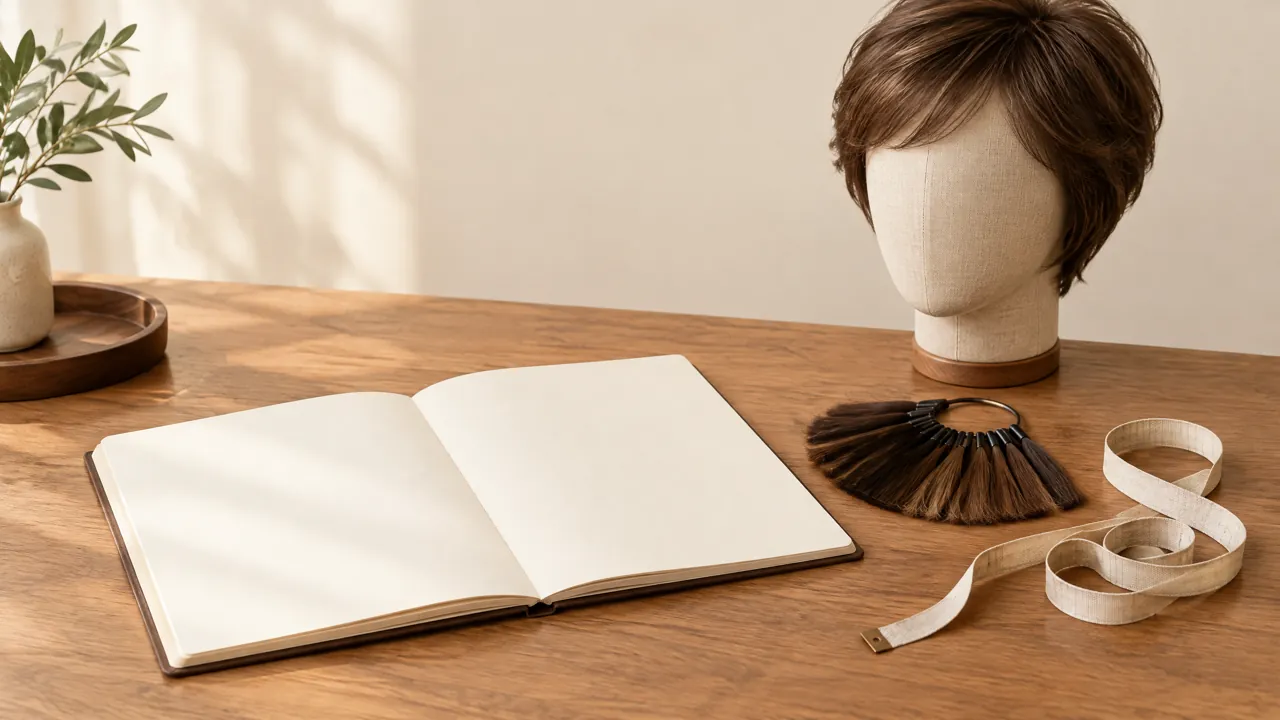
01
1. Set the question before booking the visit
Start with one sentence describing the problem you want to investigate. For example: ‘I want to understand whether a lighter fringe can preserve my usual outline without adding excessive crown height.’ This is a styling brief, not a diagnosis or a commitment to a particular product. Add two priorities and one compromise you could accept. A shorter morning routine might matter more than changing the parting every day; a familiar silhouette might matter more than extra fullness.
For an overview of what to ask before arranging a visit, use the wig shop Hong Kong page as an enquiry starting point. OwnStrand is a related brand under the same owner as Canvas Texture, rather than an independently endorsed retailer. Its sole showroom is in Kwun Tong; enquiries from other Hong Kong districts concern travel there, not local branches. Confirm sample availability, appointment arrangements and whether your particular coverage question can be explored before setting off.
Prepare a small reference pack rather than a folder of unrelated hairstyles. Include a familiar photograph and one proposed change, then explain what each image demonstrates. Keep filters and heavily edited images out of the comparison. If you usually wear glasses, bring them; their arms can affect how the side outline sits. Record your normal products and grooming routine as well, because an appealing shape is less useful if maintaining it requires a routine you cannot realistically follow.
- One familiar photograph showing the fringe, temples and overall outline.
- One reference for a change, with the specific feature identified.
- Your usual glasses and a note of your normal styling routine.
- Three unanswered questions to carry into the appointment.
02
2. Give each part of the appointment a job
Ask to organise the discussion in stages rather than moving immediately from one attractive sample to another. First explain the brief and confirm which options are relevant. Next compare appearance, then assess fit and handling separately. Finish with the order information and any unresolved questions. This sequence prevents a flattering cut from being mistaken for evidence of comfort. It also lets you notice when two samples differ in several ways, making a direct comparison less reliable.
A sample can answer some questions well and others only provisionally. It may demonstrate a texture, colour direction or outline without matching your eventual size or coverage. Ask what the sample represents before drawing conclusions from it. Where more than one relevant sample is available, compare the same feature across them: fringe position against fringe position, not one sample’s colour against another’s comfort. If only one is available, document what remains untested rather than assuming the alternatives would perform similarly.
Reserve the final part of the conversation for repeating your understanding back in ordinary language. Describe the proposed outline, the product category and the care you expect to undertake. Invite corrections while the sample is still in front of you. If the information is unclear, separate ‘confirmed today’ from ‘needs a reply’. An appointment that leaves one clearly framed question can be more useful than a rushed choice made because you feel the visit should end with a transaction.
| Stage | Question to resolve | Useful record |
|---|---|---|
| Brief | Which existing features should stay recognisable? | Two priorities and one acceptable compromise |
| Appearance | What changes at the fringe, temples and crown? | Permitted photographs under comparable conditions |
| Comfort and handling | What feels wrong, and what care is demonstrated? | Pressure points and model-specific instructions |
| Order discussion | What is confirmed for the proposed item? | Written specifications and unresolved questions |
03
3. Compare the whole outline, not just the front hairline
Look at the front, side and rear views before judging the result. A fringe may look convincing straight on while the crown feels disproportionately tall beside your usual sides. Notice where the outline becomes widest and whether that suits the shape you wanted to preserve. For someone accustomed to a compact men’s haircut, a fuller sample is not automatically better. Ask which apparent differences come from the sample’s styling and which would require a different density, length or construction.
Use your familiar photograph as a reference for proportions, not a promise of an exact recreation. Cancer Research UK suggests that photographs of a previous hairstyle can help when choosing a wig, and notes that a higher price does not necessarily mean a more realistic appearance.[1] Although its guidance is written in a cancer context, these comparison points are useful for a sample agenda. They do not establish the suitability or quality of any particular brand or item.
Keep the comparison conditions as consistent as possible. With permission, take photographs from similar angles, using the same camera position and avoiding beauty filters. Check how the outline works with your glasses and usual head position, not only a carefully arranged pose. Do not trim your remaining hair beforehand simply to match an unconfirmed sample. Discuss whether blending might be needed later, and distinguish a reversible styling adjustment from a cut you would have to grow out.
Judge the shape you will live with, not the pose that makes the sample look best.
04
4. Plan travel and make comfort a separate check
For travel to the sole showroom, the wig shop Kwun Tong page is the relevant contact resource. The verified location is Unit 2103, Li Po Time Centre, 50 Hoi Yuen Road, Kwun Tong. Confirm the appointment, current access instructions and samples before travelling. Someone coming from Mong Kok, Sha Tin or another district is visiting this Kwun Tong location, not a branch in their own district. Allow enough flexibility that you need not rush the closing questions.
During any agreed try-on, describe sensations precisely: pressure near the temples, movement at the back or pulling against remaining hair. Ask how the fit is being adjusted and whether the sample differs from the item under discussion. A brief comfortable impression cannot establish all-day comfort, exercise suitability or wear during sleep. Those uses require specific confirmation for the proposed product. If a secure feeling relies on a particular attachment, ask what it involves rather than assuming fitting includes installation.
Pain is not a useful test of how secure a style is. The American Academy of Dermatology warns that sustained pulling from tight hairstyles can damage hair, and advises acting on pain or irritation rather than tolerating it.[2] Stop a check that causes discomfort and explain where you feel it. This does not diagnose a sample or prove any attachment method universally safe. If there is a persistent scalp concern, seek appropriate professional assessment instead of treating a shopping visit as medical advice.
05
5. Rehearse an ordinary morning, not a perfect display
Ask for an explanation of how the proposed style would be maintained between appointments. Specify your available time, whether you normally air-dry your hair and how often you change the fringe direction. Human hair and synthetic hair are distinct options, with different care considerations; the label alone does not supply complete instructions. Any use of heat must follow the manufacturer’s guidance for that particular item.[1] Ask for the relevant instructions rather than borrowing settings from your own hair or another product.
Turn the demonstration into questions about actions you can repeat. Which brush is appropriate? How should the piece be supported during care? Which products are suitable for the specified material and construction? Ask whether the displayed finish depends on techniques you have not used before. If it does, decide whether learning them is acceptable or whether a simpler outline better matches your routine. Do not assume the showroom’s styled sample will return to that finish without work after every wash.
Consider the surroundings in which you will actually use the style. Glasses, collars and habitual head movements can change how the outline appears or feels. Warm weather may make care and comfort questions more important, but it does not justify a blanket claim that a named base will suit everyone. Similarly, ask about cleaning after perspiration without assuming swimming is permitted. Your aim is a specific care plan for the proposed item, with unsupported uses left clearly outside the agreement.
A convincing outline still needs a maintenance routine that fits an ordinary morning.
06
6. Convert impressions into an orderable specification
Before discussing an order, identify exactly what has been proposed. A full wig, a topper and a men’s hairpiece are not interchangeable names. Record the product category, coverage, material, colour direction and any construction details the seller confirms. Note which features were visible in the sample and which are proposed changes. If grey blending matters, request confirmation of the available proportion and placement for that order. Do not treat a general catalogue reference as proof that a particular combination can be supplied.
Ask for a written quotation that separates the item from any measurements, cutting, fitting or maintenance services included. Clarify whether later adjustments have limits, what happens if the confirmed specification changes, and the applicable order and return terms. Do not infer a universal right to return a customised item from ordinary retail habits. Lead time should also be attached to the specific process being quoted. A production estimate is not automatically a delivery promise or a date when every follow-up service will be complete.
Use the decision table below to choose a next action, not to score the salesperson. You may have enough information to proceed, enough to reject an option or too little to choose. The last position is legitimate. Write down the missing evidence and ask who will provide it before any payment decision. Avoid compensating for an unresolved fit concern by accepting a more attractive colour, or overlooking unclear terms because the sample photographs well. Different uncertainties need different answers.
| Finding | Sensible next action | What would resolve it |
|---|---|---|
| Outline works; specifications remain unclear | Request written item details before deciding | Confirmed material, coverage and proposed changes |
| Comfort is uncertain | Pause and ask whether another fit assessment is appropriate | A clear explanation of fit and remaining limitations |
| Care demands exceed your routine | Explore a simpler style or a different relevant option | A maintenance plan you can realistically follow |
| Samples do not address your main question | Arrange clarification rather than ordering from resemblance | A relevant sample or an explicit account of what cannot be tested |

07
7. Leave with a brief that survives the journey home
If the discussion moves towards a made-to-measure option, the custom wig consultation Hong Kong page provides a route for asking about samples and measurements at the sole Kwun Tong location. Distinguish an enquiry from a confirmed arrangement. Custom work should not be assumed to solve every issue raised during a sample visit. Ask what can change, what stays fixed and which appearance or comfort questions cannot be answered until a later fitting of the proposed item.
Soon after the appointment, make a short record while the differences are still clear. Summarise the outline you preferred, the compromise you accepted and the question you did not resolve. Keep sample identifiers beside any permitted photographs so that a later message refers to the correct option. If a companion came along, ask what they noticed before sharing your conclusion. Their observations may reveal a missed side view, but they should not replace your own judgement about comfort or daily care.
Separate the wig decision from any work on your remaining hair. You might want advice about keeping the sides balanced, softening a fringe or retaining a familiar silhouette while you continue comparing options. Those are useful questions in their own right. Do not change your original haircut just to make an uncertain purchase seem more settled. The visit has done its job when you can explain the proposed choice, its limitations and the next step without relying on a vague impression.
Sources and useful reading
Continue with hair and grooming
If your question concerns styling your own men’s hair, continue with: Korean Men's Perm
Compare a related selection decision: Wig prices in Hong Kong: plan the purchase in stages
Read our male-hair styling background: Vit So and the Canvas Texture studio
Keep your own hair outline in focus
For advice on your existing fringe, sides or overall men’s hairstyle, ask Canvas Texture about an own-hair styling consultation. Bring your familiar reference photograph and explain which proportions you want to preserve.
Canvas Texture · WhatsAppFrequently asked questions
Should I arrive with a finished hairstyle in mind?
Bring a direction rather than an inflexible design. Identify two familiar features you want to preserve and one change you would consider. This makes comparison purposeful without assuming every reference can be reproduced by the available samples.
Can I use a sample visit to choose a grey blend?
You can discuss the visual balance, but confirm the available grey proportion, placement and material for the proposed order. A sample or photograph does not establish that an identical blend is available or that every visible feature can be customised.
What if I am not comfortable making a decision that day?
Leave with the confirmed specification, any quotation and a clearly written list of unresolved questions. Check applicable terms before any payment. A first visit can be useful without producing an immediate purchase, particularly when fit or care requirements remain uncertain.
Should I cut my own hair before comparing samples?
Avoid making an irreversible change just for an unconfirmed sample. Explain how you normally wear your remaining hair and ask whether blending might be relevant later. Any separate haircut decision should preserve the outline you actually want, not merely accommodate a display style.
Related journal articles
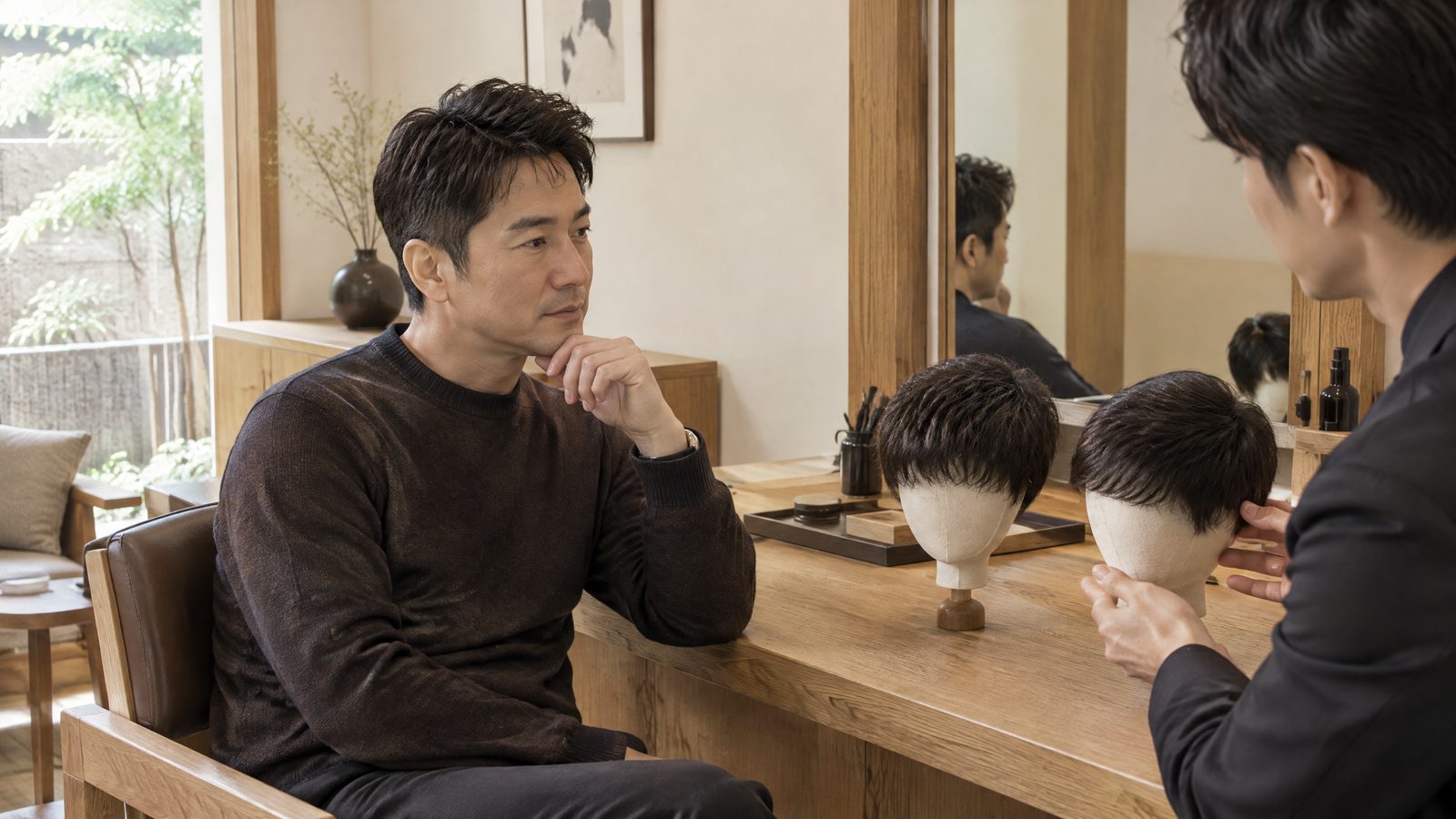
Men’s Hairpieces or a Perm? Compare Coverage and Shape
Choose a perm when enough existing hair remains and movement is the main goal. Choose a hairpiece when a defined area needs cosmetic coverage. Neither option decides the best outline by itself. First identify the visible area, surrounding density, preferred parting, and morning routine. Those observations prevent a product label from making the decision too early. Compare those details before making any booking.
Natural Hairline Wigs: A Guide to Fringe and Forehead
Natural hairline wigs look most convincing when the front edge, fit, colour, density, and haircut agree. For a hypothetical four-day workweek side part, inspect both temples under two ordinary light sources before choosing a construction. The aim is a coherent outline in movement. No single feature can decide that outcome. Check the whole frame, not only the centre. Check it while turning your head.
Human Hair or Synthetic Wigs? Texture and Care Choices
Choose human hair when approved styling flexibility matters. Choose synthetic fibre when a preset shape and simpler mornings matter more. Neither label settles the result alone. Texture, density, cap construction, attachment, and fit shape how a wig looks and feels. Start with the routine you can maintain, then check the exact model’s instructions. That order avoids paying for flexibility you will not use