Night-Dive Photography Plans: Sort Your Fringe on Land
Sort a distracting fringe on land before making night-diving photography plans. Choose a hairstyle you can manage gently, explain any hair-catching concerns during an instructor-led equipment fitting, and leave the underwater camera optional. A neat haircut cannot establish diving readiness, but thoughtful grooming can remove an avoidable source of fuss from an already unfamiliar evening.
For men with forward-growing hair, a textured crop, a long fringe or newly permed curls, the useful question is not how to make hair stay perfectly styled underwater. It is whether the everyday shape can be moved away from the face without force, then washed and restored afterwards. Plan for ordinary wet hair, not the finish of a fresh salon photograph.
Canvas Texture and DiveHarbour have the same website owner. This article connects men's own-hair styling with practical activity planning; it is not an independent course review or a diving lesson. Styling questions belong with the salon, while DiveHarbour's instructor confirms activity eligibility and equipment. Health questions requiring assessment belong with a clinician, not a stylist or a course webpage.
01
1. Start with how your fringe actually falls
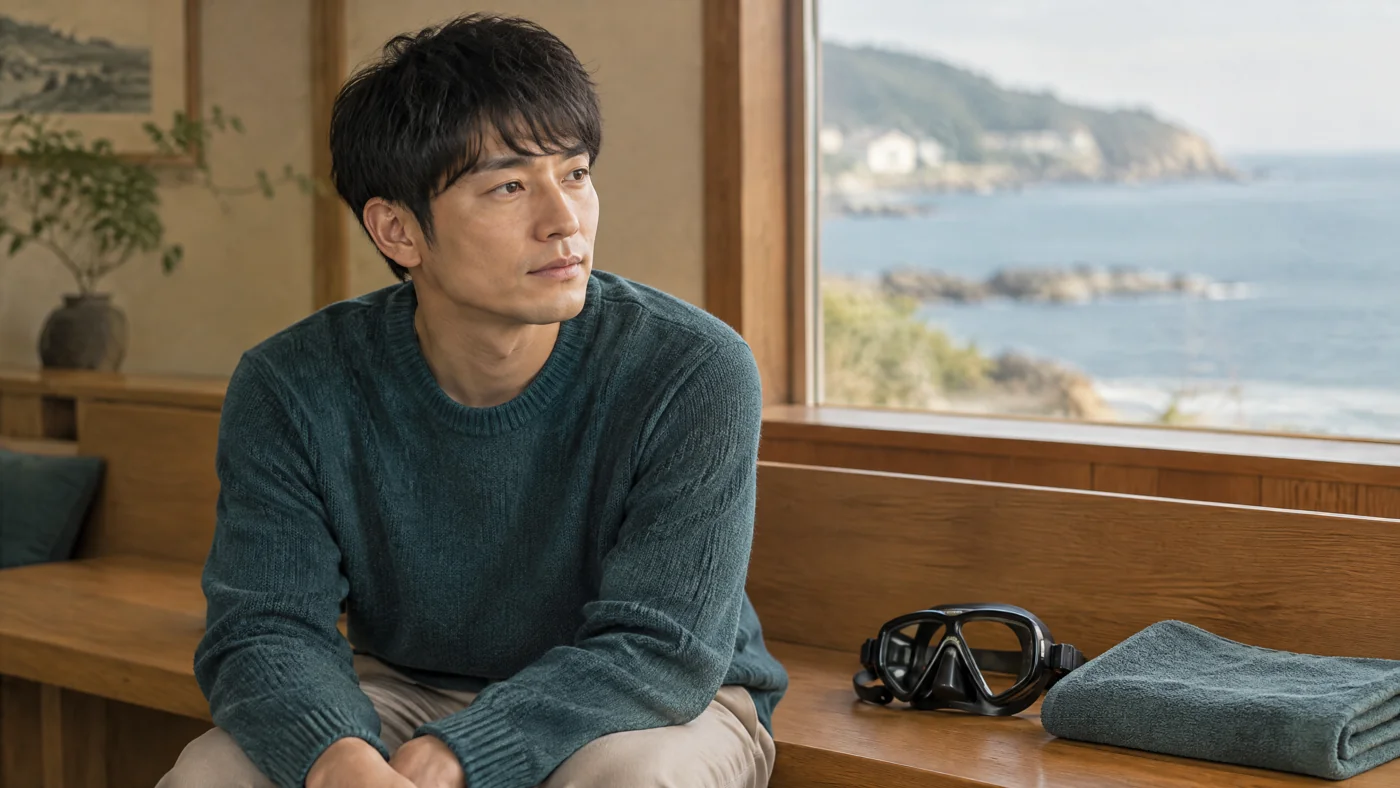
Look at your fringe after a normal wash, before adding your usual styling product. Notice its natural direction, where the longest pieces land and whether a curl drops towards your eyebrows as it dries. This is a haircut conversation, not an equipment test. A stylist can help distinguish a length problem from a styling habit, so you need not remove a favourite fringe simply because you are considering a water activity.
In a hypothetical example, a man with a long, forward-swept fringe may like its shape for office days but dislike repeatedly pushing it back when damp. His useful salon request is an alternative way to wear the same haircut, with less dependence on a rigid finish. Another man with a short textured crop may need no cut at all. The aim is a manageable option, rather than a compulsory 'diving haircut'.
Do not mistake extra thinning for an automatic solution. Short pieces can still fall forward, and a very different silhouette may create more daily work than it saves. Explain whether you want to retain the fringe for portraits and evenings out. Ask the stylist to show a gentle, repeatable way to redirect your own hair on land, using its growth pattern rather than pulling hard against it.
| Hair pattern | Useful salon question | What remains separate |
|---|---|---|
| Long forward fringe | Can I wear it away from my face without losing the everyday shape? | Instructor assessment of hair and equipment together |
| Loose permed fringe | How can I arrange the curls with minimal pulling? | Activity suitability and any equipment requirements |
| Short textured crop | Do I need a change, or simply an easier wash-and-dry routine? | Whether the proposed activity fits my experience |
| Lightened or coloured fringe | What condition issues should affect my next salon service? | Course eligibility and current venue arrangements |
02
2. Take hair concerns to the fitting, not into the water
Describe the problem plainly during an instructor-led fitting on land: hair near your face, pulling at the hairline, or strands that seem likely to catch. Arrive with a realistic hair arrangement rather than one held upright for a photograph. The instructor decides what equipment and fit are appropriate. Do not alter straps, add accessories or improvise a solution because a haircut article suggests it might feel more comfortable.
If after-dark diving is the genuine goal, the Night Diver specialty course Hong Kong page is a useful next read for the training enquiry. Share your current certification, recent experience and concerns before discussing an evening arrangement. Ask which prerequisites apply and whether a different first step would be more suitable. A tidy fringe is a preparation detail, not evidence that you are ready for the course.
A hairstyle that stays away from the face in a bathroom mirror does not guarantee a mask seal or comfortable equipment use. Keep the roles clear: the stylist helps with cut, hair direction and gentle handling; the instructor assesses the actual equipment arrangement. If retaining your usual fringe matters, say so early. That gives both conversations a concrete starting point without asking either professional to promise what lies outside their work.
A tidy fringe is a grooming choice, not a diving qualification.
03
3. Choose the activity goal before changing your haircut
An appealing evening photograph can blur several different ambitions together: trying something after sunset, improving photography, or exploring another training pathway. Separate those interests before booking a salon service around them. You may find that your actual goal is a relaxed shore portrait after an activity, which calls for a towel and a simple restyling plan rather than a major cut or an additional specialty.
Depth is a separate training interest, not a route to better hair or more impressive pictures. If it genuinely belongs in your longer-term plans, read the Deep Diver specialty course Hong Kong information as a distinct enquiry. The instructor confirms its prerequisites and scope. Do not assume night, deep and photography training should be combined, or that one course automatically prepares you for the others.
Once the activity plan is clearer, tell your stylist about any proposed colour, lightening or perm alongside your usual wash routine. There is no universal post-service waiting period that this article can give as permission to enter the sea or pool. Product instructions and your individual hair condition guide the salon discussion; activity eligibility remains separate. Keeping those decisions apart prevents a newly booked appointment from becoming pressure to attend an unsuitable outing.
- Describe whether your main interest is the evening activity, photography or another training goal.
- Tell the stylist which parts of your everyday fringe you want to keep.
- Ask about gentle handling for your current colour or perm, rather than a universal waiting time.
- Leave the activity choice with the instructor instead of using a haircut as a readiness check.
04
4. Make the underwater camera optional
A camera can remain outside the plan. Wanting pictures does not oblige you to photograph underwater, particularly when you are also concerned about unfamiliar equipment or a fringe that needs attention. Tell the instructor if photography is an interest rather than a requirement. You can still enjoy choosing a haircut for the outing, and make ordinary portraits on land, without turning the whole evening into a pursuit of images.
For a photography-focused next step, the underwater photography diving course Hong Kong page helps frame questions about prerequisites, training scope and camera arrangements. Ask whether photography is appropriate for your present experience and the proposed setting. Bring your camera details if relevant, but let the instructor confirm equipment. This is not a reason to buy unfamiliar kit or assume that photography and night training belong in the same session.
For a hypothetical shore portrait afterwards, plan a forgiving finish: clean hair, an easy parting and a texture that does not depend on maximum height. Discuss that look at the salon before the day. A comb and a suitable land-use styling product may be useful once the activity is over, where venue rules allow. You need not recreate the morning style precisely; a softer finish can still look intentional without forceful brushing or repeated heat.
05
5. Plan the rinse before the late journey home
Wash planning matters more than a heroic amount of holding product. The American Academy of Dermatology notes that pool chemicals and sun exposure can damage hair, and recommends rinsing after swimming alongside appropriate hair care.[1] Treat this as a reason to plan access to fresh water, not as a promise that one rinse prevents every change in texture or colour. Sea and pool arrangements may differ, so ask what facilities are actually available.
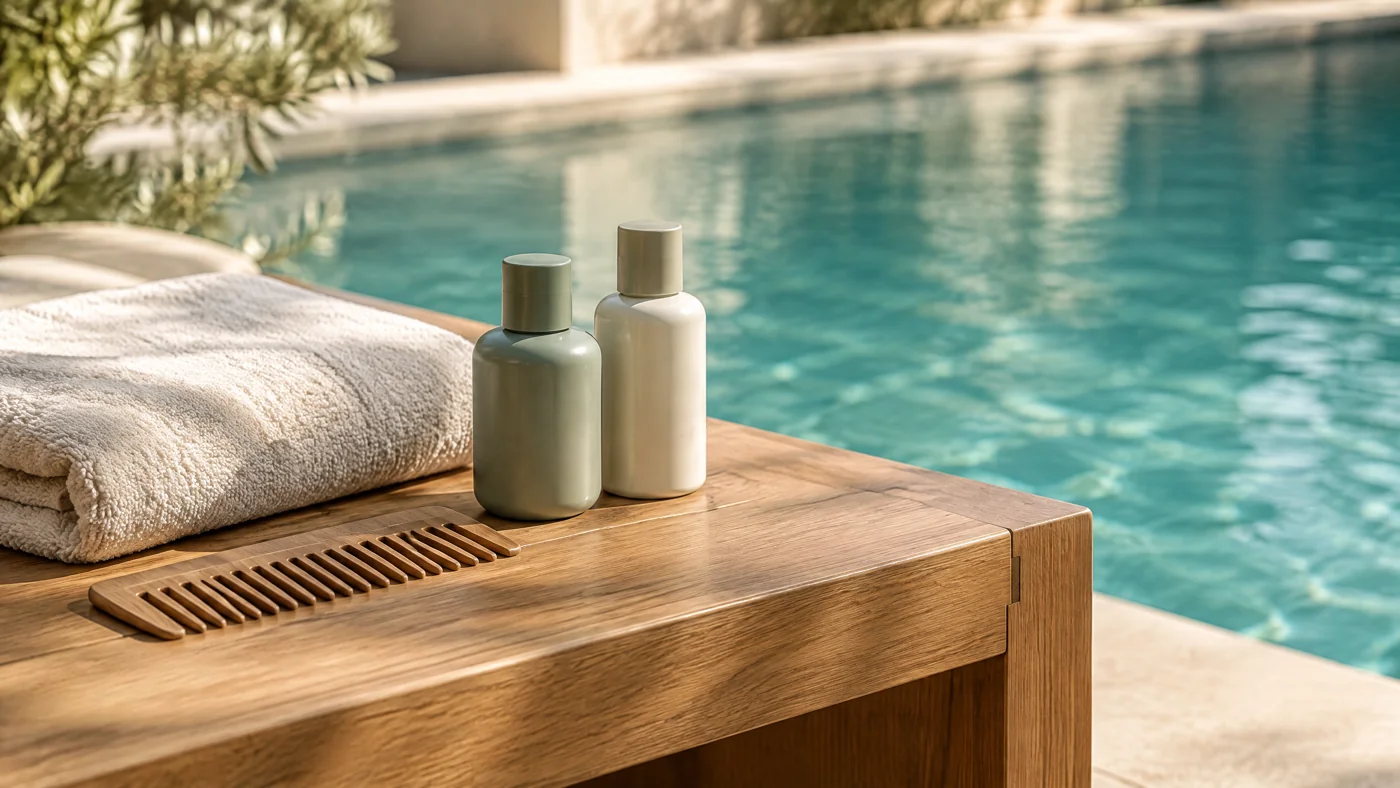
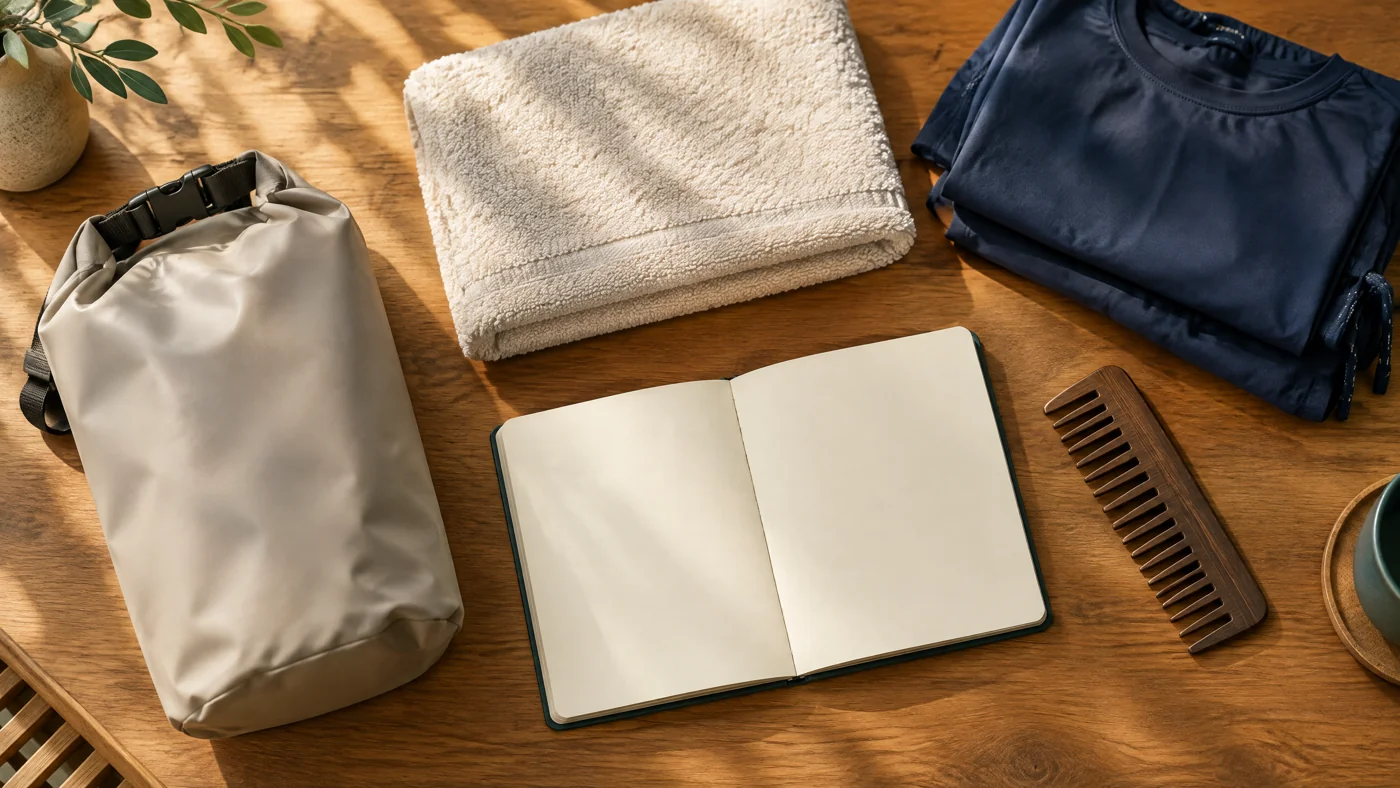
Pack your hair items in a separate pouch so they are easy to find when you are tired: a clean towel, familiar wash products and a tool suitable for your hair texture. Do not assume a course location has a shower or somewhere to dry your hair. Ask about facilities before choosing what to carry. If washing will happen at home, avoid adding an elaborate post-activity photo appointment that depends on unavailable facilities.
Choose products for your own hair and follow their instructions and the venue's rules. A label such as 'biodegradable' does not establish that a cosmetic is harmless in seawater or a pool. Keep cosmetic use to permitted land-based settings rather than coating hair for an assumed environmental benefit. For coloured or lightened hair, ask the stylist about condition and expectations before the outing, especially if the day may also involve sun exposure.
| Confirmed arrangement | Hair-care preparation | Expectation to set |
|---|---|---|
| Fresh-water rinse available, no drying area | Bring a clean towel and plan fuller care at home | A damp fringe may not hold its usual shape |
| Shower and changing facilities confirmed | Pack familiar permitted wash products | Allow time without assuming a salon finish |
| No wash facilities confirmed | Ask about a realistic rinse option and organise home care | Do not rely on immediate post-activity portraits |
| Portraits planned later on land | Keep restyling items separate from wet belongings | Use only products allowed in that setting |
06
6. Restore the shape with less pulling and heat
After washing, press moisture out gently with a towel instead of rubbing the fringe back and forth. The American Academy of Dermatology advises gentle handling, avoiding towel rubbing and limiting heat; it also distinguishes brushing advice for straight hair from care for textured or tightly curled hair.[2] That distinction matters when a man's fringe is permed or naturally curly. The best tool and timing are not necessarily the ones his straight-haired friend uses.
Follow the routine your stylist has shown for your actual texture. Do not drag a comb through resistance to reach a photographic deadline. Work gently, and use low heat if drying is appropriate for your hair. A late return is a good reason to simplify the finish: restore a comfortable direction, allow a less polished shape and leave detailed styling until the next day rather than repeatedly reheating the same section.
If your fringe repeatedly feels rough or difficult to arrange after water activities, bring that pattern to the next salon consultation. Describe your washing, drying and styling habits so the conversation can address more than the haircut alone. Persistent scalp irritation or other health concerns need an appropriate clinician. A gentler routine is useful grooming, but it is not a treatment for hair loss and should not be presented as one.
The best evening hair plan includes an easy way to stop styling.
07
7. Leave room for a changed evening
Before committing, write down the activity questions and the grooming questions separately. Ask DiveHarbour to confirm current eligibility, equipment, venue arrangements and whether your proposed photography interest fits the plan. Then ask the salon about the haircut and home-care routine you want regardless of that activity. This separation is practical: a change to the evening should not leave you with an unwanted hairstyle or a salon visit whose value depends on one particular outing.
If comparing course costs, check inclusions and payment conditions in writing rather than building a combined salon-and-activity budget from headline figures. DiveHarbour currently states that all paid fees are non-refundable; make-up sessions are available only subject to written conditions. Do not assume a replacement date. Weather-dependent arrangements also make fixed portrait plans fragile, so choose a hairstyle you will enjoy on an ordinary day if the original evening changes.
A useful final plan is modest: an everyday cut you like, hair concerns raised on land, a realistic wash arrangement and no obligation to return with underwater photographs. This article is by the Canvas Texture editorial team, with AI assistance and public sources. Canvas Texture is led by Vit So for men's own-hair styling; that does not make him the author of diving safety advice. Keep course questions with DiveHarbour and enjoy grooming as preparation, not permission.
Sources and useful reading
Continue with hair and grooming
For a separate men’s own-hair discussion: Deep Hair Treatment HK
Continue with a related hair-and-water planning guide: Returning to Diving: Record Hair Changes and Training Needs
Read our hair styling background: Vit So and the Canvas Texture studio
Ask about a fringe that fits your everyday life
Bring Canvas Texture your men's own-hair styling questions: fringe direction, a low-tension routine and a manageable finish after washing. DiveHarbour-related activity, eligibility and equipment questions belong with DiveHarbour, not the salon consultation.
Canvas Texture · WhatsAppFrequently asked questions
Do I need to cut off a long fringe before considering night diving?
Not automatically. Discuss a gentle way to wear your own hair away from the face with a stylist, then raise the actual hair and equipment arrangement during an instructor-led fitting. A haircut cannot guarantee equipment fit or establish course eligibility.
Can strong styling product replace the fitting conversation?
No. Product hold is not an equipment-fit guarantee. Let the instructor assess the arrangement on land, and follow product and venue rules rather than assuming a cosmetic belongs in the sea or pool.
Must I bring a camera if photography inspired the outing?
No. Tell the instructor what interests you and ask whether photography belongs in the proposed activity. Keeping the camera optional, or choosing portraits on land, avoids making pictures a condition of enjoying the evening.
How soon after a perm or colour service can I enter the water?
There is no universal interval offered here. Ask your stylist about the products used and your hair condition. Confirm activity suitability separately with the instructor, and seek clinical advice where a health assessment is needed.
What if there is nowhere to wash or restyle afterwards?
Ask about fresh-water access before the day and organise a realistic home-care plan. Bring a clean towel, allow your fringe to look less polished and avoid making an immediate portrait appointment depend on facilities that have not been confirmed.
Related journal articles
First Scuba Lessons: Keep Your Hair, Plan the Pool-Day Wash
Keep the haircut you want to live with; prepare for the wet-hair version of it.
Trying Scuba in Hong Kong: Prepare Your Fringe Before a Mask Fitting
Prepare the fringe you actually have, not the hairstyle you hope will stay unchanged in water.
Choosing a Hong Kong Diving School: A Men's Hair Planning Guide
Choose the learning environment with the instructor; choose an achievable hair routine with your stylist.