Divemaster Study Plans: Low-Maintenance Hair for Wet Days
For a Divemaster study plan, choose a haircut that works with your natural growth and reserve time for gentle washing after water sessions. The useful goal is not hair that stays perfectly styled underwater. It is hair you can manage without tight pulling, repeated heat styling or a lengthy reset before reading, commuting or returning to work.
Treat the course decision and haircut decision as connected but separate. Your stylist can help you judge fringe length, curl shape and daily effort. The course instructor confirms eligibility, equipment and actual training arrangements; a clinician handles individual health questions. A professional pathway should fit your experience and commitments, rather than being chosen because a shorter haircut makes a busy calendar look manageable.
Canvas Texture and DiveHarbour share the same website owner. This Canvas Texture editorial article, prepared with AI assistance and public sources, explores the grooming side of that lifestyle decision. It is not diving instruction or a personal account of completing training. DiveHarbour handles questions about its activities, while Canvas Texture focuses on men's own-hair styling.
01
1. Map the wet-to-study day before choosing a haircut
Start with the hours between activities, not a photograph of a sharp haircut. A hypothetical candidate might travel to a water session, return home, wash, eat and then study. Another might need to go straight to an office. Those days call for different grooming expectations. Write down where you could rinse, where you could dry your hair and whether your next commitment genuinely requires a styled finish. Do not assume those facilities come with the course.
Separate a dry study day from a wet training day. On the first, your usual styling routine may be perfectly workable. On the second, a natural parting and a fringe that settles without heavy hold can be more useful. Ask your stylist to show you a lower-effort version of your existing cut. That gives you a realistic fallback rather than forcing every day to meet the same polished standard, even when time or facilities differ.
If you are weighing formal study against an internship arrangement, the Divemaster course Hong Kong overview is a relevant next read. Ask DiveHarbour which arrangement is actually being discussed and request its commitments in writing. Then build your washing and travel plan around those answers. An internship label does not establish employment, payment or certification, and an attractive daily routine cannot tell you whether you meet the programme's requirements.
A manageable haircut is one part of a workable day, not proof that the training plan fits.
02
2. Choose an own-hair shape that needs less rebuilding
Low maintenance does not always mean taking everything very short. A close cut can require regular appointments if you want its outline to remain exact. A slightly longer shape may grow out more softly, although a long fringe can demand more attention after washing. Discuss your growth direction, density and preferred appearance on an ordinary weekday. The best compromise is a cut you can accept in its natural state, not merely one that photographs well after salon styling.
For a straight-haired man, excessive fringe length may make a smooth finish feel compulsory. For someone with curls, keeping enough length for the curl pattern can be more practical than chasing a straight silhouette each morning. These are styling discussions, not equipment prescriptions. Bring photographs of your hair without products as well as your preferred finished look. Ask what the proposed cut will do when air-dried and what maintenance it needs as it grows.
A perm or colour service adds another planning question. Tell your stylist about expected sea or pool exposure before agreeing to chemical work. Existing dryness, previous processing and the product system all matter to that conversation. There is no single waiting interval that guarantees your hair is ready for water activities. You may prefer a shape adjustment first and postpone a bigger change until the training commitments are clearer. Activity suitability still belongs with the appropriate professionals.
| Shape | Potential everyday advantage | Trade-off to discuss |
|---|---|---|
| Textured crop with a manageable fringe | A simpler natural finish after washing | Growth direction and how often the outline needs refreshing |
| Medium-length natural curls | Keeps the curl pattern as part of the intended style | Drying time, shrinkage and gentle detangling |
| Longer own hair | Can preserve a preferred everyday appearance | Drying time and avoiding tightly pulled styles |
| Short tapered sides with a softer top | Balances a tidy outline with flexible styling | Appointment frequency and the top's product dependence |
03
3. Plan access to washing before buying extra products
The American Academy of Dermatology notes that pool chemicals and sun exposure can damage hair, and recommends appropriate swimming-related hair care.[1] For your timetable, the useful starting point is access to fresh water after a session. Ask about washing facilities rather than assuming there will be a convenient shower. Plan a fresh-water rinse after sea or pool exposure and a suitable wash when facilities allow. That is ordinary hair care, not protection against every effect of repeated exposure.
Keep the wash bag simple enough to use when tired. Choose shampoo and conditioner appropriate to your hair and scalp, following their instructions. Products belong in permitted washing areas and must comply with venue rules; neither a natural label nor a biodegradability claim establishes marine safety. Avoid building a plan around applying cosmetics before entering the water. If washing facilities are limited, clarify your options before committing to a routine that depends on an immediate full salon-style wash.
After washing, press with a towel instead of rubbing vigorously. The Academy also advises gentle handling and reducing damaging heat and pulling.[2] Choose detangling methods suited to straight or curly hair rather than treating every wet head the same way. Do not drag a comb through resistance to save a minute. If you use a dryer, favour a lower heat setting and allow enough time for a gentle finish. Persistent scalp discomfort needs an appropriate clinician, not a stronger cleansing routine.
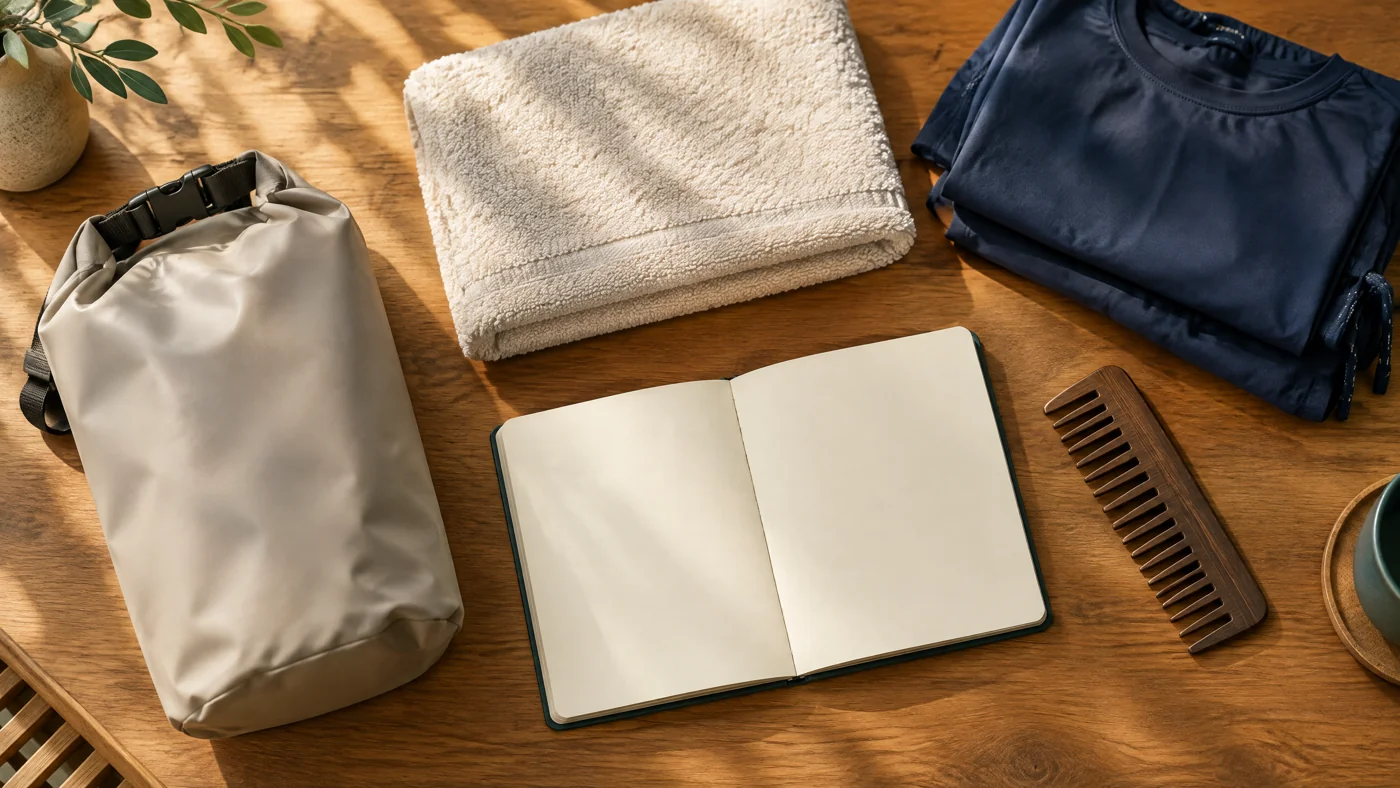
- Pack a clean towel for pressing rather than vigorous rubbing.
- Carry clearly labelled wash products suitable for your own hair.
- Keep a hair-appropriate comb or brush in a separate clean pouch.
- Confirm permitted washing facilities and allow time to use them.
04
4. Keep hair comfort separate from equipment decisions
Hair that feels comfortable during study may behave differently when diving equipment is involved. Raise any pulling, tangling or fringe concerns with the instructor on land, before the activity. They should confirm appropriate equipment and its suitability. A haircut cannot guarantee a mask seal, and a salon cannot approve a cap or hood for diving. Do not make equipment changes or experiment in the water because a hairstyle feels inconvenient. Comfort questions deserve proper attention, not a cosmetic workaround.
Longer hair does not automatically need a severe, tightly pulled style. For ordinary travel and study, ask your stylist about gentle handling and a comfortable way to gather it without sustained tension. Any arrangement involving diving equipment must be reviewed by the instructor. Be explicit if a suggested approach pulls at your hairline or catches your hair. Repeatedly tightening your hairstyle to compensate is not a sensible grooming plan, and discomfort should not become an accepted part of looking prepared.
If your current question is whether further recreational learning fits better than a professional commitment, advanced diver training Hong Kong offers a starting point for that conversation. Ask about the actual learning format rather than assuming it means fewer wet days or an easier schedule. Compare the confirmed demands with your washing facilities, work obligations and current experience. The right course sequence comes from instructor assessment; the grooming plan follows the arrangement you genuinely choose.
05
5. Protect study time from a second styling session
Think of your post-water appearance in two stages: clean and comfortable first, deliberately styled only when needed. A hypothetical candidate studying at home may be happy with a natural finish. Someone attending a meeting afterwards may want more drying time. Neither needs to reproduce a salon finish automatically after every wash. Decide what the next setting actually demands, then ask your stylist for a version of your cut that meets that need with fewer products and less heat.
Wet-day planning also affects when you book hair appointments. Rather than scheduling a major change just before an uncertain training period, consider whether a familiar shape would reduce daily decisions. Photograph the cut in its unstylised state so you can explain what grows awkwardly later. If the fringe starts needing repeated heat to sit correctly, discuss its length at the next appointment. A small adjustment can be more relevant than adding another styling product to an already crowded bag.
For a specific professional-route enquiry, read PADI Divemaster training Hong Kong and ask DiveHarbour to confirm the current prerequisites, learning scope and equipment expectations. Request the expected balance of study and water sessions without assuming dates or completion are guaranteed. This lets you estimate travel, washing and drying demands alongside academic work. Training is not a guaranteed job or income stream, so do not justify new spending on grooming or equipment through imagined future earnings.
Clean and comfortable can be the finished look when the next appointment is with your study notes.
06
6. Put practical expectations in writing before spending
A useful enquiry has two sets of notes. The first records your certification history, recent experience and questions for the instructor. The second records everyday constraints: work commitments, travel, access to washing and whether your hair needs substantial drying time. Keep the responsibilities distinct. Your stylist does not assess course eligibility, and the course team should not be expected to design your haircut. Share the relevant information with each so neither plan relies on an unspoken assumption.
Ask for written course inclusions, equipment arrangements, supervision and how changes are communicated. Establish whether an internship discussion includes a formal course or a separate arrangement, and what any duties or payment terms actually mean. On the grooming side, distinguish essential washing supplies from optional styling purchases. You may already own what you need. A confirmed plan is a better reason to buy something than an imagined wet working day borrowed from someone else's professional lifestyle.
Before paying, read the financial conditions as carefully as the learning outline. DiveHarbour currently states that all paid fees are non-refundable; make-up sessions are available only subject to written conditions. Do not treat spare calendar space as a promise of a replacement session. Budget for your ordinary hair maintenance, travel and washing needs without relying on refunds or guaranteed completion. If a changed schedule would create difficulties, ask about those circumstances before making financial commitments.
| Planning issue | Ask DiveHarbour to confirm | Plan for yourself |
|---|---|---|
| Learning format | Course or separate internship arrangement, scope and supervision | Which work and study commitments you can realistically accommodate |
| Wet-session logistics | Venue arrangements and available washing facilities | Fresh-water wash access, travel and drying time |
| Equipment comfort | Required equipment and appropriate suitability review | Explain hair pulling or tangling concerns before activity |
| Changed plans | Written make-up conditions and communication arrangements | A flexible grooming calendar without assuming replacement dates |

07
7. Review the routine without turning discomfort into a habit
Once you have an agreed plan, keep a brief grooming note after wet days. Record whether your fringe settles, where hair tangles and how long a comfortable reset takes. This is not a diving performance record or a medical assessment. It helps you give your stylist specific feedback instead of saying the whole haircut is wrong. Notice differences between pool days, sea days and ordinary washing, without assuming one cause explains every change in texture or scalp comfort.
Adjust one styling choice at a time where practical. You might use less finishing product on a study evening, choose a more natural parting or request a fringe trim at your next appointment. Avoid responding to tangling with harder brushing, more pulling or progressively hotter drying. If your hair is chemically treated, tell the stylist what exposure and handling have changed. Ongoing irritation, pain or unusual shedding belongs with a clinician rather than an endless sequence of new salon products.
Finally, review whether the lifestyle still fits the commitments you actually have. A cut that works well does not settle questions about professional responsibility, health or readiness. Discuss changes in training expectations with DiveHarbour and individual health concerns with a clinician. Bring your grooming observations to Canvas Texture separately. The worthwhile outcome is an honest course decision and an own-hair routine you can sustain, not a promise to look immaculate after every water session or finish training on a fixed date.
Sources and useful reading
Continue with hair and grooming
For a separate men’s own-hair discussion: Deep Hair Treatment HK
Continue with a related hair-and-water planning guide: Scuba Instructor Training: Separate Career and Styling Choices
Read our hair styling background: Vit So and the Canvas Texture studio
Ask about an own-hair routine that fits your week
Bring your natural hair photographs, preferred look and washing constraints to Canvas Texture for men's own-hair styling questions. DiveHarbour-related activity, course and equipment questions belong with DiveHarbour; Canvas Texture does not arrange diving bookings or provide medical advice.
Canvas Texture · WhatsAppFrequently asked questions
Do I need a very short haircut for Divemaster study?
No particular haircut establishes readiness. Discuss a manageable shape with your stylist, and ask the instructor about hair concerns involving equipment. Shorter hair may simplify some daily styling, but natural growth, curls and appointment frequency also matter.
Can I book a perm just before training starts?
Tell your stylist about expected sea or pool exposure before booking. Your hair condition and the chemical product system need individual consideration. No universal waiting interval guarantees suitability for water activities, which must be discussed separately with the relevant professionals.
What if there is no convenient shower after a session?
Ask about permitted fresh-water rinsing and washing facilities before making plans. Arrange an appropriate wash afterwards and allow time for it. Do not assume a course includes showers, or substitute extra styling products for a practical washing plan.
Does an internship mean a paid job or guaranteed qualification?
No. Ask for written duties, supervision, learning objectives, commercial terms and whether a formal course is included. Employment, payment and certification outcomes cannot be inferred from the word internship.
Will missed training always be refunded or rescheduled?
DiveHarbour currently states that all paid fees are non-refundable. Make-up sessions depend on written conditions and are not automatic. Confirm the relevant arrangements directly before paying, including how weather or missed attendance is handled.
Related journal articles
First Scuba Lessons: Keep Your Hair, Plan the Pool-Day Wash
Keep the haircut you want to live with; prepare for the wet-hair version of it.
Trying Scuba in Hong Kong: Prepare Your Fringe Before a Mask Fitting
Prepare the fringe you actually have, not the hairstyle you hope will stay unchanged in water.
Choosing a Hong Kong Diving School: A Men's Hair Planning Guide
Choose the learning environment with the instructor; choose an achievable hair routine with your stylist.