Low Density Wigs: A Balanced Outline for Hong Kong Humidity
Choose a lighter-density wig when you want less visual fullness, not as a guarantee of cooler wear. For humid Hong Kong days, assess the cap, fit and maintenance routine separately before deciding. A convincing outline depends on where the hair sits as much as how much there is. Your first comparison should therefore be between two wearable shapes, rather than two density labels on a screen.
The useful shopping factors are coverage area, fibre type, cap construction, attachment requirements and the shape around the forehead, ears and neckline. A short, modest-looking style can still feel uncomfortable if its fit is wrong. Conversely, a fuller-looking top may suit someone whose main concern is a familiar silhouette. Ask to inspect the actual option being discussed, because a photograph cannot settle questions about its interior or your comfort.
Start with a simple brief: the outline you want to keep, the situations in which you expect to wear it, and the care you can realistically manage. For someone used to a neat male haircut, those details might be a restrained crown, visible temples and an unobstructed neckline. This article turns that brief into practical comparisons, keeping appearance, warm-weather wear and buying decisions separate enough to judge each clearly.

01
1. Define what you want less density to change
Begin by identifying the part of the silhouette that feels too full. Is it height above the crown, width beside the ears, or a heavy fringe obscuring the forehead? These are different problems. Reducing overall fullness may help one area while leaving another poorly shaped. Bring a front and side reference showing the proportions you prefer, and explain which features matter rather than asking only for the lightest available option.
Use the guide to low density wigs to frame questions about visible fullness. When comparing options, ask how the stated density is defined and whether it describes the whole piece or particular areas. Treat a label as a starting point, not a universal measurement that makes different suppliers directly comparable. The decision you need is whether the actual hair distribution supports your intended style in ordinary viewing conditions.
There is a trade-off between restrained volume and the coverage you want. A lighter appearance may reveal more of the underlying base or scalp effect, depending on construction and styling. Ask to see the parting, crown and front under everyday light, not just a flattering angle. If your preferred finish relies on brushing hair back, assess it that way; a forward fringe should not conceal a mismatch during the comparison.
02
2. Separate visual fullness from cap and coverage
Density describes one aspect of the hair, while the cap determines what sits against your head. A lighter-looking style does not establish how much skin is covered, where seams rest or how the interior feels. Ask to inspect those details separately. If you are comparing a full wig with a smaller hairpiece, first establish whether each covers the area you need; they are not interchangeable merely because the photographs show similar hairstyles.
Ask what the stated construction term means for the specific model. A mesh-related name, for example, does not by itself establish the front design, attachment method or your experience of ventilation. Have the relevant areas pointed out on the actual sample. Then ask which details belong to that sample and which could differ on the item supplied. This keeps broad descriptions such as lightweight from replacing the specifications needed for a sensible decision.
Fit deserves its own assessment before any attempt to thin or reshape the hair. Notice whether the piece shifts when you turn your head, presses at an edge or needs repeated adjustment. Do not assume extra tightening is the answer to movement. Ask whether size, shape or the intended securing method needs reconsideration. A secure result should not require you to accept discomfort simply because the outer silhouette already looks right.
When your own hair remains around the intended coverage area, explain how you normally wear it and where it will sit during fitting. Its arrangement can affect both the overall outline and the space beneath a full wig. Do not flatten everything into an unusually tight style just to make a sample appear suitable. Ask for a comparison that reflects your realistic preparation routine, and clarify whether a later change in your own hair would require the fit to be reviewed.
| Variable | What you are assessing | Question to ask |
|---|---|---|
| Hair density | Visible fullness and distribution | How is this label defined, and does it vary by area? |
| Coverage | Whether the piece covers the intended area | Is this a full wig or a smaller hairpiece? |
| Cap construction | Interior layout and contact points | Can you show the seams, edges and base on this model? |
| Securing method | Stability without uncomfortable pressure | What does this particular option require for wear and removal? |
03
3. Build a restrained outline around three landmarks
Check the sides first, because width near the ears can make even a relatively light top appear bulky. Compare the silhouette straight on, then at a slight angle. Look for the relationship between the temples, cheekbones and side sections rather than pursuing an abstract rule about face shapes. If you want a familiar short-haired appearance, explain whether you normally show the ears and how closely you prefer the hair to sit beside them.
Next assess the crown from behind as well as above. A front view can look balanced while the rear profile remains higher than you intended. Ask whether the desired shape can be achieved with the existing hair direction and length, or whether a different option would be more suitable. Do not assume thinning will solve every mismatch. Removing hair is a separate alteration decision, and its effect on coverage should be discussed before work begins.
Finally, decide how much forehead you want visible. A fringe, an exposed front and a side part place different demands on the finished outline. Take your usual glasses if you wear them, and check whether the fringe interferes with their position. Prefer a style that works in the way you normally arrange it. A shape requiring constant repositioning may be less practical than a slightly fuller alternative that stays visually coherent during ordinary movement.
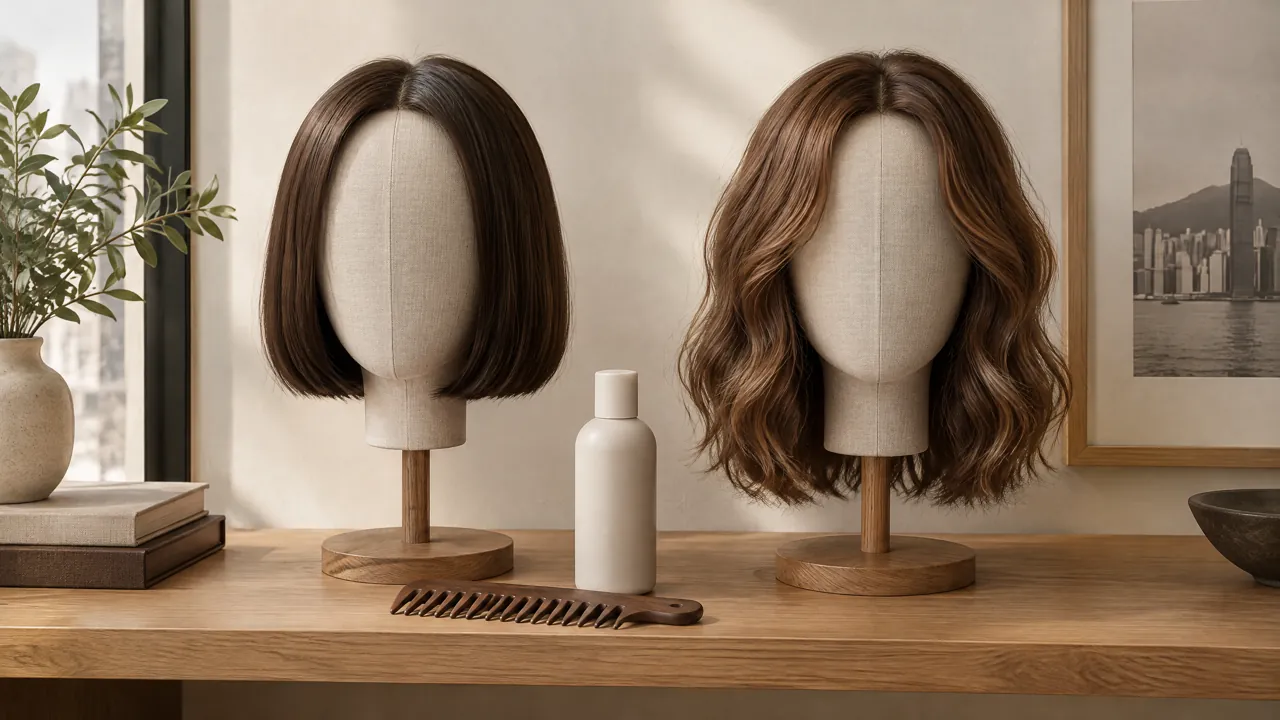
A lighter outline is a relationship between the sides, crown and forehead, not a number in isolation.
04
4. Test the humid-day routine, not a cooling promise
When choosing a wig for hot humid weather, describe the transitions in your day: outdoor walking, air-conditioned rooms and periods when removal is inconvenient. Ask which cap and care details are relevant to those conditions. Breathable and lightweight are useful questions to investigate, but neither word predicts your personal comfort. A short fitting can identify obvious problems; it cannot establish how the piece will feel throughout a humid afternoon.
Separate dampness, pressure and unwanted movement when noting a problem. They call for different questions, and adding tension can hide movement without addressing fit. The American Academy of Dermatology advises against continuing hairstyles that cause pain, stinging or scalp irritation associated with pulling [1]. Apply that warning to how your own hair is handled beneath or around a piece, without treating it as a diagnosis of any particular wig or attachment method.
Plan what you can actually do if the fit becomes uncomfortable during the day. Can you step somewhere private, remove or adjust the piece according to its instructions, and deal with dampness without rushing? Ask about care and drying before purchase rather than improvising with heat later. If discomfort persists, pause wear and seek appropriate advice. Your schedule should influence the shortlist; an option that needs unavailable breaks is not rescued by a pleasing density.
- Describe your longest period without a practical removal break.
- Record dampness, pressure and shifting as separate observations.
- Ask for model-specific cleaning, drying and securing instructions.
- Reject a routine that depends on tolerating pain or pulling.
05
5. Match fibre care to the time you really have
Choose the fibre after considering how you want the style to behave and how much maintenance you can manage. Cancer Research UK distinguishes synthetic, human-hair and mixed options, and notes that synthetic styles are often preset; any use of heat must follow the manufacturer's guidance [2]. This is general selection information, not evidence about a particular supplier's range. Ask for the composition and instructions of the exact item rather than relying on its appearance.
A wish for flexible styling should be weighed against the work needed to maintain it. Ask what happens after washing: how the piece should dry, whether its outline needs restyling, and which products or tools are permitted. Do not infer heat resistance from a human-hair-like finish or a product name. For a routine with early starts and little preparation time, a manageable care process may matter more than having numerous styling possibilities.
Use the second table when observations conflict, rather than repeatedly comparing materials in the abstract. A piece that looks right but feels wrong needs a fit review, while one that feels acceptable but demands impractical care needs a routine review. Avoid changing density, securing and styling simultaneously, because you will not know which change helped. Ask one focused question, assess the answer, then decide whether the option remains on your shortlist.
| Observation | Next step | Trade-off to resolve |
|---|---|---|
| Comfortable fit, but sides look too wide | Ask about shaping feasibility before altering anything | A neater outline versus retaining useful coverage |
| Pleasing outline, but pressure at an edge | Reassess fit and securing requirements | Stability versus unacceptable pressure |
| Acceptable wear, but care is too demanding | Compare a different routine or fibre option | Styling freedom versus preparation time |
| Unclear response to humid conditions | Clarify care instructions and terms before committing | Remaining uncertainty versus readiness to buy |
06
6. Make your fitting observations repeatable
Bring one current photograph and one realistic style reference rather than a folder of conflicting looks. The current photograph helps explain the outline you recognise; the reference identifies the change you want. If the reference has dramatic lighting or lifted styling, point that out and ask what can reasonably be reproduced. Keep your priorities short: perhaps less width at the sides, a modest crown and a clear forehead. That makes disagreements easier to resolve.
Use the same sequence for each option. Check front, profile and back views, then turn your head, look down and put on your glasses if relevant. With permission, take comparable photographs from similar positions without filters. Record appearance and sensation separately immediately afterwards. A simple note such as crown acceptable, fringe too heavy, edge pressure is more useful than natural-looking, which can blur three different judgements into one vague impression.
Before any cutting or other alteration, ask what is reversible, what changes coverage, and what affects the transaction terms. Clarify whether the sample matches the intended supplied item in size, fibre and construction. If you are uncertain, preserve the observation rather than rushing to fix it. The aim is not to leave with every question answered by a haircut; it is to understand whether the underlying option can support the finish and routine you need.
Keep the model identifier beside each set of notes so a later enquiry refers to the same item. Record any proposed alteration separately from what you actually saw: a promised shorter fringe is not yet an observed result. If another option is suggested afterwards, ask which specification has changed and why that change addresses your concern. This small paper trail helps prevent a pleasant conversation about possibilities from becoming mistaken certainty about the final piece.
A repeatable comparison beats a memorable first impression.
07
7. Turn your shortlist into a conditional buying decision
Read the full-coverage comparison for men's wigs when your brief genuinely calls for a full wig rather than a smaller piece. OwnStrand is a same-owner related brand to Canvas Texture, so this reading suggestion is not an independent endorsement. The relevant decision remains yours: confirm the coverage, outline, fit and care of the option being discussed, and check availability and fitting arrangements directly rather than assuming every illustrated style can be supplied.
If arranging a visit, plan travel to OwnStrand's sole Kwun Tong showroom. Confirm the address and fitting arrangements directly before travelling, rather than assuming a walk-in comparison will be available. Bring your outline references and written observations so the visit addresses unresolved questions rather than restarting the comparison. There is no need to request every possible variation: focus on the two or three differences that would genuinely change whether an option works for your daily use.
Finish with a written decision that names both the benefit and the condition. For example: restrained sides and familiar crown, provided the fit issue is resolved and the care routine is manageable. Confirm the exact item, included alterations, care guidance and applicable terms before committing. If those conditions remain unclear, keep comparing. Lighter density is worthwhile when it supports a usable, recognisable outline; it should never become a shortcut around comfort or specification checks.
Sources and useful reading
Continue with hair and grooming
If your question concerns styling your own men’s hair, continue with: Perm for Thin Hair Men HK
Compare a related selection decision: Men’s wigs: plan a workday outline rather than extra bulk
Read our male-hair styling background: Vit So and the Canvas Texture studio
Clarify the outline you want to keep
For guidance on your own hair, speak with Canvas Texture about a male-hair styling consultation. Bring front and side references to discuss proportions, everyday styling and the familiar features you want to retain.
Canvas Texture · WhatsAppFrequently asked questions
Does a lighter density automatically make a wig cooler?
No. Visible fullness does not establish cap coverage, interior construction or personal comfort. Compare those separately and ask how the specific option should be cared for after damp wear.
Should I choose the lowest available density for a short style?
Not necessarily. Judge the sides, crown and forehead together, including the coverage needed in your preferred arrangement. The lightest option may not support the outline you want.
Can thinning correct a wig that looks too bulky?
It may be an alteration to discuss, but it is not a universal fix. Establish whether the problem is distribution, length, direction or fit, and ask how removal would affect coverage before proceeding.
What should I do if securing the piece causes pain?
Do not accept pain as evidence of a secure fit. Pause wear, avoid further pulling on your own hair and ask for the fit and securing requirements to be reassessed. Seek appropriate advice for persistent irritation.
Related journal articles
Men’s Hairpieces or a Perm? Compare Coverage and Shape
Choose a perm when enough existing hair remains and movement is the main goal. Choose a hairpiece when a defined area needs cosmetic coverage. Neither option decides the best outline by itself. First identify the visible area, surrounding density, preferred parting, and morning routine. Those observations prevent a product label from making the decision too early. Compare those details before making any booking.
Natural Hairline Wigs: A Guide to Fringe and Forehead
Natural hairline wigs look most convincing when the front edge, fit, colour, density, and haircut agree. For a hypothetical four-day workweek side part, inspect both temples under two ordinary light sources before choosing a construction. The aim is a coherent outline in movement. No single feature can decide that outcome. Check the whole frame, not only the centre. Check it while turning your head.
Human Hair or Synthetic Wigs? Texture and Care Choices
Choose human hair when approved styling flexibility matters. Choose synthetic fibre when a preset shape and simpler mornings matter more. Neither label settles the result alone. Texture, density, cap construction, attachment, and fit shape how a wig looks and feels. Start with the routine you can maintain, then check the exact model’s instructions. That order avoids paying for flexibility you will not use