Men's hair colour: choosing brown depth and chocolate warmth
For a brown that feels considered rather than simply darker or warmer, choose the overall depth first. Then decide which reflection you enjoy and how it should sit within your haircut. Chocolate is a useful reference word, but it does not specify one shade. Two photographs carrying that label can show quite different brightness, warmth and amounts of lighter hair.
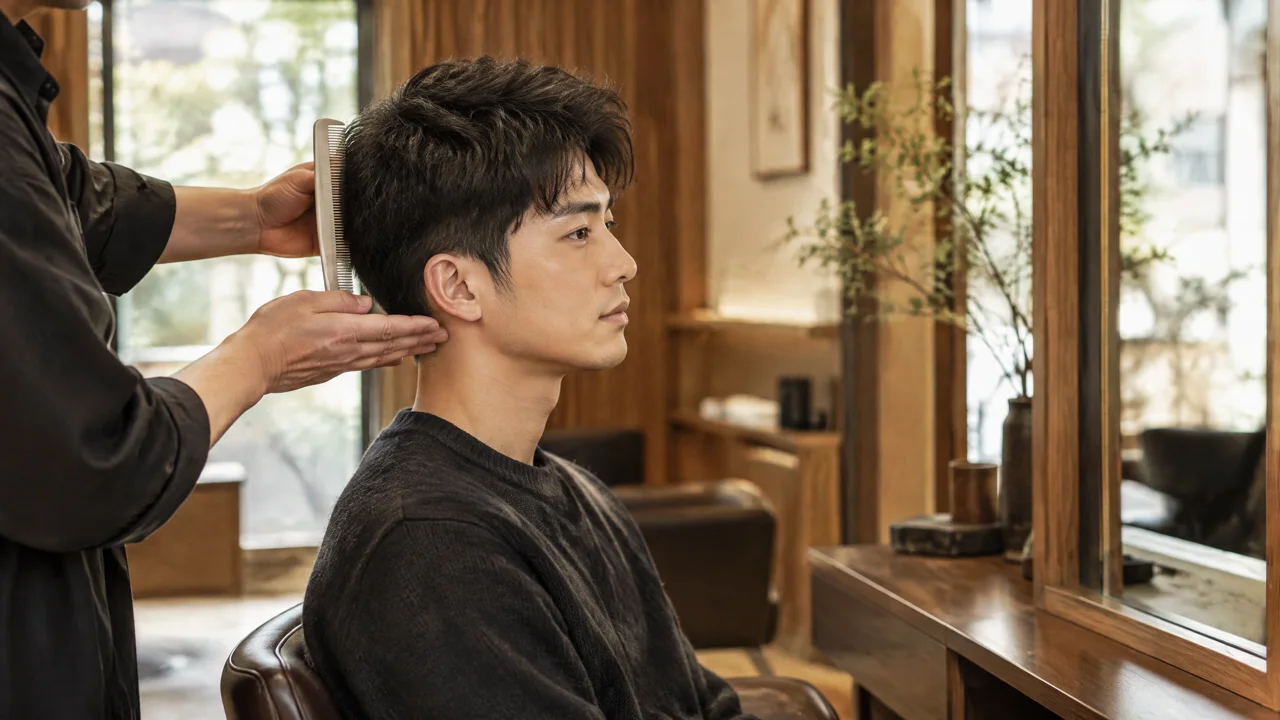
Short hair adds another decision: how the top should relate to the sides. A longer fringe presents overlapping strands, while close sides show more skin between the hairs. The same colour direction will not necessarily look equally solid across both areas. Think about the shape you intend to keep, not just the hairstyle in your favourite photograph.
This guide separates the choices that often get bundled into a request for a natural brown. It covers depth, warm reflection, previous colour and the effect of regular trimming. The aim is a clearer conversation, not a formula to copy. Your current hair and acceptable degree of change matter more than finding the most appealing name on a shade chart.

01
Start with the haircut you will actually keep
Look at your dry hair from the front, side and back before choosing a brown. Identify where the longest strands sit and which areas you regularly clip close. A swept top can cover the side boundary when relaxed, then expose it when pushed up. Colour planning needs both views if you change your styling during the week.
The Vit So guide to men's hair colour explains why top-to-side contrast belongs in the initial discussion. It helps you prepare photographs and distinguish an overall tint from a different colour goal. Its service information also makes clear that a general tinting listing is not automatically a combined men's cut-and-colour package.
A brown top over darker-looking sides can be a deliberate choice rather than an imperfection. The question is whether you enjoy that separation in your usual style. If you prefer a connected outline, point to the temple area and explain your concern. Asking for the same shade everywhere does not fully describe how you want the cut to read.
For an illustrative example, imagine someone keeping a long fringe but shortening the sides substantially. A reference with equally long hair all around gives little guidance about the resulting contrast. A more useful comparison shows a similar fringe and side length. This is a planning example, not a client result or a prediction of what colour processing will achieve.
02
Choose depth before deciding how warm it should look
Depth describes the overall light or dark impression. Reflection describes the warm, cool or more neutral cast you notice when light catches the strands. Start by covering the brightest part of a reference with your finger. If the remaining hair still appeals, you may be responding to its underlying depth rather than to the shine alone.
Compare shaded areas near the roots, behind the ear and beneath the top. A photograph showing a dark crown with brighter tips is not the same request as a medium brown throughout. On short hair, even a relatively small area at the front can dominate a selfie. Ask to see the whole design before deciding that you want its overall brightness.
Dark brown can preserve a deep outline when your natural roots are similarly deep. It is not automatically discreet on everyone: lighter roots or white strands can create their own contrast. Medium brown may make the change more apparent indoors, while a lighter reference asks for a larger departure from a dark base. None of these descriptions establishes a processing method.
Decide where you want the difference to register. Would a quiet brown reflection near a window be enough, or do you want visibly browner hair at your desk? That distinction is more useful than saying subtle and noticeable in the same request. Compare your reference with an ordinary indoor photograph, not only a bright outdoor shot that exaggerates the visible reflection.
| Direction | What to inspect | Trade-off to discuss |
|---|---|---|
| Deep brown | The shaded top and overall outline | A quiet change on deep roots can still contrast with lighter roots or white strands. |
| Medium brown | Whether most strands look brown indoors | More visible change may also mean a clearer boundary with deep new growth. |
| Lighter brown | The whole head, not only bright tips | The starting base and old dye need assessment before discussing how to reach it. |
| Dark base with brighter pieces | How much dark hair remains between the lighter areas | Placement becomes part of the request; it is not simply an all-over shade choice. |
03
Give chocolate warmth a clear boundary
Chocolate usually suggests a rich brown impression, but the word leaves plenty unresolved. One reference might show a deep base with gentle warmth; another might contain red-brown areas or separate golden strands. Describe the part you enjoy in plain language. Deep brown with a soft warm reflection is a clearer starting point than three food-inspired names joined together.
Keep warmth and brightness separate when comparing chocolate with chestnut or caramel references. A chestnut image may suggest reddish warmth, while a caramel image may show amber strands against a darker base. Neither label tells you how light the entire head should become. Inspect the shaded brown first, then compare the red or golden cast at a similar depth.
A less-preferred image can be useful too. You might like the overall brown but dislike a copper-looking fringe, or enjoy golden reflection without wanting broad pale streaks. Mark the specific area instead of rejecting the whole photograph. A visual boundary tells the stylist what would count as too much change, even when your preferred image has imperfect lighting.
There is no need to treat warmth as a test you must pass based on your skin tone. Look at the colour beside clothes you often wear and in lighting familiar to you. This is a preference exercise, not a rule about who can wear brown. If you like the depth of one image and the reflection of another, explain that combination.
Describe the warmth you want to keep and the point where it becomes too red or too bright for you.
04
Your starting hair matters more than the shade name
Natural roots and previously coloured lengths are different starting information, even when they appear similarly dark. A longer top may retain old dye, lightening or perm treatment after the sides have been cut away. Do not assume short hair is untreated hair. Record which areas received each process and roughly when, including home colour and colour-depositing products.
A comparison of brown hair colour can help you distinguish a deeper outline from a lighter overall base before discussing the route. The useful question is how far the reference sits from your roots and retained lengths. That page also explains why previous dark applications matter when a brighter brunette is the goal.
If avoiding bleach is important, state that before agreeing on the reference. Brown is a colour family, not a promise that lightening will be unnecessary. Ask what degree of visible change can be discussed within your preference, rather than demanding the same brightness by a different name. A nearer-depth alternative may be worth considering if the original image conflicts with your limits.
For an illustrative scenario, consider a dark home-coloured top beside untreated close sides. Asking for a lighter chocolate throughout does not make those starting areas equivalent. The consultation should separate changing the old colour from choosing the final reflection. This example shows why treatment history matters; it does not establish that correction is needed or that any particular method is suitable.
White strands add another decision. Do you want a more consistent brown appearance, or do you want some white to remain visible? Photograph the temples, hairline and crown at the length you usually keep. Grey coverage and retaining visible grey are distinct appearance goals, and neither should be silently folded into a fashion-colour request because the reference happens to look brown.
05
Plan for trimming, growth and the way you style
Short-hair upkeep has two moving parts: the remaining coloured strands and the shape left after cutting. If the sides are refreshed while the top stays long, the visible colour balance can change without the retained top changing shade. If you shorten everything together, more coloured length disappears. A photograph taken after a haircut cannot always be compared directly with the original colour photograph.
A matte, forward-styled crop and a glossy swept top also present reflections differently. Save a photograph with your normal product and finish, not only a freshly styled reference. Colour will not supply the length, movement or lift missing from your current cut. Ask which part of the image comes from the shade and which comes from styling or lighting.
Decide what would prompt you to seek advice again. It might be a root boundary, warmer-looking lengths, exposed white strands or the sides returning towards their natural appearance. These are different observations and may need different conversations. A fixed calendar is less informative than knowing your usual haircut pattern and which change actually bothers you between visits.
Keep comparison photographs reasonably consistent: dry hair, similar light and the same styling direction. Include the whole head as well as a close view of the concern. If you have changed products or used home colour since the appointment, mention it. Clear observations are more helpful than describing every difference as fading or asking to repeat the previous work without reassessment.
| What you notice | What to compare | Useful information to send |
|---|---|---|
| A new root boundary | New growth against the retained coloured hair | A close view of the parting and your last haircut pattern |
| Less brown at the sides | The side length before and after trimming | Whether the sides were clipped while the top was retained |
| A warmer top | The same strands under similar lighting | Whole-head photographs and any recent home colour products |
| Different contrast when styling | The hair forward, parted or pushed back | Your everyday finish and the area you want to look more connected |
06
Keep safety and care separate from the colour reference
A discreet dark tint still requires attention to product instructions and reaction history. The FDA advises following the label's skin-testing instructions before each use. Previous uneventful colouring does not guarantee that a later application will cause no reaction, and a negative test cannot rule one out.[1] Testing is a precaution, not a guarantee that the proposed colour is safe for you.
Tell the stylist about previous burning, rash or swelling separately from the appearance you want. The FDA also advises against dyeing an irritated, sunburned or damaged scalp.[1] Do not treat a different brown shade as a workaround for a suspected reaction. Seek medical advice about reactions rather than using an appearance consultation to decide whether symptoms can be ignored.
Care should reflect the actual treatment rather than the shade's reassuring name. The American Academy of Dermatology notes that sunlight can leave hair dry, rough and faded, particularly after colouring, bleaching or perming. It recommends a wide-brimmed hat outdoors.[2] If outdoor weekends are part of your routine, include that practical detail when discussing care for the brown you choose.
Ask for cleansing and styling instructions appropriate to the proposed service. Do not borrow a universal wash-delay rule or automatically add a strong cooling product because the word brown appears on the bottle. Gentle warmth may be part of your intended finish. If the reflection later becomes less appealing, describe the change first and ask about suitable care rather than experimenting with repeated colour applications.
07
Turn the reference into a clear consultation request
For the final warm-tone comparison, the discussion of chocolate brown hair helps separate a rich brown base from reddish or golden reflection. Use it to annotate your reference rather than to select a formula. Point out whether you want warmth throughout the hair, only when light catches it, or in distinct brighter strands.
Write one short priority statement and one limit. For example, as an illustrative request: keep the outline dark, let the top look softly brown indoors, and avoid an obvious copper fringe. Then say which priority matters most if the photograph is not realistic for your starting hair. This makes room for an alternative without leaving the stylist to guess what natural means to you.
Explain any planned change in length before agreeing on colour scope. Growing out the top, shortening the fringe and refreshing only the sides leave different areas available to colour. Ask how the haircut and colour should be coordinated, rather than assuming an order. If both are wanted, confirm whether they can be arranged together and how each part will be quoted.
Before committing, ask what the proposed work includes and whether any additional lightening or tonal adjustment is part of it. Share your budget and any time constraints, then obtain the quotation and expected duration. A published tinting range is not a quote for every chocolate reference. Service scope, arrangements and availability still need confirmation for the specific request.
Leave with a description you could recognise in ordinary light: the intended depth, the accepted warmth and the relationship between top and sides. Keep the reference and current photographs for future discussions. That record gives your next haircut a useful starting point, especially if you later decide to retain more length or reduce the contrast rather than simply repeat the same shade name.
- Photograph the dry top, both sides and back; add the hairline and crown if white strands matter.
- Save a preferred reference and a less-preferred one, marking the depth and reflection in each.
- List previous colour, lightening and texture treatments by area, with approximate dates and product details where known.
- State your planned haircut, no-bleach preference if relevant, budget and acceptable alternative; confirm the scope before booking.
A clearer consultation ends with priorities and limits, not a longer list of brown shade names.
Sources and useful reading
Continue with hair and grooming
Continue with Canvas Texture’s male hair needs: Korean Men's Perm
Explore another related decision: Ash brown hair colour and highlights for short hair
Read the lead stylist’s background: Vit So and the Canvas Texture studio
Discuss brown colour around your everyday haircut
Bring your current-hair photographs, preferred brown references and treatment history to a Canvas Texture consultation about your male hair needs. Explain the cut you plan to keep, the warmth you enjoy and the contrast you would like to avoid.
Canvas Texture · WhatsAppFrequently asked questions
Does chocolate brown mean a dark colour?
Not necessarily. The label can describe several depths and reflections. Look at the shaded parts of the photograph and compare them with your roots. Explain how dark you want the overall outline to remain, then discuss the warmth separately.
Can a brown change always be done without bleach?
No conclusion can be drawn from the name alone. Your starting depth, previous colour and intended brightness need assessment. If avoiding bleach is a priority, say so early and discuss an acceptable alternative rather than assuming every brown reference fits that limit.
Why do my close sides look different from the coloured top?
Close sides expose more skin and contain less overlapping hair than a longer top. Trimming also removes coloured strands as new hair grows. Compare the length and haircut pattern before assuming the difference is fading or uneven colour.
Should I choose a warm brown or a cool brown for work?
There is no universal workday shade. Compare the overall depth and how visible the reflection is in ordinary indoor light. If you want a restrained change, define what would feel too bright or too red for you, and bring a reference showing that boundary.
Related journal articles
Hair salon or hair stylist: what should you compare?
Choose the appointment around the change you need, not the most impressive title on the booking page.
Haircut, wash cut and blow dry: choosing the right family appointment
A family can share a journey to the salon without sharing the same haircut brief.

A layered haircut for busy days: choose what to keep
The most useful length is not always the longest strand; it is the shortest piece your routine still needs.