Custom Wig Consultation Hong Kong: Plan the Fitting
Start a wig consultation with the outline you want to keep, not a demand for the most expensive construction. Treat the later fitting as a separate check of comfort, position and styling. A convincing photograph cannot show every detail of wearing a piece. Before agreeing to an order, decide what the consultation must establish and what can only be assessed on the completed item. This separation makes your questions clearer and reduces pressure to approve everything at once.
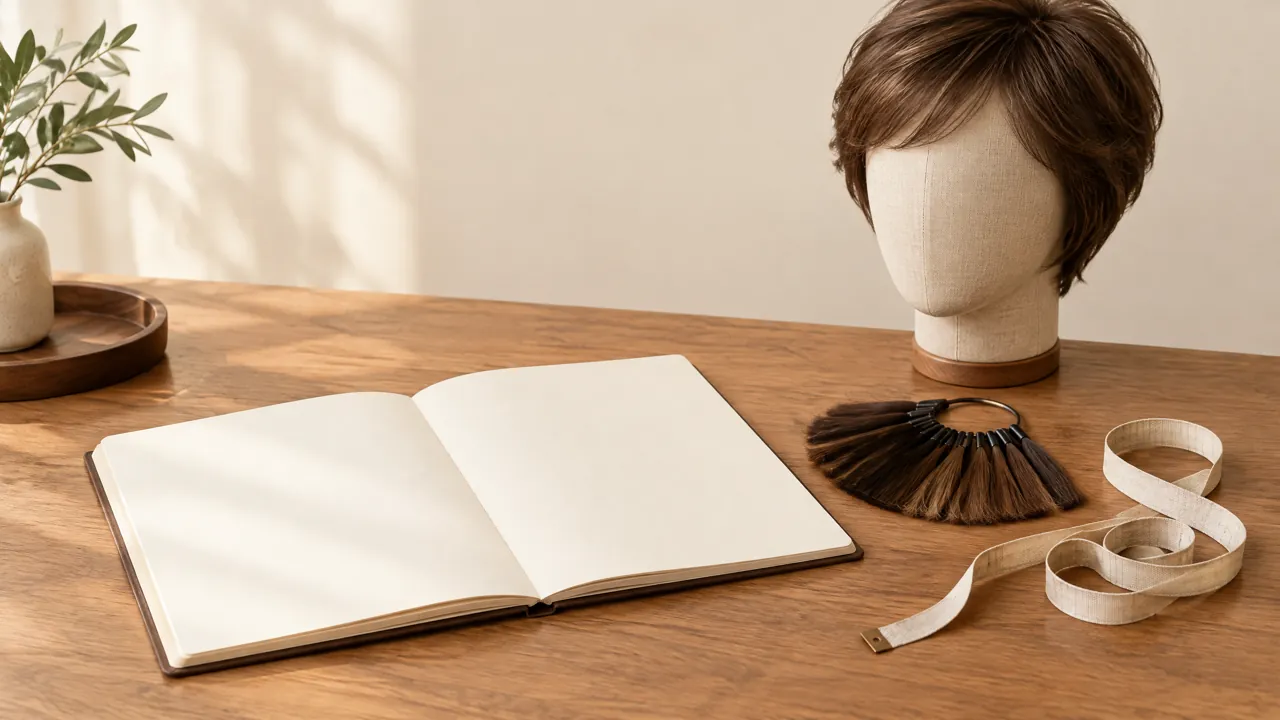
Useful comparison factors include coverage, head measurements, material, fringe direction and the care you can realistically manage. Samples help you discuss these choices, but they do not establish the fit of your finished order. Bring references that show your familiar hairline and side profile, plus notes about glasses or other items worn near the ears. Record which features are essential and which remain flexible. This gives the discussion a practical starting point rather than an open-ended search for something natural.
For readers of Canvas Texture, the connection is the shape of a hairstyle: the balance between fringe, temples, crown and sides. Choosing additional coverage does not automatically require abandoning that familiar shape. Equally, preserving it does not mean copying every detail of an old photograph. This guide follows the decisions from preparation to collection, with ways to compare options and recognise unresolved questions. It concerns appearance and shopping, not diagnosis, and leaves room to decide against buying a wig.
01
1. Turn your familiar hairstyle into a workable brief
Choose two or three reference photographs for different reasons. One might show the fringe you like; another could show comfortable height at the crown. Include a side view if the outline around your ears matters. Label the feature in each photograph instead of expecting a stylist to infer it. Avoid using a heavily filtered picture as your only reference. Its lighting and smooth edges may hide the density, texture or hairline you actually want to discuss during the appointment.
Write a short wear profile alongside the photographs. State when you expect to wear the piece, whether you usually expose the forehead, and how much styling time feels manageable. Separate preferences from constraints: a swept fringe is a preference, while needing space for glasses is a practical constraint. If keeping existing side hair, ask how its length and direction might affect the eventual blend. Do not cut that hair solely to match a sample before the intended coverage has been agreed.
The custom wig consultation Hong Kong page provides a starting point for discussing samples and measurements with OwnStrand. OwnStrand is a related brand under the same owner as Canvas Texture, not an independent recommendation. Use the enquiry to confirm what can be examined before ordering and what must be specified in writing. Its sole showroom is in Kwun Tong; a visit means travelling there, rather than choosing among district branches. Confirm appointment arrangements before making that journey.
02
2. Decide what needs coverage before choosing a route
First establish whether you are considering full coverage or a smaller piece that works with remaining hair. A full wig and a topper are not interchangeable simply because both add visible hair. Their coverage and fitting questions differ, and the suitable option depends on the area involved. Ask the provider to explain the proposed item using a sample or drawing. Mark where the piece would sit and where existing hair would remain visible, without assuming that every type is available.
Compare custom and ready-made routes against the same brief. A ready-made item lets you assess that particular piece, subject to availability and any proposed alterations. A custom order can involve choices before the finished item exists, so it needs clearer approval records. Neither route automatically looks better. Use the table to identify the main uncertainty you need to resolve. If a route cannot meet a non-negotiable requirement, do not compensate by accepting an unrelated feature you never wanted.
Material choice also changes the daily workload. Cancer Research UK distinguishes synthetic, human-hair and mixed options, and advises following manufacturer guidance on heat use [1]. Ask for instructions for the exact item under consideration, rather than assuming all synthetic hair tolerates styling tools. If you enjoy changing the fringe regularly, discuss that habit before selecting a material. If you prefer a repeatable morning routine, ask what maintaining the demonstrated shape involves. A pleasing sample is only useful if its care fits your routine.
| Route to discuss | Potential decision advantage | Question before proceeding |
|---|---|---|
| Ready-made full wig | Assess the available item before deciding | Does this actual item fit, and what alterations are possible? |
| Custom full wig | Discuss specifications before production | Which features are agreed, and which sample differences remain? |
| Partial coverage or topper | Consider retaining visible existing hair | Is the coverage suitable, and how would it work with the remaining hair? |
| No purchase yet | Keep time to resolve an unclear requirement | Would another comparison or a revised brief change the decision? |
03
3. Translate the sample into an approval record
A sample is a conversation tool, not proof that a finished order will reproduce every visible detail. Ask which features it represents: colour, construction, length, density or simply general shape. Then note differences between the sample and the proposed order. A useful description might distinguish the chosen fringe direction from a sample fringe that is too short. Request photographs of the relevant sample where permitted, and pair them with written notes so neither has to carry the entire specification alone.
Discuss the hairline in relation to how you intend to wear the style. Someone who usually covers the forehead has different viewing priorities from someone who brushes everything back. Ask to see the relevant edge and parting at ordinary conversational distance, not only through a close-up photograph. Check whether the crown looks fuller than your familiar outline. If you want grey mixed into the colour, ask whether it can be supplied and how its proportion would be agreed; do not assume availability.
Make the approval record understandable without specialist vocabulary. It should identify the proposed item, agreed material or construction, intended length and the remaining questions. Where a description is ambiguous, ask for a plain-language explanation rather than repeating a technical label. Separate features selected now from styling decisions reserved for completion. Keep a copy of the provider's written confirmation. If a choice remains uncertain, resolving it before production is more useful than collecting more reference photographs that point in different directions.
A sample shows possibilities; an approval record says which possibilities you have actually chosen.
04
4. Separate production, appointment and alteration decisions
Timing should describe stages, not just a single collection date. OwnStrand's verified hand-made human-hair custom process includes viewing samples, choosing a style and having head shape measured before production. The stated production period is approximately three to five working days, subject to order confirmation. This is not a delivery promise or a timetable for every wig, topper or hair system. Ask when production starts, how completion is communicated, and whether the return appointment needs to be arranged separately.
Before committing, use the custom vs ready-made wigs comparison to structure questions about fit, choice and process. Apply the same requirements to both routes rather than comparing a custom ideal with an unsuitable ready-made example. Ask for the quotation's scope, payment stages and relevant cancellation or alteration terms. Establish what happens if an agreed feature appears different at completion. Do not infer a refund entitlement or included adjustment from the word custom; obtain the actual terms before deciding.
Allow some flexibility around an important event, especially if this is your first purchase. The production estimate does not tell you whether you will need another discussion or time to learn styling. Bring the written brief back to the fitting and assess the item against it before asking for a new look. Otherwise, a change of preference can become confused with a difference from the order. Record any revised decision clearly, including what action is proposed and whether it affects timing or cost.
05
5. Check the fit before changing the hairstyle
At the completion visit, begin with positioning rather than cutting. Ask the fitter to show where the piece should sit and how to recognise that position yourself. Check the relationship between the front edge, ears and nape without imposing a universal measurement. Wear your usual glasses and move your head gently as you normally would. Describe any movement or pressure by location and activity. Saying that the edge shifts when you look down gives a clearer starting point than saying everything feels wrong.
Do not treat pain as a normal price of getting a secure outline. The American Academy of Dermatology warns that persistent pulling from tight hairstyles can damage existing hair, and identifies pain, stinging and irritation as warning signs [2]. If the arrangement pulls or hurts, stop the trial and ask for reassessment rather than tightening it further. This does not establish that a particular attachment method caused a condition. Persistent symptoms or concerns about hair loss belong with an appropriate healthcare professional.
Ask to practise putting on and removing the piece under the provider's guidance, where this is part of the agreed appointment. A fit achieved only by someone else may be difficult to reproduce at home. Check whether your existing hair needs arranging consistently beneath or around it, and ask about any permitted adjustment. Cancer Research UK notes that fit may change when remaining hair changes [1]. If that situation applies, ask when to seek another fit check rather than assuming the original measurements remain suitable.
Check position and pressure before reaching for scissors: a moving outline is not necessarily a cutting problem.
06
6. Judge the outline before approving irreversible changes
Once the position feels workable, look at the whole outline from the front, side and back. Start at normal viewing distance before inspecting individual fibres. Ask whether the fringe frames your face in the intended way and whether crown height overwhelms the sides. If the shape seems wrong, identify the region and compare it with the brief. Avoid immediately asking for less hair everywhere. A local styling issue, a positioning problem and a specification mismatch call for different conversations and different remedies.
Assess the colour under more than one ordinary light condition if the setting permits. A sample viewed in one light cannot guarantee how the completed item appears elsewhere. Where existing side hair remains visible, compare it alongside the piece rather than relying on a remembered colour name. Ask which colour or styling changes are suitable for that exact material. Do not apply assumptions from salon treatments on your own hair. Any proposed chemical or heat treatment should follow the item's confirmed care guidance.
Use a least-permanent-first sequence when discussing corrections. Recheck placement, consider reversible styling within the care instructions, and only then discuss cutting or another alteration. Ask what improvement is expected and what flexibility will be lost. A shorter fringe might feel tidier but remove the option to sweep it differently. You do not need to approve a permanent change while uncertain about the cause of the problem. The table separates observations from actions; it is not a guarantee that every item can be adjusted.
| What you notice | First check | Decision to discuss |
|---|---|---|
| The front edge changes position | Confirm placement and the fit arrangement | Resolve movement before deciding the fringe is too long |
| The crown looks too tall | Compare positioning and reversible styling with the brief | Ask whether the issue is styling or the agreed specification |
| The sides do not blend | View the piece beside existing hair in ordinary light | Clarify whether colour, length or shape causes the contrast |
| The ear area feels crowded | Try usual glasses and describe the pressure point | Request fit reassessment before approving a cutting solution |

07
7. Leave with a routine you can repeat
The custom wig fitting Hong Kong page concerns completion visits, fit checks and collection styling. For OwnStrand's verified hand-made custom process, the completed item is followed by a return visit for fitting and wash, cut and blow-dry styling. Confirm the scope for your particular order rather than assuming the same service applies to every product. At that visit, prioritise understanding the finished outline and its care. A polished departure matters less if you cannot repeat the basic positioning tomorrow.
Request care instructions for the actual material and construction, including washing, drying, storage and any restrictions on tools or products. Ask the provider to distinguish routine maintenance from changes requiring professional input. Keep those instructions with the order record, not buried among unrelated messages. If something feels uncomfortable or looks different after home use, describe what changed before trying to correct it. A note about placement, glasses, washing or styling can make a follow-up discussion more useful than an isolated photograph.
If you retain visible side or back hair, plan its ordinary haircut separately from the piece's upkeep. Explain the intended outline to your hairdresser and identify lengths you do not want removed without discussion. The aim is continuity between the covered and uncovered areas, not a compulsory change to your whole style. Review the plan when your own hair changes rather than making repeated compensating cuts. A good decision leaves you knowing what to maintain, what to monitor and when to ask for clarification.
- Keep the agreed specification, quotation scope and care instructions together.
- Record the positioning method you were shown, with photographs only where permitted.
- Confirm how to raise a fit concern and whether further appointments involve separate charges.
- Tell your regular hairdresser which existing lengths support the intended outline before cutting.
Sources and useful reading
Continue with hair and grooming
If your question concerns styling your own men’s hair, continue with: Korean Men's Perm
Compare a related selection decision: Buy wigs online Hong Kong: check the model and terms
Read our male-hair styling background: Vit So and the Canvas Texture studio
Keep your own-hair outline intentional
Speak with Canvas Texture about a men's hairstyle consultation for your existing hair. Discuss fringe direction, crown balance and side lengths you want to retain, so your ordinary haircut supports a clear, manageable outline.
Canvas Texture · WhatsAppFrequently asked questions
Should I settle on a hairstyle before the consultation?
Bring a direction rather than a fully fixed design. Identify the fringe, crown height and side outline you want to preserve, then discuss what is feasible for the proposed item. Keep a short list of essential requirements so a pleasing sample does not distract from your actual needs.
Does choosing a custom piece guarantee a better fit?
No. Custom specifications and measurements provide a process for discussing requirements, but the completed item still needs assessment. Ask how the fit is checked and what terms apply to adjustments. Compare any ready-made alternative on its actual fit, not on the assumption that one route is always superior.
Can I cut my remaining side hair before collection?
Avoid a major change until you have discussed how that hair contributes to the intended outline. If the piece is meant to blend with it, removing length may reduce your options. Ask what can be maintained meanwhile and bring the agreed plan to your ordinary haircut appointment.
What should I do if the piece feels painful during fitting?
Stop the trial and explain where the pressure or pulling occurs. Do not tighten the arrangement or accept pain merely to improve appearance. Ask for reassessment; persistent irritation or concerns about hair loss require appropriate healthcare advice rather than a shopping solution.
Related journal articles
Men’s Hairpieces or a Perm? Compare Coverage and Shape
Choose a perm when enough existing hair remains and movement is the main goal. Choose a hairpiece when a defined area needs cosmetic coverage. Neither option decides the best outline by itself. First identify the visible area, surrounding density, preferred parting, and morning routine. Those observations prevent a product label from making the decision too early. Compare those details before making any booking.
Natural Hairline Wigs: A Guide to Fringe and Forehead
Natural hairline wigs look most convincing when the front edge, fit, colour, density, and haircut agree. For a hypothetical four-day workweek side part, inspect both temples under two ordinary light sources before choosing a construction. The aim is a coherent outline in movement. No single feature can decide that outcome. Check the whole frame, not only the centre. Check it while turning your head.
Human Hair or Synthetic Wigs? Texture and Care Choices
Choose human hair when approved styling flexibility matters. Choose synthetic fibre when a preset shape and simpler mornings matter more. Neither label settles the result alone. Texture, density, cap construction, attachment, and fit shape how a wig looks and feels. Start with the routine you can maintain, then check the exact model’s instructions. That order avoids paying for flexibility you will not use